JEE Mains 2026 Book Stack Builder
Determine the optimal combination of reference books based on your current status and goals.
Select Your Resources
Click on books to include them in your stack. The system will suggest defaults based on your profile above.Physics
Chemistry
Mathematics
Recommended Strategy Profile
Finalized Book List
Suggested Weekly Workflow
Walking into a bookstore or scrolling through online stores, you might feel overwhelmed by the sheer number of titles claiming to be the "best" for JEE Mains. The truth is simple but often missed: there is no single magic book. Instead, there is a specific combination of resources that aligns with your current level and target score. For most students aiming for a top rank in 2026, the strategy revolves around mastering fundamentals first, then moving to advanced problem-solving.
This guide breaks down the essential books subject-wise, helping you build a library that actually works rather than one that just looks impressive on your shelf. We will look at which books are non-negotiable for Physics, Chemistry, and Mathematics, and how to balance them with your school syllabus.
Why Book Selection Matters More Than Quantity
Many students make the mistake of buying five different reference books for each subject. This leads to burnout and confusion because every author has a different approach to explaining concepts. In JEE Mains, speed and accuracy are key. You need resources that help you solve standard problems quickly without getting bogged down in obscure theories that rarely appear in the exam.
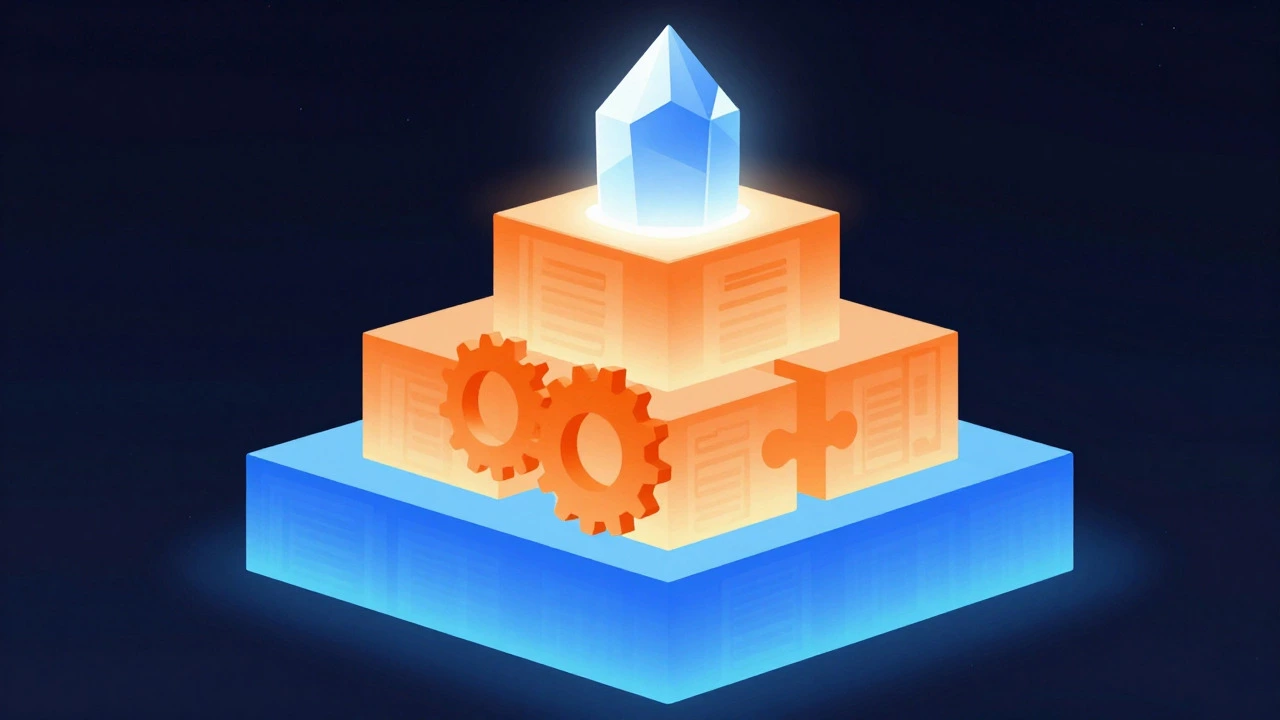
The ideal preparation stack usually consists of three layers:
- Foundation: Textbooks that explain concepts clearly (like NCERT).
- Practice: Books with a high volume of graded problems (like HC Verma or Cengage).
- Advanced/Revision: Materials for quick revision or challenging edge cases (like Irodov or coaching modules).
Your choice depends heavily on whether you are relying solely on self-study or attending a coaching institute. If you have access to quality coaching notes, you can skip some standard reference books. However, if you are self-studying, these books become your primary teachers.
Physics: Building Intuition and Problem-Solving Speed
Physics in JEE Mains tests your ability to apply formulas to real-world scenarios. It is not just about memorizing equations; it is about understanding the physical laws behind them. The two gold standards here are NCERT Physics is the official textbook published by the National Council of Educational Research and Training, serving as the base for all science education in India. and Concepts of Physics by H.C. Verma is a widely used reference book known for its clear explanations and conceptual questions.
NCERT Physics is non-negotiable. Since JEE Mains is based on the CBSE syllabus, many direct questions come from NCERT examples and exercises. You must read every line, including the marginalia and back-of-chapter questions. It builds the basic vocabulary of physics.
For deeper understanding, HC Verma is the go-to choice. Unlike NCERT, which is concise, HC Verma explains the "why" behind the "how." The objective questions at the end of chapters are excellent for testing conceptual clarity. If you find HC Verma too easy, you might look at Problems in General Physics by I.E. Irodov, but be careful. Irodov is designed for JEE Advanced, not Mains. Solving Irodov for Mains preparation is like using a sledgehammer to crack a nut-it takes too long and may frustrate you. Stick to HC Verma and perhaps Cengage Physics for additional practice problems if you want more volume.
Chemistry: The Score Booster
Chemistry is often considered the easiest section to score well in, provided you have the right resources. It splits into Physical, Organic, and Inorganic chemistry, each requiring a different approach.
Inorganic Chemistry is largely memory-based. Here, NCERT Inorganic Chemistry is the bible. Every word matters. Questions are frequently lifted directly from NCERT text, tables, and reaction mechanisms. Do not rely on any other book for Inorganic; stick strictly to NCERT and your coaching notes if available. Supplement this with previous year papers to understand the pattern of questions.
Organic Chemistry requires understanding reaction mechanisms. M.S. Chouhan is a popular name here, but for JEE Mains, NCERT Organic Chemistry combined with a good question bank like Organic Chemistry by Morrison and Boyd (for theory) or simply extensive practice from coaching modules is sufficient. Many students find that practicing named reactions and GOC (General Organic Chemistry) thoroughly covers 90% of the organic questions in Mains.
Physical Chemistry involves numerical problems. N.P. Bahadur’s Physical Chemistry is a classic for practice. It offers a wide range of problems with solutions. Alternatively, Cengage Physical Chemistry provides a structured approach with theory followed by exercises. Both are effective, so choose one and stick to it.
| Subject | Book Name | Author/Publisher | Best For | Difficulty Level |
|---|---|---|---|---|
| Physics | NCERT Physics | NCERT | Basics & Direct Questions | Easy |
| Physics | Concepts of Physics | H.C. Verma | Conceptual Clarity | Medium |
| Physics | I.E. Irodov | I.E. Irodov | Advanced Problem Solving | Hard |
| Chemistry | NCERT Chemistry | NCERT | Inorganic & Theory | Easy |
| Chemistry | N.P. Bahadur | N.P. Bahadur | Physical Chem Numericals | Medium |
| Mathematics | NCERT Mathematics | NCERT | Definitions & Basics | Easy |
| Mathematics | Arihant Series | Arihant Publications | Chapter-wise Practice | Medium |
Mathematics: Consistency Over Complexity
Mathematics in JEE Mains is less about deep theoretical proofs and more about applying standard methods to solve problems within time limits. The best book for Math is often the one that gives you the most variety of problems.
NCERT Mathematics is still important for definitions and standard results. However, the exercises in NCERT are often insufficient for JEE level. You need a dedicated problem-solving book. The Arihant Series (specifically the JEE Main chapter-wise books) is highly recommended. It categorizes problems by difficulty and topic, making it easy to track progress. Another strong contender is Objective Mathematics by R.D. Sharma, which is great for building confidence with basic to intermediate problems.
If you are strong in Calculus, Calculus by S.L. Loney is a classic, but again, it might be overkill for Mains. Focus on Calculus, Coordinate Geometry, Vectors, and 3D Geometry, as these carry significant weightage. Use Arihant or similar compilations to drill these topics until they become second nature.
Self-Study vs. Coaching Modules: Which Should You Choose?
This is a critical decision point. If you are attending a reputable coaching institute (like Allen, FIITJEE, or Resonance), their study material is usually curated specifically for JEE Mains. It includes theory, examples, and practice sets aligned with the latest syllabus trends. In this case, you should prioritize coaching modules over external books for daily practice. Use NCERT and one reference book (like HC Verma or Arihant) only for weak areas.
However, if you are self-studying, you cannot rely on coaching notes. You must treat the books listed above as your primary source. Create a schedule where you spend 40% of your time reading theory from NCERT/reference books and 60% solving problems. Without a teacher to guide you, the structure of books like HC Verma or Arihant becomes your roadmap.
Remember, consistency beats intensity. Reading one book thoroughly is far better than skimming five books. Mark your mistakes in a separate notebook and review them weekly. This active recall method is more effective than passive reading.
How to Structure Your Study Plan with These Books
Owning the right books is only half the battle. How you use them determines your success. Here is a practical workflow for integrating these resources into your daily routine:
- Start with NCERT: Read the chapter in NCERT to get an overview of the concepts. Highlight key formulas and definitions.
- Deep Dive with Reference Book: Move to HC Verma (Physics) or Arihant (Maths) for detailed explanations and solved examples. Understand the logic behind each solution.
- Practice Graded Problems: Begin with easy problems to build confidence, then move to medium and hard ones. Time yourself for each set.
- Analyze Mistakes: After completing a set, review every wrong answer. Was it a concept gap, a calculation error, or a misreading? Note it down.
- Weekly Revision: Spend the last day of the week revisiting the mistake notebook and re-reading key sections of NCERT.
Do not try to finish a book cover-to-cover in one go. Chapter-wise completion is more effective. Finish one chapter completely-theory, examples, and exercises-before moving to the next. This ensures depth over breadth.
Frequently Asked Questions
Is NCERT enough for JEE Mains?
NCERT is essential but not sufficient on its own. It covers the syllabus perfectly and provides many direct questions, especially in Chemistry. However, for Physics and Mathematics, you need additional practice from books like HC Verma or Arihant to handle the variety of problem types seen in the actual exam.
Should I solve Irodov for JEE Mains?
Generally, no. I.E. Irodov is designed for JEE Advanced and contains very complex, time-consuming problems. For JEE Mains, focus on speed and accuracy with standard problems. Only attempt Irodov if you have completed all other resources and have extra time, and even then, pick selectively.
Which book is best for Organic Chemistry?
For JEE Mains, NCERT Organic Chemistry is the primary source. It covers all necessary reactions and mechanisms. If you need more practice, use a question bank from your coaching institute or a book like M.S. Chouhan, but ensure you master NCERT first.
Can I prepare for JEE Mains without coaching?
Yes, absolutely. Many students have cracked JEE Mains through self-study. The key is discipline and using the right resources. Follow a strict schedule, use books like NCERT, HC Verma, and Arihant, and take regular mock tests to simulate exam conditions.
How many hours should I spend on each book?
There is no fixed rule, but a balanced approach is 40% theory reading and 60% problem-solving. For example, if you spend 5 hours on Physics, spend 2 hours reading concepts and 3 hours solving problems. Adjust this ratio based on your comfort level with the topic.