
Basic English Progress Estimator
How Long Until You Can Communicate?
Estimate your realistic timeline to basic English communication based on the article's research. Most learners see progress in 3-6 months with consistent practice.
Your Progress Timeline
Ever felt stuck because you don’t know how to say what you mean in English? You’re not alone. Millions of adults around the world start with a basic English course because they need to communicate - whether it’s for work, travel, or just feeling more confident in daily life. A basic English course isn’t about memorizing fancy words or writing essays. It’s about learning how to speak, understand, and get by in real situations.
What You’ll Actually Learn in a Basic English Course
A basic English course teaches you the building blocks of everyday communication. That means focusing on the 80/20 rule: 20% of the language gives you 80% of the results. You’ll learn high-frequency words and phrases that come up again and again - things like asking for directions, ordering food, introducing yourself, and talking about your job or family.
Grammar is covered, but only what matters. You won’t spend hours on the subjunctive mood. Instead, you’ll learn how to use simple past, present, and future tenses correctly. For example: "I went to the store," "I work at a café," "I will call you tomorrow." These are the sentences you’ll use every day.
Listening and speaking come first. Many courses use audio clips of real conversations - not scripted textbook dialogues. You’ll practice responding to questions like "How are you?" or "What time does the bus leave?" with real answers, not just repeating after a teacher.
Reading and writing are included, but in a practical way. You’ll learn to read short signs, menus, emails, and simple news headlines. Writing might mean filling out a form, sending a quick message, or writing a short note to your landlord. No poetry. No complex reports. Just what you need to get things done.
Who Is a Basic English Course For?
If you’ve never studied English before, or if you tried years ago and forgot most of it, this is where you start. It’s also for people who can read English but can’t speak it. Or those who understand TV shows but panic when someone asks them a question in person.
It’s not for people who already speak fluently. If you can hold a 30-minute conversation about your job or watch a movie without subtitles, you’re past this level. Basic courses are for absolute beginners or those at A1-A2 on the CEFR scale - the lowest two levels of the Common European Framework of Reference for Languages.
Many learners are adults: new immigrants, workers in hospitality or healthcare, parents helping kids with homework, or retirees who want to travel. In New Zealand, for example, a basic English course is often the first step for refugees or skilled migrants preparing to enter the workforce.
How Long Does It Take?
There’s no magic timeline, but most people see real progress in 3 to 6 months with consistent practice. That means attending class twice a week and spending 15-20 minutes a day reviewing vocabulary or listening to short English clips.
One study from the British Council found that learners who practiced daily improved their speaking confidence 40% faster than those who only attended class. It’s not about how long you sit in a classroom - it’s about how often you use what you learn.
Some courses promise fluency in 30 days. That’s misleading. Fluency takes years. But basic communication? That’s achievable in a few months if you focus on real-life use, not tests.

What Does a Typical Class Look Like?
Classes are small - usually 8 to 12 people. The teacher doesn’t lecture. They guide conversations. You’ll do role-plays: pretending to book a hotel, ask for help at a pharmacy, or explain a problem to your boss. You’ll watch short videos and answer questions. You’ll listen to recordings of native speakers and repeat phrases out loud.
There’s no pressure to memorize long lists. Instead, you’ll learn words in context. For example, instead of memorizing "grocery," "supermarket," "market," and "shop," you’ll learn how to say: "I need to buy milk, bread, and eggs. Where’s the nearest supermarket?"
Homework is light. Maybe a 10-minute listening task, or writing three sentences about your day. The goal isn’t perfection - it’s practice. Mistakes are expected. In fact, they’re part of the learning process.
What You Won’t Find in a Basic Course
You won’t study advanced grammar like conditionals or passive voice in depth. You won’t write essays on climate change or analyze Shakespeare. You won’t prepare for IELTS or TOEFL. Those come later.
You also won’t find a lot of focus on spelling or punctuation unless it’s needed for real tasks - like filling out a job application. The priority is being understood, not writing perfectly.
And you won’t be graded on tests. Most basic courses use informal check-ins: "Can you order coffee now?" or "Can you explain where you live?" Progress is measured by what you can do, not by scores.
Where Can You Take One?
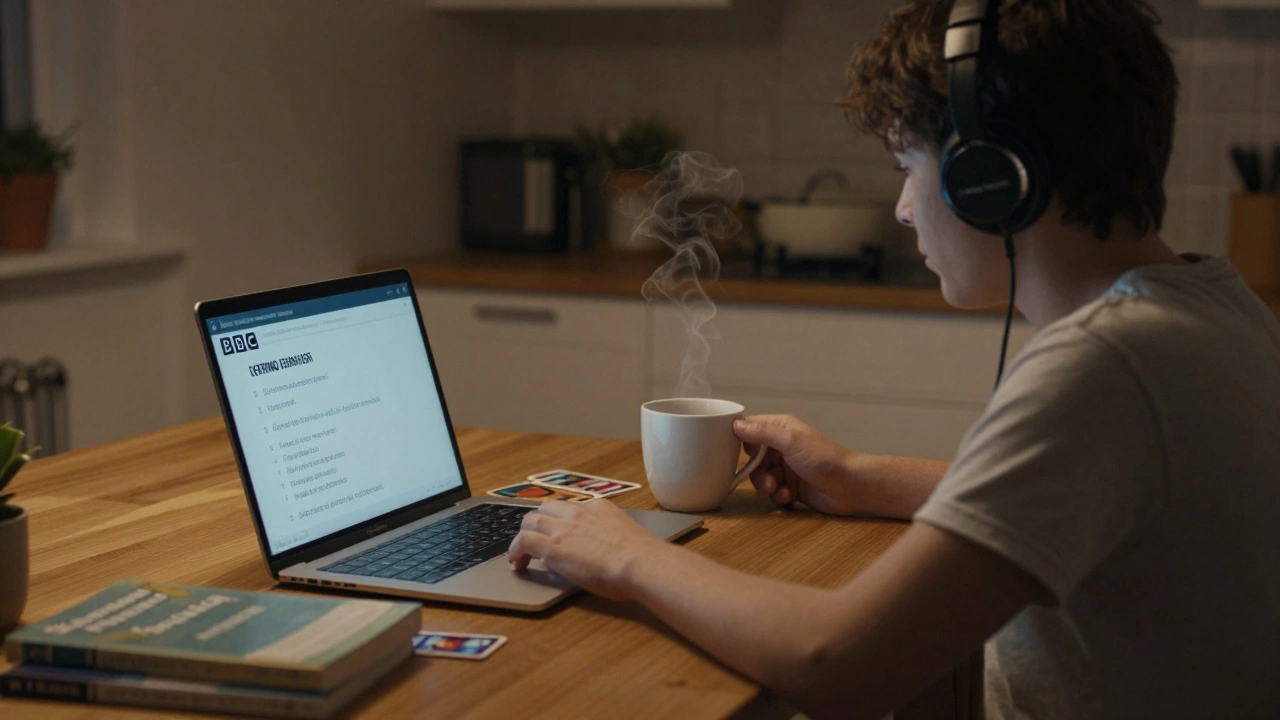
Many community centers, libraries, and adult education centers offer free or low-cost basic English courses. In New Zealand, organizations like Community Languages a network of local programs offering free English classes for adult learners run weekly sessions. Online platforms like Duolingo, BBC Learning English, and USA Learns offer structured beginner content for self-study.
Some employers offer English classes as part of workplace training - especially in industries like healthcare, retail, and cleaning services. If you’re a migrant, check with your local settlement agency. Many countries provide free language support for new residents.
Private tutors are an option, but they can be expensive. For a basic course, group classes often work better because you get to practice with others who are at the same level.
What Comes After a Basic English Course?
Once you can introduce yourself, talk about your daily routine, ask for help, and understand simple instructions, you’re ready for the next step. That’s usually an intermediate course - where you start talking about opinions, past experiences, and future plans. You’ll learn more verb tenses, expand your vocabulary, and start reading longer texts.
Some people move on to career-focused English - like writing resumes or joining meetings. Others prepare for exams like IELTS if they want to study or work abroad. But that’s not the goal of a basic course. The goal is to get you from silence to speech.
Why This Matters
Language isn’t just about words. It’s about connection. A basic English course gives you the tools to ask for help, understand your rights, make friends, and feel less alone in a new place. It’s not about sounding like a native speaker. It’s about being heard.
People who complete a basic course often say the biggest change isn’t their vocabulary - it’s their confidence. They stop avoiding conversations. They start asking questions. They speak up.
That’s the real win.
Is a basic English course free?
Many basic English courses are free, especially through community centers, libraries, or government-funded programs for migrants and refugees. Some online platforms like BBC Learning English and USA Learns are completely free. Private tutors or university programs may charge fees, but free options are widely available.
Do I need to know any English before starting?
No. Basic English courses are designed for complete beginners. You don’t need to know any words or grammar beforehand. The course starts from zero - with pictures, gestures, and simple repetition to build understanding.
How often should I attend class?
Most courses meet two to three times a week for 1-2 hours per session. But even attending once a week helps - as long as you practice outside class. Ten minutes a day of listening or speaking practice makes a big difference over time.
Can I learn basic English on my own?
Yes, but it’s harder. Apps and videos can teach you vocabulary and grammar, but they don’t give you practice speaking. Real progress comes from talking with others. If you’re learning alone, try finding a language partner online or joining free conversation groups at local libraries.
Will a basic English course help me get a job?
It can. Many entry-level jobs in customer service, cleaning, warehousing, and healthcare require basic communication skills. Completing a course shows employers you’re willing to learn and can follow simple instructions. Some employers even partner with language programs to train their staff.
What if I’m shy and scared to speak?
That’s normal. Most students feel this way at first. Good teachers create a safe space where mistakes are okay. You’ll start by repeating phrases, then answering simple questions, then sharing short stories. No one is judged. Progress is slow, but it’s real - and you’re not alone.