You’ve probably tried memorizing vocabulary lists until your eyes crossed. You might have spent hours conjugating verbs in a grammar workbook that feels more like a puzzle than a conversation. Yet, when you actually sit down with a native speaker, your mind goes blank. The words are there, but they won’t come out. This is the classic trap of language learning: focusing on the wrong skills.
If you want to know what is the best skill to learn English, the answer isn’t reading, writing, or even speaking-at least not at first. It’s listening. Specifically, active listening. Without it, every other skill is built on sand. Here is why listening is the master key, and how you can use it to unlock fluency faster than any textbook promises.
The Hidden Foundation: Why Listening Comes First
We often think of language learning as a linear process: read, write, speak. But look at how babies learn. They don’t start by writing essays. They spend their first year just listening. They absorb the rhythm, the pitch, and the flow of speech long before they say their first word. This period is called the "silent phase," and it is crucial for building an internal map of the language.
When you skip this phase and jump straight to speaking, you’re trying to drive a car without knowing how the engine works. You might get somewhere, but you’ll stall out the moment things get complicated. Listening builds your phonological awareness-your ability to distinguish between similar sounds like "ship" and "sheep." If you can’t hear the difference, you’ll never pronounce it correctly, no matter how many times you repeat it.
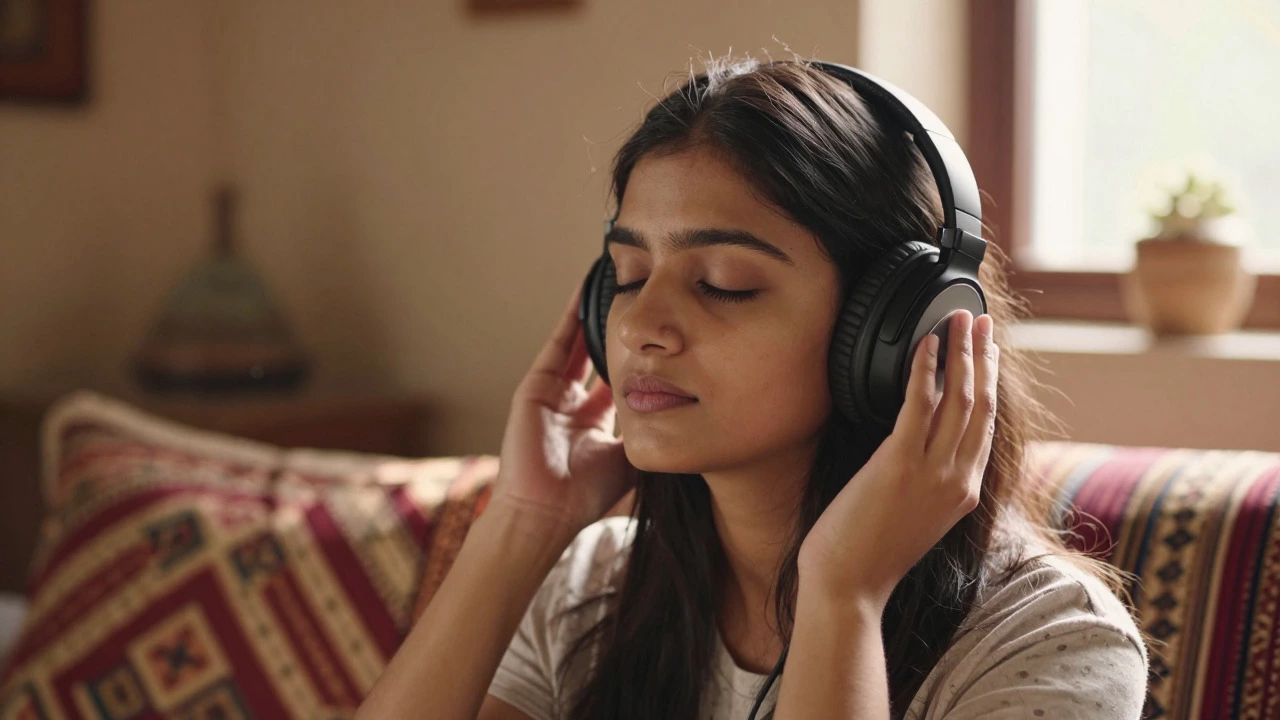
In the context of English learning, active listening means engaging with the language intentionally. It’s not just having the TV on in another room. It’s sitting down with a podcast, pausing after every sentence, and asking yourself: "Did I catch every word? If not, what did I miss?" This deliberate practice rewires your brain to recognize English patterns automatically.
From Input to Output: The Bridge to Speaking
Many learners feel stuck because they have a gap between what they understand and what they can say. This is known as the receptive-productive gap. Listening helps bridge this gap by providing models for your own speech. When you listen closely, you aren’t just hearing words; you’re absorbing intonation, stress, and linking.
English is a stress-timed language. This means the rhythm comes from stressed syllables, not from a steady beat like in Spanish or Japanese. If you don’t listen for this rhythm, your English will sound robotic or flat. Native speakers might understand you, but they’ll have to work harder to do so. By mimicking the sounds you hear through active listening, you naturally adopt the correct prosody-the musicality of the language.
Consider the phrase "want to." In rapid speech, this becomes "wanna." If you only study from textbooks, you’ll expect to hear "want to" clearly. When you hear "wanna," you might get confused. But if you train your ears through active listening, you’ll recognize these reductions instantly. This recognition is the first step to producing them yourself, which makes your speech sound natural and fluent.
Practical Strategies for Active Listening Practice
Knowing that listening is important is one thing; doing it effectively is another. Most people listen passively, letting the audio wash over them. To make listening your superpower, you need specific techniques. Here are three methods that transform passive hearing into active learning.
- The Dictation Method: Choose a short audio clip (30-60 seconds) from a podcast or news broadcast. Listen to it once without looking at any transcript. Then, try to write down exactly what you heard. Play it again, filling in the blanks. Finally, compare your notes with the actual transcript. This highlights the specific sounds or connected speech patterns you missed.
- Shadowing: This involves listening to a native speaker and repeating what they say almost simultaneously, like a shadow. Don’t worry about understanding every word at first. Focus on matching their speed, pitch, and emotion. This trains your mouth muscles to move in ways required for English pronunciation.
- Context Guessing: Listen to a conversation where you don’t know all the words. Instead of stopping to look up every unknown term, try to guess the meaning from the context. Ask yourself: "Is the speaker angry? Are they making a joke? What is the main topic?" This builds comprehension resilience, which is vital for real-world conversations.
These exercises take time, but they are far more efficient than rote memorization. They engage multiple parts of your brain: auditory processing, memory, and motor control. Over time, this creates strong neural pathways that make English feel less like a foreign code and more like a natural tool.

The Role of Reading and Vocabulary
While listening is the primary skill, reading plays a supporting role. Reading helps you expand your vocabulary and understand complex grammatical structures. However, reading alone doesn’t teach you how English sounds. You can be an excellent reader of Shakespeare but still struggle to order coffee in London if you haven’t trained your ears.
Vocabulary acquisition is also tied to listening. Words learned in isolation-like "ubiquitous" or "ephemeral"-often remain dormant in your mind. You might recognize them in a test, but you won’t use them in conversation. Words learned through listening, especially in emotional or memorable contexts, stick better. When you hear a word used in a funny story or a heated debate, your brain tags it as important.
To maximize vocabulary retention, combine listening with reading. Use audiobooks while following along with the text. This dual-input method reinforces both the visual and auditory representations of words. It helps you connect the spelling of a word with its pronunciation, reducing errors like mispronouncing "schedule" or "vegetable."
Overcoming Common Listening Barriers
Even with the right mindset, listening can be frustrating. Native speakers talk fast, use slang, and mumble. Here’s how to handle the most common hurdles.
- Speed: Don’t rush to normal speed immediately. Use apps that allow you to slow down audio to 0.75x or 0.8x speed. Once you understand the content clearly, gradually increase the speed. Your brain needs time to adjust to the new tempo.
- Accent Diversity: English has many accents-American, British, Australian, Indian, Singaporean, and more. Exposure to just one accent can limit your understanding. Try to listen to a variety of sources. If you only watch American movies, you might struggle with a British colleague. Diversifying your input makes you a more adaptable listener.
- Anxiety: Many learners freeze when they don’t understand everything. Remember, native speakers don’t understand every word either. We fill in gaps using context. Give yourself permission to miss details. Focus on the gist first, then dive deeper if needed.
Another barrier is inconsistency. Listening for ten minutes every day is far more effective than binge-listening for five hours once a week. Language learning is a marathon, not a sprint. Consistency builds the habit and keeps the neural connections strong.
Comparison of Learning Approaches
| Skill | Impact on Fluency | Time to Results | Best For |
|---|---|---|---|
| Active Listening | High | Medium (3-6 months) | Building intuition, pronunciation, and comprehension |
| Grammar Study | Low-Medium | Slow (6+ months) | Writing accuracy and formal contexts |
| Vocabulary Memorization | Medium | Variable | Expanding word bank, but low retention without context |
| Speaking Practice | High | Fast (if supported by listening) | Confidence and muscle memory |
As the table shows, active listening provides a high impact on overall fluency because it supports all other skills. Grammar study alone yields slower results and often fails to translate into spontaneous speech. Speaking practice is powerful, but without a solid listening foundation, it can reinforce bad habits.

Integrating Listening into Daily Life
You don’t need extra hours in your day to practice listening. You can integrate it into your existing routine. Commute to work? Listen to an English podcast instead of music. Cooking dinner? Watch an English-language cooking show. Waiting in line? Listen to an English song and try to parse the lyrics.
The key is to make English a part of your environment, not just a subject you study. Surround yourself with the language. Change your phone’s language settings to English. Follow English-speaking influencers on social media. These small exposures add up, creating a constant stream of input that keeps your brain engaged.
Also, choose content that interests you. If you love technology, listen to tech reviews. If you enjoy true crime, find podcasts in that genre. Interest drives engagement, and engagement drives learning. Boring material leads to distraction, which defeats the purpose of active listening.
Measuring Progress
How do you know if your listening practice is working? Look for subtle signs. You’ll start catching jokes in movies that previously flew over your head. You’ll notice when someone is being sarcastic based on their tone. You’ll find yourself thinking in English during simple tasks, like planning your day.
Record yourself speaking periodically. Compare your recordings from three months ago to today. You’ll likely notice improvements in your rhythm and clarity, even if you don’t feel like you’re changing much day-to-day. Progress in language learning is often incremental and invisible until it suddenly isn’t.
Set specific goals. For example, "I will understand 90% of this news report without subtitles." Track your success rate. This objective measure helps maintain motivation and provides clear feedback on your improvement.
Conclusion: The Power of the Ear
Finding the best skill to learn English isn’t about finding a shortcut. It’s about finding the lever that moves the heaviest load. Listening is that lever. It unlocks pronunciation, boosts vocabulary retention, improves comprehension, and builds confidence. By prioritizing active listening, you shift from struggling with the mechanics of English to flowing with it.
Start today. Put down the grammar book for an hour. Pick up a podcast. Listen actively. Hear the music of the language. Your future self will thank you for every minute you spend tuning in.
Is listening really more important than speaking?
Yes, especially in the early stages. Listening builds the mental database of sounds and patterns that speaking relies on. Without sufficient input, output is limited and error-prone. Think of listening as saving money and speaking as spending it. You can't spend what you haven't saved.
How much listening practice should I do daily?
Aim for at least 30 minutes of focused, active listening per day. Consistency matters more than duration. Ten minutes of intense focus is better than an hour of distracted background noise. As you improve, you can increase this time.
Can I learn English by only watching movies?
Movies are great for exposure, but they are often too fast and filled with cultural references. For beginners, structured listening materials like podcasts designed for learners are more effective. Use movies as a supplement, not your primary source, until your comprehension level rises.
What if I don't understand anything I hear?
This is normal. Start with simpler content. Use transcripts to help. Slow down the audio. The goal is comprehensible input-material that is slightly above your current level but still understandable with effort. If it's completely incomprehensible, it's too hard. Step back to easier material.
Does accent matter in listening practice?
It depends on your goals. If you plan to live in the UK, focus on British accents. If you're targeting global business, a mix of international accents is best. Exposure to diverse accents makes you a more versatile communicator. Don't limit yourself to just one type unless necessary.