
Vocational Career Matchmaker
Not sure which high-paying trade suits you? Answer these three questions to find your best match among the top earning vocational jobs.
You might think that to make serious money, you need a four-year degree and a mountain of student debt. But here’s a twist: some of the highest earners in the workforce never set foot in a lecture hall for more than two years. They wear steel-toed boots, carry tool belts, or work with high-voltage equipment. If you are asking what is the highest paid vocational career path, the answer isn’t just one job-it’s a cluster of skilled trades that pay surprisingly well due to scarcity, danger, and specialized knowledge.
A vocational career is defined as an occupation requiring specific technical skills and hands-on training rather than a general academic education. Unlike white-collar roles that often start at modest salaries, many vocational paths allow you to earn while you learn through apprenticeships. The earning potential skyrockets once you master niche skills that machines cannot easily replicate yet.
The Power Players: Why These Trades Pay So Well
Why do plumbers sometimes out-earn lawyers? It comes down to supply and demand. There is a global shortage of skilled tradespeople. As older workers retire, fewer young people are entering these fields. This scarcity drives up wages. Additionally, many top-paying vocational jobs involve working in hazardous environments, tight deadlines, or complex regulatory frameworks. You aren’t just getting paid for your time; you’re getting paid for your expertise in managing risk and complexity.
Consider the difference between a standard office job and a specialized industrial role. An entry-level administrative assistant might start at $40,000 a year. In contrast, an apprentice in a high-demand trade can start near that figure but sees faster percentage growth because their skill set becomes rarer over time. By the time they hit mid-career, they are often earning significantly more than their university-educated peers who are still climbing corporate ladders.
Aviation Maintenance Technicians: High Stakes, High Pay
If we look strictly at numbers, Aviation Maintenance Technician (AMT) roles consistently rank at the top. These professionals ensure aircraft are safe to fly. The responsibility is immense-a single error can have catastrophic consequences. Because of this liability and the rigorous certification required by bodies like the FAA (in the US) or CAA (in New Zealand), airlines and maintenance firms pay a premium.
Getting there requires a Part 147 school certificate and passing multiple written and practical exams. Once certified, AMTs can work on everything from small private planes to massive commercial jets. With overtime during peak travel seasons and shift differentials for night work, senior technicians can easily clear six figures. It is physically demanding work, often involving cramped spaces and jet fuel smells, but the financial reward is substantial.
Electrical and Electronics Engineering Technicians
Another heavyweight in the vocational earnings chart is the Electrical Technician. Modern infrastructure runs on electricity, and as we move toward renewable energy sources like solar and wind, the demand for skilled installers and repairers has exploded. A residential electrician makes good money, but an industrial electrical technician who maintains power grids or factory automation systems makes excellent money.
The key here is specialization. General wiring pays well. Programmable Logic Controllers (PLCs) and robotics integration pay much better. If you can troubleshoot a robotic arm on a manufacturing line when it fails at 2 AM, you are invaluable. Companies will pay for that reliability. Furthermore, unionized electricians in major cities often command some of the highest hourly rates in any profession, including law and medicine.

Nuclear Medicine Technologists: Healthcare’s Hidden Gem
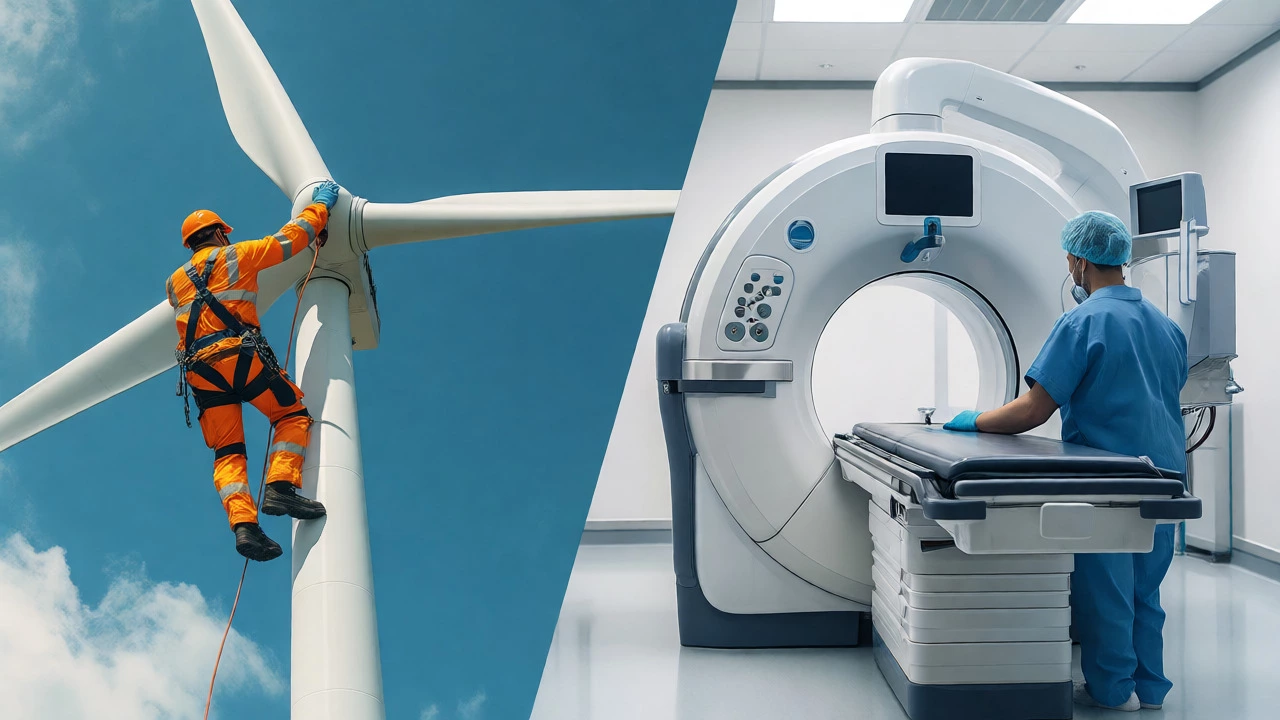
When people think of healthcare, they think of doctors and nurses. But Nuclear Medicine Technologists operate sophisticated imaging equipment that uses radioactive materials to diagnose diseases. This role sits at the intersection of healthcare and technology. It requires a strong understanding of physics, biology, and patient care.
Because the work involves handling radioactive isotopes, strict safety protocols apply. Not everyone wants to work around radiation daily, which limits the labor pool. Consequently, hospitals offer competitive salaries to retain these specialists. While it may not always beat the top-tier engineers, it offers a stable, high-paying career with less physical strain than construction or aviation. Plus, the healthcare sector is recession-resistant-people always need diagnostics.
Drafters and CAD Designers: Bridging Art and Engineering
If you prefer design over heavy lifting, consider Drafting and Design. Using software like AutoCAD or Revit, drafters create detailed drawings for architects and engineers. While AI is automating some basic tasks, the need for human oversight in complex projects remains high. Senior drafters who specialize in BIM (Building Information Modeling) can earn impressive salaries, especially in large-scale infrastructure projects.
This field rewards continuous learning. Software updates every year. Those who stay ahead of the curve become project leads. Unlike pure artistic roles, drafting is technical and precise, making it a solid vocational choice for those who enjoy structure and detail.
Comparing the Top Vocational Careers
To help you decide, let’s break down the key attributes of these top-paying roles. Note that salaries vary significantly by location, experience, and industry sector.
| Career | Typical Training Duration | Key Skills Required | Earning Potential Driver |
|---|---|---|---|
| Aviation Tech | 18-24 Months | Mechanical aptitude, precision, regulatory compliance | High liability, scarce talent, shift work |
| Electrician | 4-5 Years (Apprenticeship) | Circuitry, problem-solving, code knowledge | Union rates, industrial specialization, emergency calls |
| Nuclear Med Tech | 2 Years (Associate Degree) | Patient care, physics, radiation safety | Healthcare stability, technical complexity |
| Wind Turbine Tech | 6 Months - 2 Years | Height comfort, mechanical/electrical hybrid skills | Growing green energy sector, remote locations |
How to Choose Your Path
Picking the right vocational course isn’t just about the paycheck. You need to match the job to your personality. Do you hate sitting still? Aviation or Wind Turbine Technology might suit you. Are you meticulous and calm under pressure? Nuclear Medicine or Electrical Troubleshooting could be a fit. Do you enjoy solving puzzles with software? Drafting is worth exploring.
Also, consider the barrier to entry. Some trades require physical fitness tests (like firefighting or police). Others require extensive licensing exams. Check local regulations. In New Zealand, for example, becoming a registered electrician takes several years of supervised work. In the US, state licenses vary. Research your local market before committing.
The Future of Vocational Work
Will robots take these jobs? Unlikely in the near term. Robots are great at repetitive tasks on assembly lines. They struggle with unpredictable environments. Fixing a leaky pipe behind a wall, diagnosing a weird engine noise, or positioning a patient for an MRI requires human judgment and adaptability. As long as infrastructure ages and technology evolves, skilled humans will be needed to maintain it.
Moreover, the "green economy" is creating new vocational niches. Solar panel installers, EV charging station technicians, and heat pump specialists are emerging as lucrative fields. These roles blend traditional trade skills with modern tech, offering fresh opportunities for those starting now.
Next Steps for Aspiring Tradespeople
If you are ready to pursue a high-paying vocational career, here is your action plan:
- Research Local Demand: Look at job boards in your area. Which trades have the most openings?
- Talk to Professionals: Shadow an electrician or technician for a day. See if you like the environment.
- Check Certification Paths: Understand the cost and time commitment for licensing in your region.
- Look for Apprenticeships: Many trades pay you to learn. This avoids student debt entirely.
Is vocational training cheaper than university?
Generally, yes. Vocational programs are shorter and often include paid apprenticeships, meaning you earn income while training. University tuition fees have risen dramatically, whereas trade schools focus on specific skills with lower overhead costs.
Do I need a degree for high-paying vocational jobs?
No. Most high-paying vocational jobs require certifications, licenses, or associate degrees, not bachelor's degrees. For example, an Aviation Maintenance Technician needs FAA certification, not a college diploma.
Which trade is easiest to enter?
Entry-level roles in construction or basic electrical work often have lower barriers to entry. However, the highest paying trades usually require longer apprenticeships or stricter licensing exams to ensure competence and safety.
Can women succeed in high-paying trades?
Absolutely. Women are increasingly entering fields like welding, electrical work, and aviation maintenance. Physical strength is less critical than technique and endurance, and many tools are now designed for ergonomics rather than brute force.
What is the biggest risk in vocational careers?
Physical injury is a real risk in trades like construction and aviation. However, proper training and safety protocols mitigate this. Another risk is economic downturns affecting construction, but essential services like plumbing and healthcare remain stable.