STAR Method Interview Builder
Build a compelling answer by filling in each section of the STAR framework. This tool helps you maintain the recommended time balance and ensures you focus on your specific actions.
10%
15%
60%
15%
Interview Balance Checker
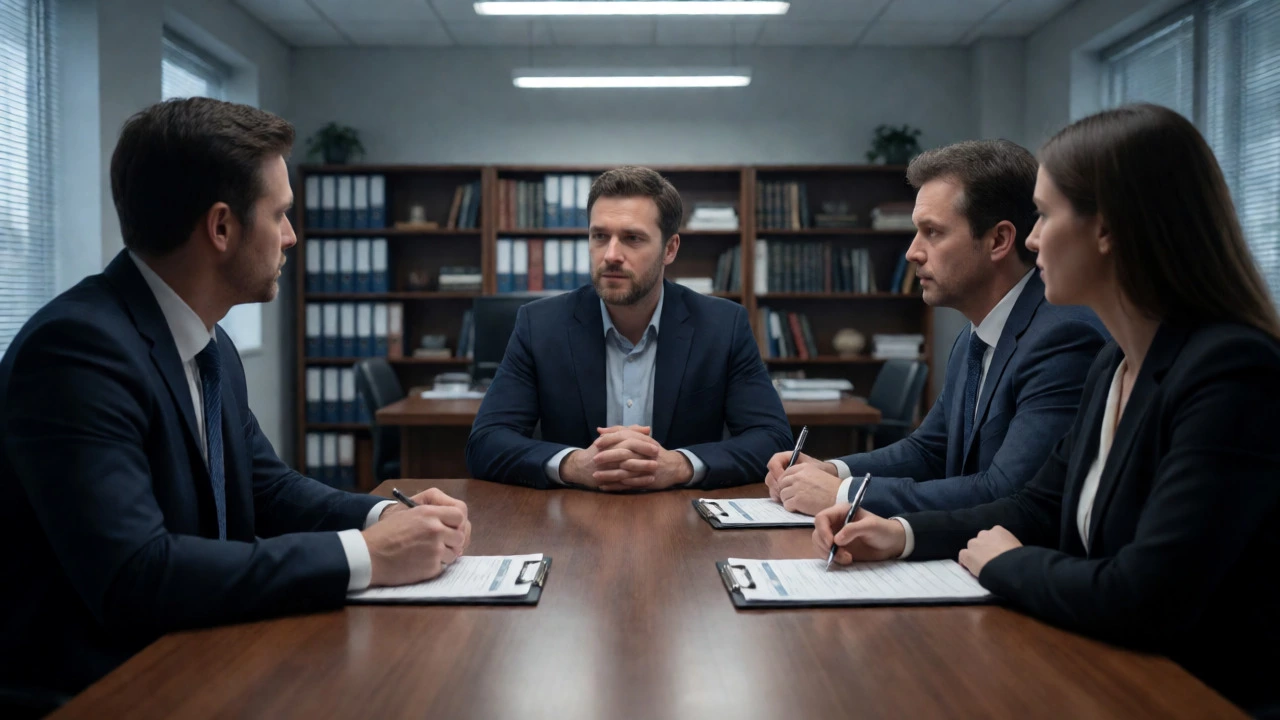
You’ve spent months studying policy documents, memorizing statutes, and polishing your resume. You walk into the federal agency office, sit across from a panel of three hiring managers, and they ask: "Tell me about a time you handled a difficult stakeholder." Your mind goes blank. You start rambling about general philosophy rather than specific actions. This is the most common way candidates lose government jobs-not because they lack skills, but because they fail to structure their answers.
The STAR method is a structured framework for answering behavioral interview questions by outlining the Situation, Task, Action, and Result of a past experience. It’s not just a trick; it’s a requirement for many public sector roles where competency-based hiring is standard. If you want to move from "maybe" to "hired," you need to master this format. Here is exactly how it works, why government panels love it, and how to avoid the traps that sink good candidates.
Why Government Panels Demand Structure
Private sector interviews can be conversational. Government interviews are evaluative. When you apply for a role with the Department of Justice or a local municipal agency, you are often competing against dozens of other qualified applicants. The hiring panel uses standardized scoring rubrics. They aren’t looking for charm; they are looking for evidence of specific competencies like leadership, integrity, or technical proficiency.
If you give a vague answer, the panelist has to guess if you actually did the work. If you use the STAR method, you hand them the evidence on a silver platter. This reduces ambiguity in scoring. In fact, the U.S. Office of Personnel Management (OPM) guidelines for federal hiring emphasize objective assessment of past performance as the best predictor of future behavior. By structuring your story, you make it easy for the evaluator to check the box next to "Demonstrated Problem-Solving Skills." Without it, you’re relying on luck.
Breaking Down the S-T-A-R Framework
Think of every behavioral question as a prompt for a mini-case study. The STAR method provides the four slides for that case study. Let’s look at what belongs in each section, keeping in mind that the balance matters more than the length.
| Component | Definition | Key Focus | Time Weight |
|---|---|---|---|
| Situation | The context or background of the event. | Set the scene briefly. Who, where, when? | 10% |
| Task | The challenge or goal you faced. | What was required of you specifically? | 15% |
| Action | The steps you took to address the task. | Use "I" statements. Detail your specific contribution. | 60% |
| Result | The outcome of your actions. | Quantify success. What changed because of you? | 15% |
Situation: Keep It Brief
Candidates often spend too much time here. You don’t need to explain the entire history of the department. Just give enough context so the panel understands the stakes. For example, instead of saying, "I worked in IT for five years," say, "In my previous role as an IT Specialist at the City of Austin, we were facing a server outage during tax season." That’s it. Move on.
Task: Define Your Role
This is where many people slip up by focusing on the team’s goal rather than their own. The panel needs to know what *you* were responsible for. Did you lead the project? Did you analyze the data? Did you mediate the conflict? Be clear about your specific responsibility within the broader situation.
Action: The Core of Your Answer
This is the meat of the response. Use active verbs. Avoid passive voice like "mistakes were made." Instead, say "I identified the error." Break down your process into logical steps. If the question asks about teamwork, describe how you coordinated with others. If it asks about problem-solving, describe your analytical approach. Remember, even if you worked in a group, the panel is hiring *you*, not your team. Highlight your individual contributions while acknowledging collaboration.
Result: Prove It Worked
Never leave a story hanging. What happened? Did you save money? Did you reduce wait times? Did you improve morale? Wherever possible, use numbers. "We improved efficiency" is weak. "We reduced processing time by 20%, saving 15 hours per week" is strong. If the result wasn’t perfect, explain what you learned. Honesty builds trust.

Common Pitfalls in Government Interviews
Even experienced professionals stumble here. The biggest mistake is the "We" trap. If you say, "We decided to implement a new software," the interviewer doesn’t know if you coded it, bought it, or just watched it happen. Switch to "I." Say, "I researched three vendors, presented a cost-benefit analysis to leadership, and I led the migration team."
Another frequent issue is running out of time. Government interviews are strictly timed. If you spend two minutes on the Situation, you’ll rush the Action and Result. Practice timing yourself. Aim for a two-minute answer maximum. If you go over, you risk losing the panel’s attention.
Finally, avoid hypotheticals. Questions like "What would you do if..." are tricky. While you can answer them logically, behavioral questions asking "Tell me about a time..." require real examples. Don’t invent stories. Panels can smell fabrication, especially when they probe for details later.
Adapting STAR for Civil Service Competencies
Government job announcements list specific competencies, such as "Written Communication," "Customer Service," or "Financial Management." Your STAR stories must map directly to these. Before your interview, review the job description. Pick one or two stories for each major competency.
For instance, if the job emphasizes "Integrity," prepare a story where you admitted a mistake or refused to cut corners. If it emphasizes "Conflict Resolution," have a story ready about de-escalating a disagreement with a coworker or citizen. Tailoring your examples shows you understand the values of the public sector.
Consider this scenario: You are asked, "Describe a time you had to interpret complex regulations for a non-expert."
- Situation: During my tenure at the EPA, a small business owner called confused about new emission standards.
- Task: I needed to explain the compliance requirements without using jargon to prevent him from missing his deadline.
- Action: I created a one-page visual guide, walked him through the key points over the phone, and followed up with an email summary highlighting only the mandatory steps.
- Result: He submitted his application on time and later referred two other businesses to our office for assistance.
Notice how the Action section focuses on communication tools and empathy, directly addressing the competency.

Preparing Your Story Bank
You cannot improvise high-quality STAR responses under pressure. You need a prepared bank of stories. Start by listing 5-7 significant professional experiences. These should cover different types of challenges: a failure, a success, a conflict, a tight deadline, and a leadership moment.
Write out the STAR breakdown for each. Then, practice speaking them aloud. Record yourself. Do you sound confident? Are you using "I" statements? Is the Result clear? Refine until each story flows naturally. Having these stories internalized means you won’t panic when a curveball question comes up. You’ll simply recognize which pre-prepared story fits the prompt.
Frequently Asked Questions
How long should a STAR answer be?
Aim for 90 seconds to two minutes. This allows enough detail for the Action and Result sections without boring the panel. If the interviewer wants more detail, they will ask follow-up questions.
Can I use personal examples instead of work ones?
Yes, especially for entry-level positions or internships. However, ensure the example demonstrates relevant transferable skills. A story about organizing a community fundraiser can effectively show project management and budgeting skills.
What if I don't have a perfect result?
Not every story ends in triumph. If the result was mixed, focus on what you learned and how you applied that lesson in subsequent projects. Government agencies value adaptability and continuous improvement over flawless perfection.
Is the STAR method used in all government interviews?
It is highly prevalent in federal and large municipal hiring processes that use competency-based assessments. Smaller local offices might be less formal, but using STAR always makes your answer clearer and more persuasive, regardless of the setting.
How do I handle a question that doesn't fit STAR?
Some questions are situational ("What would you do?") or technical ("Define administrative law"). For those, provide a direct, concise answer first. If appropriate, follow up with a brief example to illustrate your point, but don't force a full STAR structure if it feels unnatural.