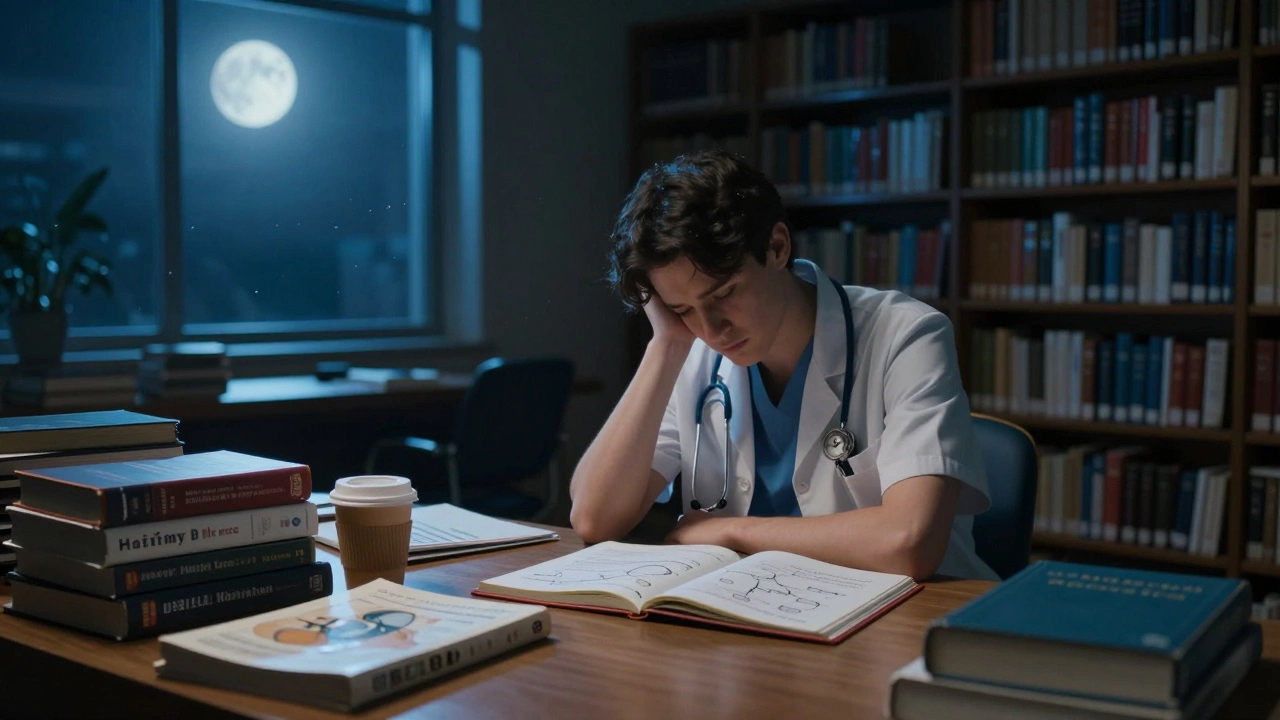
There is no single answer to what the toughest American exam is because "tough" means different things to different people. For a medical student, it’s about volume of knowledge. For a law student, it’s about logical reasoning under pressure. For an accountant, it’s about endurance and technical precision. However, if we look at pass rates, study hours, and career impact, three exams consistently rise to the top: the USMLE, the United States Medical Licensing Examination required for physicians, the Bar Exam, the licensing test for attorneys in the United States, and the CPA Exam, the Certified Public Accountant certification test.
Most people assume the SAT or ACT is the hardest because everyone takes them. But those are standardized tests designed to be accessible to millions. The real monsters are the professional licensing exams. These aren’t just about getting a good grade; they determine whether you can legally practice your profession. Fail one, and you don’t just retake a class-you delay your career by months or years.
The USMLE: The Memory Marathon
If you define "tough" as the sheer amount of information you must memorize, the USMLE Step 1 is arguably the hardest exam in America. This exam is the first hurdle for anyone wanting to become a doctor in the United States. It covers basic sciences like anatomy, physiology, biochemistry, and pharmacology. The depth is staggering. You aren’t just learning that the heart pumps blood; you’re learning the molecular mechanisms of every drug interaction and disease pathway.
The difficulty spikes because the stakes are incredibly high. While many schools now report Step 1 scores as "pass/fail" to reduce stress, the content hasn’t gotten easier. In fact, some argue it has gotten harder because students have less incentive to grind for a perfect score early on, yet they still need to know the material to pass Step 2 CK (Clinical Knowledge). Students typically spend 3 to 6 months studying full-time. That’s 400 to 800 hours of review. The format is multiple-choice, but the questions are complex clinical vignettes that require you to diagnose a patient based on subtle clues. One wrong assumption leads to the wrong answer.
- Study Time: 400-800 hours average.
- Format: Multiple-choice questions with clinical scenarios.
- Pass Rate: Around 90-95% for U.S. graduates, but significantly lower for international medical graduates.
- Main Challenge: Volume of content and retention over long periods.
The mental toll is significant. Burnout is common among med students during this period. It’s not just about intelligence; it’s about discipline. Can you sit in a library for 12 hours a day for four months without losing your mind?
The Bar Exam: The Logic Gauntlet
While doctors memorize facts, lawyers must apply logic. The Bar Exam varies by state, but New York and California are notoriously difficult. The National Conference of Bar Examiners administers the Uniform Bar Exam (UBE), which is used in many states. It consists of two parts: the Multistate Bar Examination (MBE) and the Essay/Performance Tests.
The MBE is a 200-question multiple-choice test covering constitutional law, contracts, torts, and more. It’s tricky because there are often two answers that seem correct, but only one is "most" correct based on legal precedent. Then comes the essay portion. You have to write detailed legal analyses under strict time limits. The Performance Tests simulate real-life tasks, like drafting a memo or reviewing a file. You might have 90 minutes to analyze a case file and write a brief. There are no sample answers provided beforehand. You’re graded on how well you spot issues and apply the law.
The pass rates here tell the story. In California, the first-time pass rate hovers around 50%. In New York, it’s slightly higher but still challenging. Why so low? Because the bar doesn’t test if you went to law school; it tests if you can think like a lawyer. Many bright students fail because they struggle with the specific writing style and speed required. It’s a marathon of mental agility.
| Exam | Primary Skill Tested | Avg Study Hours | First-Time Pass Rate (Approx.) |
|---|---|---|---|
| USMLE Step 1 | Memory & Clinical Reasoning | 400-800 | 90-95% (US Grads) |
| Bar Exam (NY/CA) | Legal Analysis & Writing | 300-600 | 50-70% |
| CPA Exam | Technical Accounting & Endurance | 300-400 | 40-50% (Per Section) |

The CPA Exam: The Endurance Test
Don’t sleep on the accounting world. The CPA Exam is unique because it’s not one sitting. It’s four separate sections: Auditing and Attestation (AUD), Business Environment and Concepts (BEC), Financial Accounting and Reporting (FAR), and Regulation (REG). You must pass all four within an 18-month window. If you fail one, you keep trying until you pass, but the clock keeps ticking.
The FAR section is widely considered the hardest part due to its complexity and volume. It covers everything from government accounting to nonprofit financial statements. The AICPA (American Institute of Certified Public Accountants) sets the passing standard, and the cut score is adjusted each time to maintain consistency. Historically, the overall pass rate for all candidates across all sections hovers around 50%. However, when you break it down by section, some drop below 40%. This makes the cumulative probability of passing all four sections quite low for first-timers.
The challenge here is endurance. You can’t cram for the CPA. Most candidates work full-time while studying. They take one section at a time, meaning they spend 6 to 12 months preparing for the entire exam. It’s a test of consistency. Can you show up, study for 100 hours, take a 4-hour exam, and do it four times?

Other Contenders for the Title
While the big three dominate the conversation, other exams deserve mention. The CFA Level III (Chartered Financial Analyst) is brutal for finance professionals. It requires deep quantitative analysis and portfolio management skills. The pass rates are often below 40%. Then there’s the FE Exam (Fundamentals of Engineering). It’s tough, but the pass rates are generally higher than the Bar or CPA. And let’s not forget the MCAT. While it’s an entrance exam rather than a licensing exam, its competition is fierce. Getting into med school is harder than passing the MCAT itself, but the prep is intense.
Why does this matter? Because understanding the difficulty helps you prepare. If you’re aiming for the Bar, focus on writing practice. If it’s the USMLE, build a strong memory system. If it’s the CPA, plan your schedule carefully.
How to Prepare for the Hardest Exams
No matter which exam you choose, success comes down to strategy. First, start early. Cramming doesn’t work for these tests. Second, use active recall. Don’t just read textbooks; quiz yourself. Third, simulate the testing environment. Take practice exams under timed conditions. Finally, manage your health. Sleep, diet, and exercise affect your cognitive performance more than you think.
Remember, these exams are gatekeepers. They’re designed to filter out those who aren’t ready. But with the right approach, they’re conquerable. Which one will you tackle?
Is the USMLE harder than the Bar Exam?
It depends on your strengths. The USMLE requires massive memorization of scientific facts, while the Bar Exam tests logical reasoning and legal writing. Statistically, the Bar Exam has lower pass rates in states like California, making it statistically harder to pass. However, the volume of content for the USMLE is greater.
What is the lowest pass rate for any US professional exam?
The California Bar Exam often has the lowest pass rates, sometimes dipping below 50% for first-time takers. The CPA Exam also has low per-section pass rates, often around 40-50%, depending on the section.
Can I self-study for the CPA Exam?
Yes, many people self-study for the CPA using review courses like Becker, Wiley, or Roger. However, it requires extreme discipline. Most successful candidates dedicate 100-150 hours per section.
Does the USMLE Step 1 still have a numerical score?
No, since January 2022, USMLE Step 1 is reported as Pass/Fail. However, the content difficulty remains high, and you still need a solid understanding to pass.
Which exam requires the most study hours?
The USMLE Step 1 and Step 2 CK typically require the most study hours, often totaling 600-1000 hours combined. The Bar Exam usually requires 300-600 hours, and the CPA Exam requires 300-400 hours total across all sections.