Daily English Speaking Challenge Tracker
Your 7-Day Starter Plan
Follow this simple plan to build confidence in speaking English without paying for lessons. Choose one activity per day from the list below.
Select Your Daily Activities
Your Progress
Want to speak English confidently but don’t want to pay for classes? You’re not alone. Millions of people around the world are learning to speak English for free-and succeeding. The truth is, you don’t need expensive tutors or fancy apps to get good at speaking. You just need the right tools, consistent practice, and a clear plan. This isn’t about theory. It’s about what actually works when you’re starting from scratch or stuck at an intermediate level.
YouTube is your secret language coach
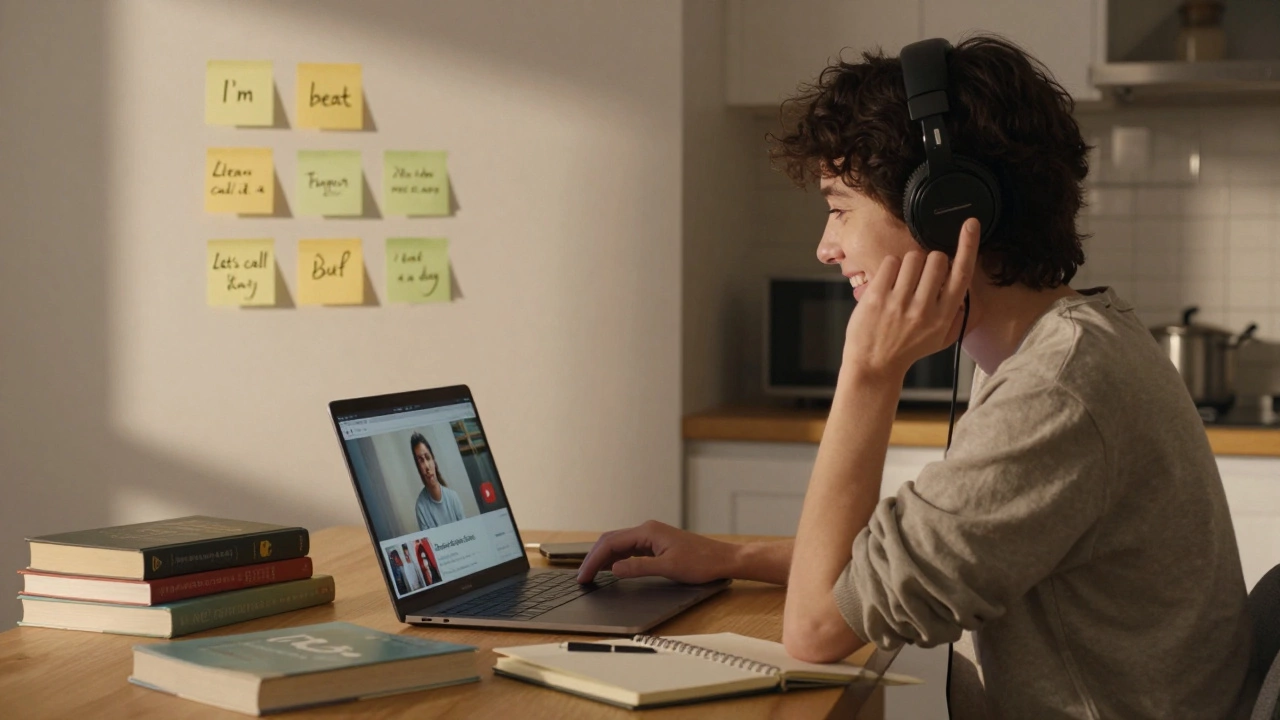
YouTube isn’t just for cat videos and music. It’s one of the most powerful free tools for learning spoken English. Channels like English Addict with Mr Steve is a YouTube channel that uses real-life conversations, humor, and clear explanations to help learners improve speaking and listening skills and Learn English with Emma offers daily speaking lessons focused on natural phrases, pronunciation, and everyday vocabulary break down how native speakers really talk. No textbooks. No grammar drills. Just real conversations you can mimic.
Here’s how to use it: Pick one video a day. Watch it once to understand. Watch it again and pause every few seconds to repeat out loud. Don’t just listen-copy the rhythm, the pauses, the stress. Do this for 15 minutes a day. After a month, you’ll notice your own voice sounds different. That’s because your mouth and brain are learning new muscle patterns.
Language exchange apps connect you to real people
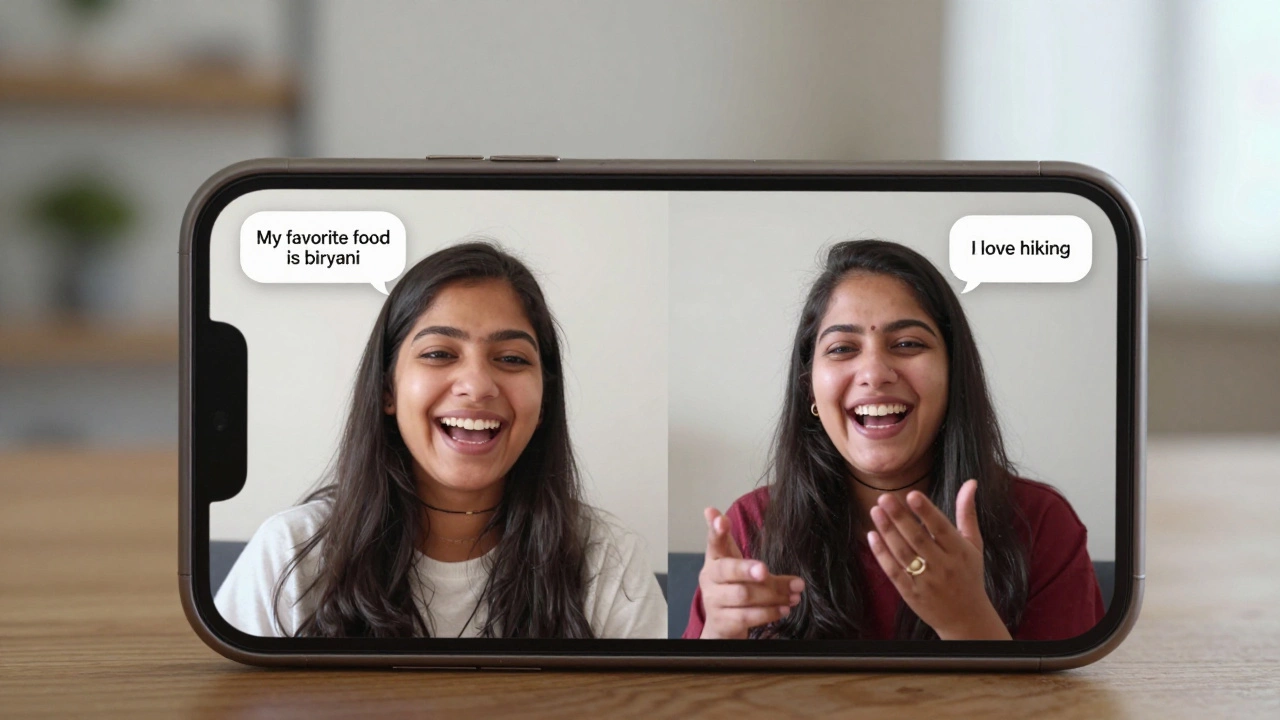
Apps like Tandem is a language exchange platform that pairs learners with native speakers who want to learn your language in return and HelloTalk allows users to chat with native English speakers through text, voice messages, and video calls let you trade language practice. You help someone learn your language, and they help you speak English. No money changes hands. Just time and effort.
Start by sending a short voice message instead of typing. Say: "Hi, I’m learning English. Can we talk for 10 minutes? I’ll help you with [your language] too." Most people say yes. The first few calls feel awkward. That’s normal. By the fifth one, you’ll be laughing together. That’s when real learning kicks in-when you’re not afraid to make mistakes.
Public libraries offer free English conversation groups
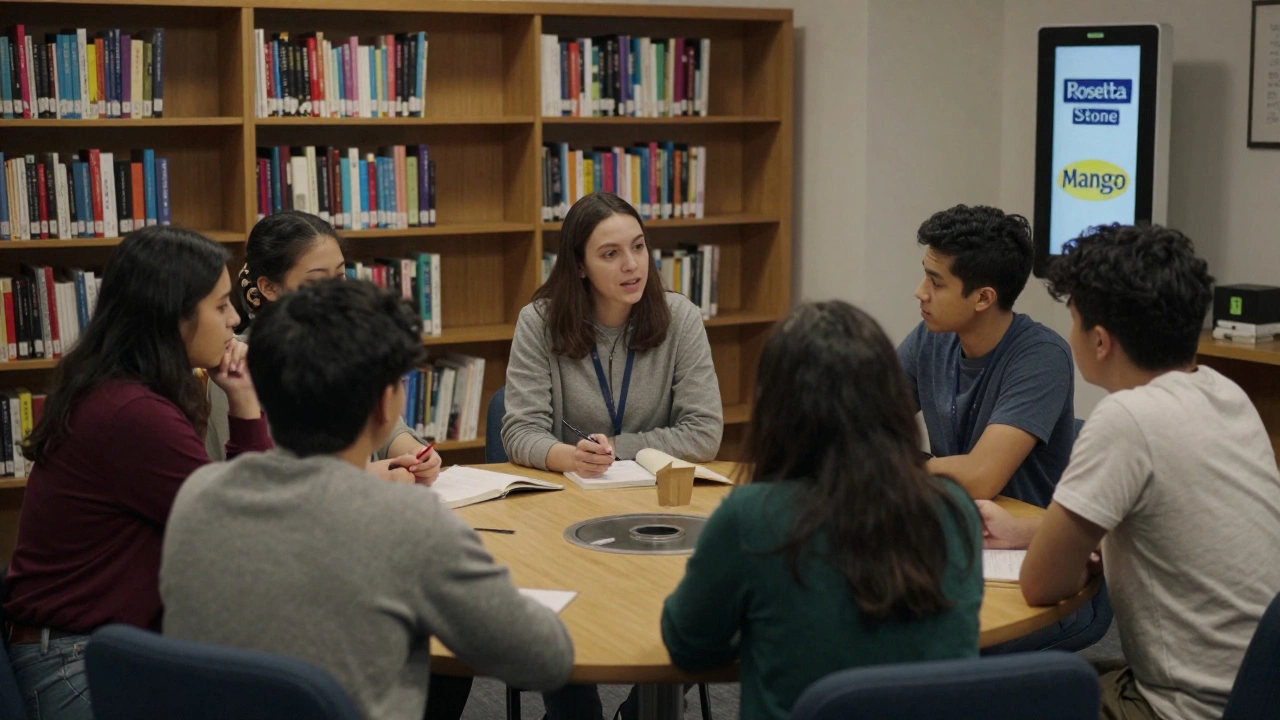
Many public libraries around the world run free English conversation circles. In cities like Wellington, Toronto, or Berlin, you can walk into a library on a Tuesday evening and join a group of learners and volunteers. No registration. No fees. Just a table, chairs, and people willing to talk.
These groups are quiet, low-pressure, and focused on real talk-what you did this week, your favorite movie, why you’re learning English. You’ll hear different accents, learn phrases you won’t find in books, and build confidence just by showing up. Libraries also have free access to Rosetta Stone a language learning software that uses immersive techniques to teach vocabulary and speaking skills and Mango Languages a library-based language learning platform offering interactive courses in speaking and listening through their digital services. All you need is a library card.
Podcasts that train your ear for real English
Listening is the foundation of speaking. You can’t say what you’ve never heard clearly. The English We Speak is a BBC podcast that teaches short, practical English phrases used in everyday conversations is perfect for this. Each episode is just three minutes long and teaches one useful phrase-like "I’m beat" or "Let’s call it a day."
Another great one is All Ears English a podcast focused on natural American English conversation, slang, and pronunciation for intermediate learners. Listen while walking, cooking, or commuting. Don’t try to understand every word. Just notice how sentences flow. Then, replay your favorite parts and speak along. Your brain starts picking up patterns without you even trying.
Free online speaking challenges
There are free 30-day speaking challenges hosted by educators and language communities. One popular one is the Speak English Every Day Challenge a free online program that encourages learners to speak English aloud for 10 minutes every day for 30 days. Each day, you get a simple prompt: "Describe your morning routine," "Tell a joke in English," "Talk about your favorite food."
You record yourself using your phone. Then you listen back. At first, you’ll hate the sound of your voice. That’s okay. By day 10, you’ll notice you’re speaking faster. By day 20, you’ll catch yourself thinking in English. By day 30, you’ll realize you didn’t need a class-you just needed to speak.
Use AI tools to practice without judgment
Tools like Elsa Speak an AI-powered app that gives instant feedback on pronunciation and speaking fluency and ChatGPT a large language model that can simulate conversation and correct spoken English in real time let you practice speaking anytime. Set up a daily 10-minute session: Ask ChatGPT, "Let’s talk about your favorite movie." Then speak for a full minute. Ask it to correct your grammar, pronunciation, or word choice. It won’t laugh at you. It won’t judge. It just helps.
Use Elsa Speak to drill tricky sounds like "th," "v," or "r." It shows you a visual waveform of your speech and compares it to a native speaker’s. You’ll see exactly where you’re off. Fix that one sound for a week, and suddenly people start saying, "Your English is getting better."
Why most people fail-and how to avoid it
The biggest mistake? Waiting to be "ready." People think they need perfect grammar, a big vocabulary, or a clear accent before speaking. That’s a trap. Real speaking isn’t about perfection. It’s about connection. You don’t need to sound like a news anchor to be understood.
Here’s the rule: Speak before you feel ready. Say something even if it’s messy. Say it again tomorrow. And again. Progress isn’t linear. Some days you’ll feel stuck. Other days, you’ll surprise yourself. That’s normal. The key is consistency-not intensity.
What to do next: Your 7-day starter plan
- Day 1: Subscribe to one YouTube channel. Watch one video. Repeat it out loud.
- Day 2: Download Tandem. Send one voice message to a language partner.
- Day 3: Listen to one episode of "The English We Speak." Repeat the phrase three times.
- Day 4: Use ChatGPT. Have a 5-minute spoken conversation about your day.
- Day 5: Check if your local library has a conversation group. Go.
- Day 6: Record yourself answering: "What do you want to do this year?" Listen back.
- Day 7: Do it all again. No new tools. Just repeat.
After seven days, you won’t be fluent. But you’ll be speaking. And that’s the first step everyone skips.
Can I really learn to speak English for free without a tutor?
Yes, absolutely. Thousands of people have learned to speak English fluently without paying for lessons. The key isn’t money-it’s consistent practice. Using free resources like YouTube, language exchange apps, podcasts, and AI tools, you can build speaking skills through daily repetition. What matters most is showing up, speaking out loud, and not waiting to be perfect.
How long does it take to get better at speaking English for free?
You’ll notice small improvements in as little as two weeks if you practice daily. Real confidence usually comes after 3-6 months of consistent effort. Don’t measure progress by grammar tests. Measure it by how often you speak without hesitation. If you can talk about your weekend, your favorite food, or your plans for tomorrow-without stopping to think-that’s progress.
Is it better to learn with apps or real people?
Both matter. Apps help you build pronunciation and vocabulary. Real people help you learn how to respond naturally. Use apps like Elsa Speak or ChatGPT to practice alone. Then, use Tandem or HelloTalk to apply what you’ve learned with real conversations. The combination gives you both accuracy and fluency.
Do I need to understand grammar to speak English well?
Not to speak well. You don’t need to know the difference between past perfect and present continuous to order coffee or ask for directions. Focus on phrases you hear in real life-"I’ve been meaning to...", "Let’s grab coffee soon." These are more useful than grammar rules. Learn grammar only if it helps you fix mistakes you keep making. Otherwise, prioritize speaking over studying.
What if I’m too shy to speak out loud?
Start by talking to yourself. Describe what you’re doing as you cook, walk, or brush your teeth. Record yourself. Listen. Then try talking to a friend, a language partner, or even ChatGPT. Most people feel awkward at first. That doesn’t mean you’re bad-it means you’re human. The more you speak, the less scary it gets. Your voice doesn’t have to be perfect. It just has to be heard.