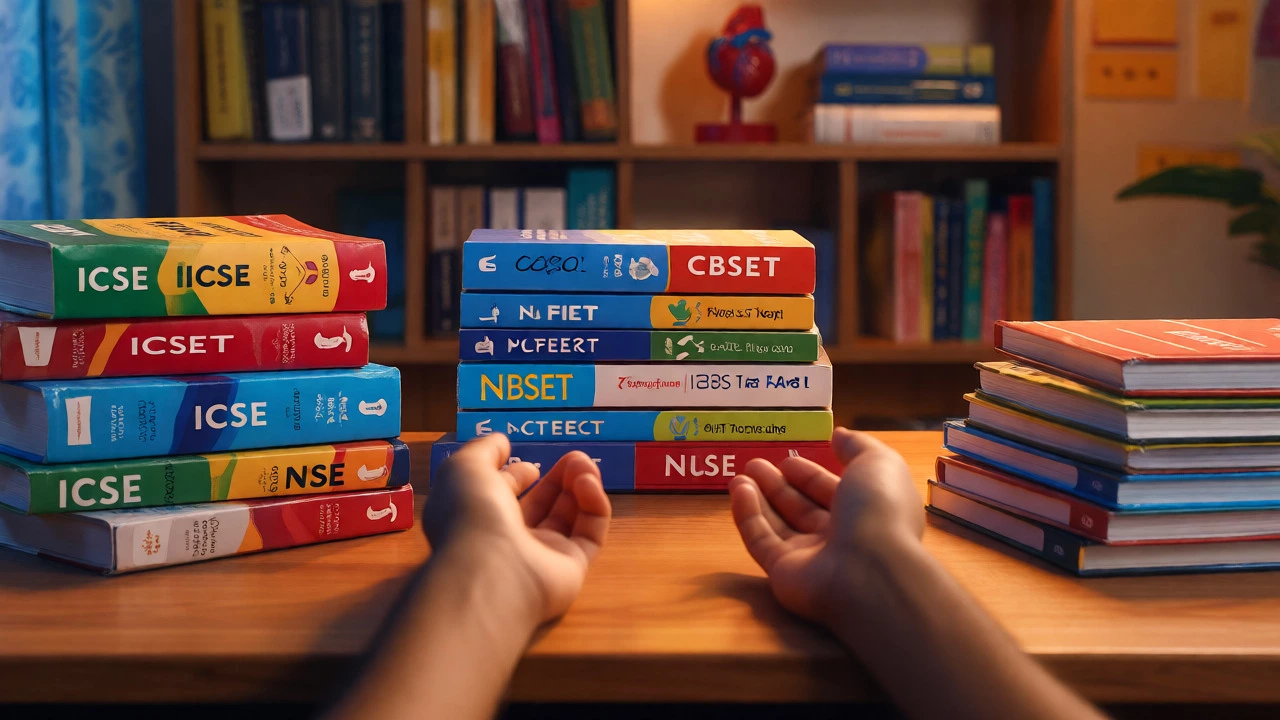
Board Value Finder
Answer three simple questions to find the board that offers the highest value for your specific situation.
1. What is your primary academic goal?
Recommended Board:
Why this fits you:
Things to consider:
You might have heard a parent at a school pickup say, "My child is doing ICSE because it's tougher," or a neighbor claiming, "State board students are better at practicals." It’s confusing, right? You want to know which path actually gives your child the best shot at top colleges and jobs. The truth is, there isn't one single board with the highest value that works for everyone. But there is a clear winner depending on where you plan to go next.
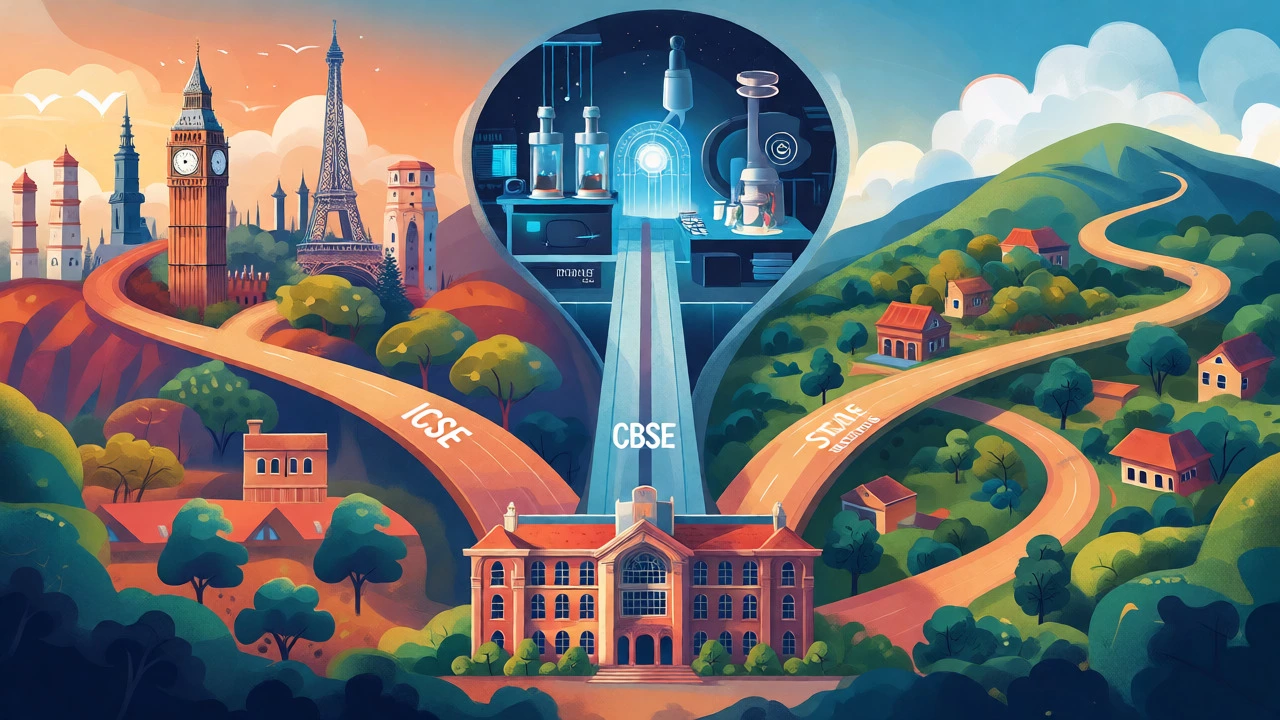
If you are aiming for national competitive exams like JEE (engineering) or NEET (medicine), the Central Board of Secondary Education (CBSE is a national-level board controlled by the Government of India) is generally the most strategic choice. If you are targeting international universities or careers in humanities and law, the Council for the Indian School Certificate Examinations (ICSE is a private, non-governmental board known for its comprehensive curriculum) often holds more weight. And if you are staying local or looking at specific state government jobs, your State Board might be exactly what you need.
The Myth of the "Best" Board
Let’s kill the biggest myth first: no board guarantees success. A student who scores 95% in a rigid State Board can struggle in college just as much as an ICSE student with 80%. The "value" of a board is measured by three things: alignment with entrance exams, global recognition, and skill development. When people ask which board has the highest value, they are usually asking about return on investment for their time and money.
Think of it like choosing a car. A Ferrari is fast, but it’s useless if you live in a village with unpaved roads. Similarly, the ICSE curriculum is rich and detailed, but if your goal is cracking the highly specific pattern of the Joint Entrance Examination (JEE), the extra effort spent on ICSE’s deep English literature might not give you the same ROI as CBSE’s focused science approach.
Why CBSE Dominates Competitive Exams
For decades, CBSE has aligned its syllabus directly with major national entrance tests. This is why over 27,000 schools in India follow this board. The National Testing Agency (NTA), which conducts JEE Main and NEET, bases its questions strictly on NCERT textbooks. Since CBSE uses NCERT books exclusively, students don’t have to hunt for extra resources. They study what is taught, and that is exactly what appears in the exam.
Consider Rohan, a student from Pune. He chose CBSE because his dream was IIT Bombay. His friends in ICSE were busy memorizing complex grammar rules and writing lengthy essays for their internal assessments. Rohan spent that time solving previous year JEE papers. When the results came out, Rohan cracked the exam, while his ICSE friend had to take an extra year to adjust to the MCQ-based format of the entrance test. That is the practical value of CBSE for STEM-focused students.
| Feature | CBSE | ICSE | State Boards |
|---|---|---|---|
| Primary Focus | National Entrance Exams (JEE/NEET) | Holistic Development & English Proficiency | Regional Language & Local Context |
| Textbooks | NCERT (Standardized) | Publishers like Selina, Concise | State Government Prescribed |
| Global Recognition | High (Accepted worldwide) | Very High (Preferred abroad) | Moderate (Varies by country) |
| Exam Pattern | Structured, Predictable | Detailed, Subjective | Variable, Often Rote-Learning Heavy |

ICSE: The Choice for Global Careers and Humanities
If you look at admissions data from top UK and US universities, ICSE students often have an edge in applications requiring strong essay writing and critical analysis. The ICSE curriculum emphasizes depth over breadth, particularly in English and sciences. It forces students to understand concepts rather than just memorize formulas.
Take Priya, who wanted to study Law at Oxford. Her ICSE background meant she had already spent years analyzing literature and constructing arguments in her English classes. When she applied, her personal statement was sharper than her CBSE counterparts, who had been drilled primarily in multiple-choice logic. For careers in journalism, law, diplomacy, or liberal arts, ICSE builds a communication muscle that other boards sometimes neglect.
However, this comes at a cost. The workload is heavy. Internal assessments account for 20% of the final grade, meaning you cannot just cram two months before the board exams. You have to perform consistently throughout the year. If your child struggles with time management, ICSE can feel overwhelming.
State Boards: Underrated Powerhouses
People often dismiss State Boards as "lesser" boards. That is unfair. In states like Tamil Nadu, Kerala, and Maharashtra, the education quality is exceptionally high. The Kerala State Education Board, for example, has produced some of the highest literacy rates and scientific temperaments in India.
The real value of State Boards lies in regional advantage. If you plan to work in a specific state, knowing the local language and context through the State Board curriculum helps. Furthermore, many state government recruitment exams are based entirely on the State Board syllabus. A student studying in the Karnataka State Board will find it easier to crack KPSC (Karnataka Public Service Commission) exams than a CBSE student who hasn’t studied Kannada history or geography in depth.
Also, let’s talk about pressure. State Boards often have fewer internal assessments and less competition within the classroom compared to elite CBSE/ICSE schools. For students who thrive in a less pressured environment, State Boards provide a healthier mental space, leading to better long-term retention of knowledge.
International Baccalaureate (IB): The Premium Option
We can’t ignore the International Baccalaureate is a globally recognized educational foundation offering four programs. It is expensive, yes. But if money is not a constraint, IB offers perhaps the highest "soft value" in terms of critical thinking and research skills. IB students learn how to question, not just answer. Top universities in Canada, Australia, and Europe view IB credits favorably, sometimes granting direct entry into second-year courses.
But here is the catch: IB does not align with JEE or NEET. An IB student wanting to do engineering in India must prepare separately for entrance exams, often taking a gap year or joining coaching classes alongside their diploma. So, while IB has high global value, its domestic utility for STEM fields is lower unless supplemented heavily.
How to Choose Based on Your Goals
Stop looking for the "best" board and start looking for the "right fit." Here is a simple decision tree:
- Goal: Engineering/Medicine in India? Go with CBSE. The syllabus match saves you hundreds of hours of unnecessary study.
- Goal: Abroad for Liberal Arts/Law/Business? Go with ICSE or IB. Your writing and analytical skills will stand out.
- Goal: Stay Local/Government Jobs? Stick to the State Board. It keeps you connected to regional opportunities and reduces financial burden.
- Goal: Undecided/Flexible? CBSE is the safest middle ground. It is accepted everywhere, though not preferred specifically anywhere.
Remember, the board name on your certificate matters less after five years. What matters is whether you developed the discipline to study, the curiosity to ask questions, and the resilience to handle failure. A motivated student from any board will outperform a passive student from the "prestigious" one.
Is ICSE harder than CBSE?
Generally, yes. ICSE is considered more comprehensive and demanding, especially in English and Science subjects. It requires consistent study throughout the year due to internal assessments, whereas CBSE allows for more last-minute preparation strategies.
Do foreign universities prefer ICSE over CBSE?
Foreign universities often view ICSE and IB slightly more favorably for humanities and social sciences due to the emphasis on essay writing and critical analysis. However, for STEM courses, CBSE is equally respected, provided the grades are high.
Can I switch from State Board to CBSE in Class 11?
Yes, you can switch. Many students move from State Boards to CBSE in Class 11 to better prepare for national entrance exams. However, you may face initial challenges adapting to the different teaching style and NCERT textbook structure.
Which board is best for NDA preparation?
CBSE is widely recommended for National Defence Academy (NDA) aspirants. The mathematics and general ability sections of the NDA exam closely mirror the CBSE Class 11 and 12 syllabus, making preparation more streamlined.
Are State Board marks valid for all colleges in India?
Yes, State Board marks are fully valid for admission to all central and state universities in India. The only potential hurdle is if a specific university has a reservation quota for local state board students, which might disadvantage out-of-state board students, but academically, the validity is equal.