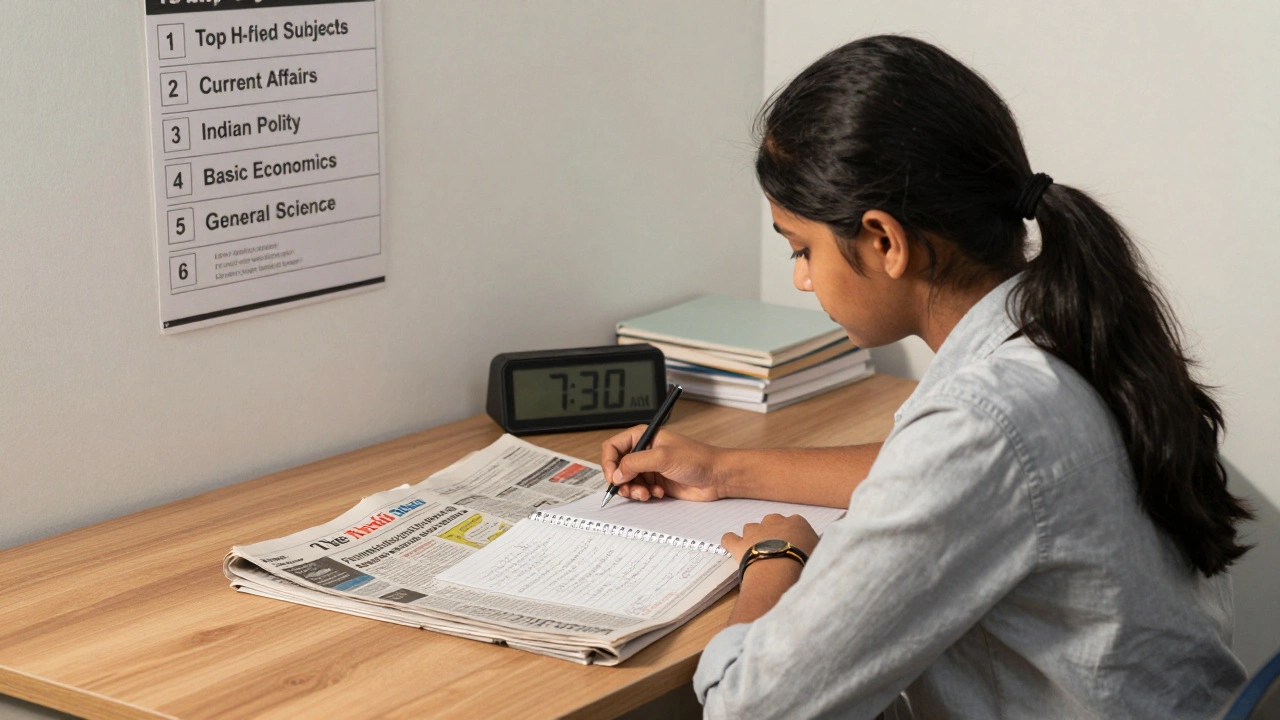
Subject Weightage Calculator
Select your target exam to see which subjects have the highest weightage and how to allocate your study time effectively.
Study Time Recommendation
Based on current exam patterns:
Recommended Breakdown
There’s no single "best" subject for competitive exams - but there is a pattern. If you’re preparing for exams like UPSC, SSC, banking, or state-level services, your success doesn’t come from picking the hardest topic. It comes from picking the one that gives you the most leverage. The truth? Most candidates waste months chasing flashy subjects while ignoring the ones that actually move the needle.
What Most People Get Wrong
A lot of students think they need to master advanced math or deep history to crack competitive exams. They spend weeks on obscure constitutional articles or complex calculus problems. But here’s what the toppers know: the exam doesn’t test how much you know. It tests how smartly you use what you know.Take UPSC Prelims. In 2025, 68% of the questions came from just five areas: current affairs, Indian polity, basic economics, environment, and general science. Not one question required you to memorize the entire Mughal dynasty timeline. Not one asked for the quadratic formula. The exam is designed to filter out noise - not reward cramming.
Same goes for SSC CGL. In 2024, over 70% of the General Awareness section was pulled from the last 12 months of national news, government schemes, and budget highlights. The rest? Basic geography and static facts you can learn in two weeks. The math and reasoning sections? They’re predictable. Practice 50 types of questions. You’ll see 90% of what shows up.
The Top 4 Subjects That Actually Matter
- Current Affairs (Daily News) - This is the biggest scoring area across all major exams. UPSC, SSC, banking, state PSCs - they all want you to know what’s happening right now. Not what happened in 2010. Not what’s in a 500-page book. The last 12 months of national and international events, government announcements, awards, and policy changes. A student who reads one reliable daily digest (like The Hindu or PIB summaries) for 30 minutes a day outperforms someone who reads three thick books.
- Indian Polity and Governance - This isn’t about memorizing articles. It’s about understanding how power flows: Who appoints the Chief Justice? What happens if the President dies? How does a bill become law? The Constitution is the backbone of UPSC and many state exams. If you can explain the difference between a Money Bill and a Finance Bill, you’re already ahead of 80% of candidates. NCERT Class 11 and 12 textbooks cover 90% of what you need.
- Basic Economics (Not MBA-Level) - You don’t need to know GDP formulas or supply curves. You need to know: What is fiscal deficit? What does the RBI do when inflation rises? What’s the difference between direct and indirect taxes? The Union Budget is a goldmine. Every year, 10-15 questions come directly from budget highlights. If you understand the last three budgets, you’ve got this section locked.
- General Science (Class 8-10 Level) - Physics, chemistry, biology - but only the basics. Why does a pressure cooker cook faster? What’s the role of insulin? What causes acid rain? These questions show up every year. No need for organic chemistry mechanisms. Just stick to NCERT Class 8-10. If you can answer 8 out of 10 science questions from past papers, you’re in the top tier.
What to Skip (Seriously)
- Advanced Mathematics - Unless you’re targeting SSC CGL Tier 2 or banking PO, you don’t need integration, matrices, or trigonometry. Focus on percentage, ratio, average, and data interpretation. That’s it.
- Deep History - You don’t need to know the exact year of the Third Battle of Panipat. You do need to know how the Indian National Congress evolved, or why the Government of India Act 1935 matters. Context > dates.
- Foreign Literature or Philosophy - No exam asks about Kant’s categorical imperative. Don’t waste time on that.
- Memorizing All 1200 Articles of the Constitution - Focus on Parts III (Fundamental Rights), IV (Directive Principles), and VI (Union and States). That’s 80% of the questions.
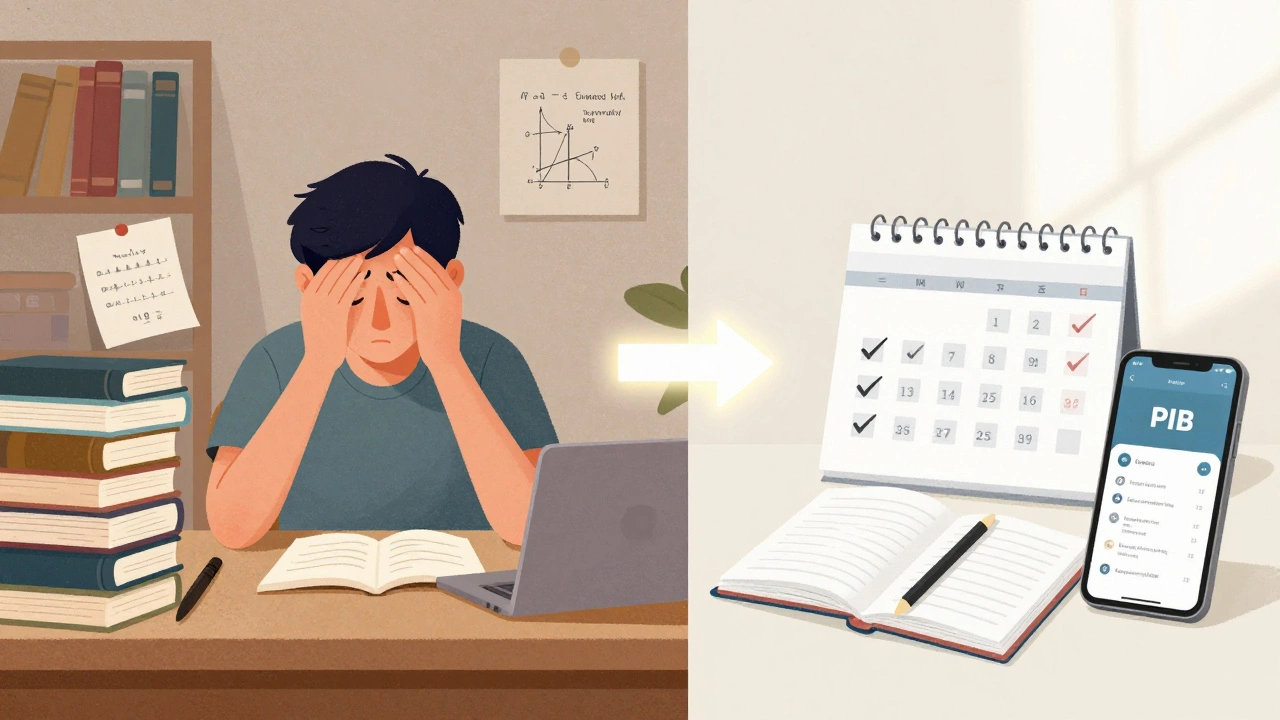
How to Build Your Subject Strategy
Start with your target exam. Don’t guess. Look at the last three years’ papers. Count how many questions came from each subject. Then build your plan around that.
For UPSC aspirants: Spend 60% of your time on Current Affairs + Polity. 20% on Economics and Environment. 15% on Science. 5% on other topics. That’s the sweet spot.
For SSC CGL: 50% on Quantitative Aptitude and Reasoning (practice daily), 30% on English, 20% on General Awareness. The GA section is your differentiator. Most people lose here because they treat it like an afterthought.
For Banking Exams (IBPS PO, SBI PO): 40% on Quantitative Aptitude and Reasoning, 30% on English, 30% on Financial Awareness (banking terms, RBI policies, financial schemes). No one fails because they’re bad at math. They fail because they don’t know what NEFT is.
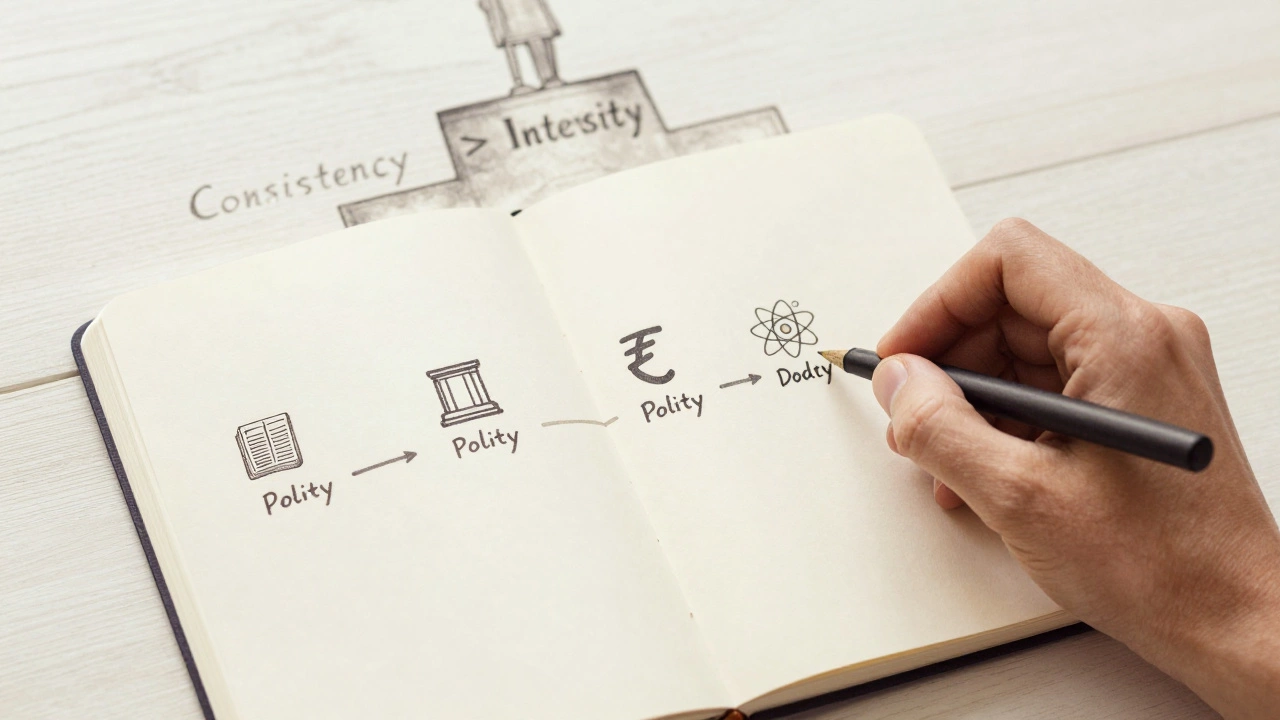
The Real Secret: Consistency Over Intensity
It’s not about how many hours you study. It’s about how consistently you show up. A student who reads one newspaper summary every day for six months will beat someone who crams 10 hours on weekends for two months.
Set a daily habit: 30 minutes of current affairs. 20 minutes of one static subject (like polity). 15 minutes of practice questions. That’s 65 minutes. Do it every day. No breaks. No "I’ll start Monday." In three months, you’ll know more than 90% of the competition.
And here’s the kicker: your weakest subject isn’t your enemy. It’s your opportunity. If you’re terrible at economics, make it your daily 15-minute topic. You’ll surprise yourself.
Common Mistakes That Cost Exams
- Waiting for "perfect" study material - There’s no perfect book. Use one reliable source and stick to it.
- Ignoring mock tests - You can’t memorize your way to a top rank. Practice under timed conditions. Every week.
- Comparing yourself to others - Your journey is yours. Someone studying 12 hours a day might be burning out. You’re building stamina.
- Not reviewing mistakes - If you keep missing the same type of question, you’re not learning. You’re just repeating.
Final Answer: What’s the Best Subject?
The best subject is the one you’ll stick with. Not the hardest. Not the flashiest. Not the one everyone else is talking about.
For most people, that’s Current Affairs - because it’s high-yield, constantly updated, and directly tied to the exam’s logic. But if you’re strong in math, lean into Quantitative Aptitude. If you love reading, make Polity your anchor.
The real winner isn’t the one who knows the most. It’s the one who shows up, every day, and turns small habits into unstoppable momentum.
Which subject has the highest weightage in UPSC Prelims?
Current Affairs and Indian Polity together make up nearly 50% of UPSC Prelims questions. Current Affairs (last 12 months) accounts for about 25-30% of the paper, while Polity (Constitution, governance, rights) adds another 20%. These two areas are more important than history, geography, or science combined.
Is English important for competitive exams?
Yes - but not like you think. For UPSC Mains, you need to write clear, structured essays in English. For SSC and banking exams, English is tested through comprehension, grammar, and vocabulary. You don’t need to be a literature expert. You need to understand sentence structure, spot errors quickly, and read passages fast. Practice 2-3 reading passages daily. That’s enough.
Can I crack competitive exams without coaching?
Absolutely. Over 70% of UPSC toppers in 2024 were self-studied. Coaching helps with structure, but not with knowledge. The real edge comes from disciplined daily habits: reading newspapers, solving previous papers, and analyzing mistakes. Free resources like the official UPSC website, PIB, and YouTube channels like Drishti IAS have all the material you need.
Should I focus on optional subjects early?
No - not for Prelims. Optional subjects matter only for UPSC Mains, and even then, only after you’ve cleared Prelims. Focus on the common papers first: General Studies Paper I and II. Once you’re confident about clearing Prelims, then pick your optional. Choosing an optional just because it’s "popular" (like History or Sociology) without interest leads to burnout.
How much time should I spend on current affairs daily?
30 minutes is enough. Use one reliable source - like The Hindu’s daily news summary or PIB releases. Don’t jump between 5 apps or YouTube channels. Pick one, stick to it, and make notes. Review your notes every Sunday. That’s better than spending 2 hours a day with no system.