
Coding Learning Time Calculator
Total Hours Invested
Estimated Projects Built
Project Examples
Can you really learn to code without taking a class, paying for a bootcamp, or even enrolling in a university? The answer isn’t just yes-it’s yes, and thousands of people are doing it right now.
Back in 2020, a 32-year-old barista in Wellington named Mara built her first mobile app in six months. No degree. No bootcamp. Just a laptop, free tutorials, and a habit of solving one small problem every day. Today, she works as a frontend developer for a local startup. She didn’t get hired because she had a certificate. She got hired because she had a GitHub profile with five working projects and a blog explaining how she built them.
You don’t need permission to learn to code. You just need to start.
What Does It Actually Mean to Teach Yourself to Code?
Teaching yourself to code isn’t about reading a book cover to cover or watching every video on YouTube. It’s about building things-small, messy, broken things-and then fixing them. It’s about asking, "Why isn’t this working?" and then digging until you find the answer.
Most people who fail at self-teaching do so because they treat coding like a subject you study, not a skill you practice. You don’t learn to ride a bike by reading about balance. You fall off, get up, and try again. Coding works the same way.
When you teach yourself, you’re not just learning syntax. You’re learning how to think like a programmer: how to break problems into steps, how to search for solutions when you’re stuck, and how to keep going even when you don’t understand what’s happening.
The Real Barriers (And How to Get Past Them)
People say they can’t teach themselves because they’re "not technical enough," "too old," or "don’t have the time." Those aren’t real barriers-they’re excuses dressed up as reasons.
- "I don’t know where to start." Start with HTML and CSS. Build a personal homepage. Add a button that changes color when you click it. That’s your first program.
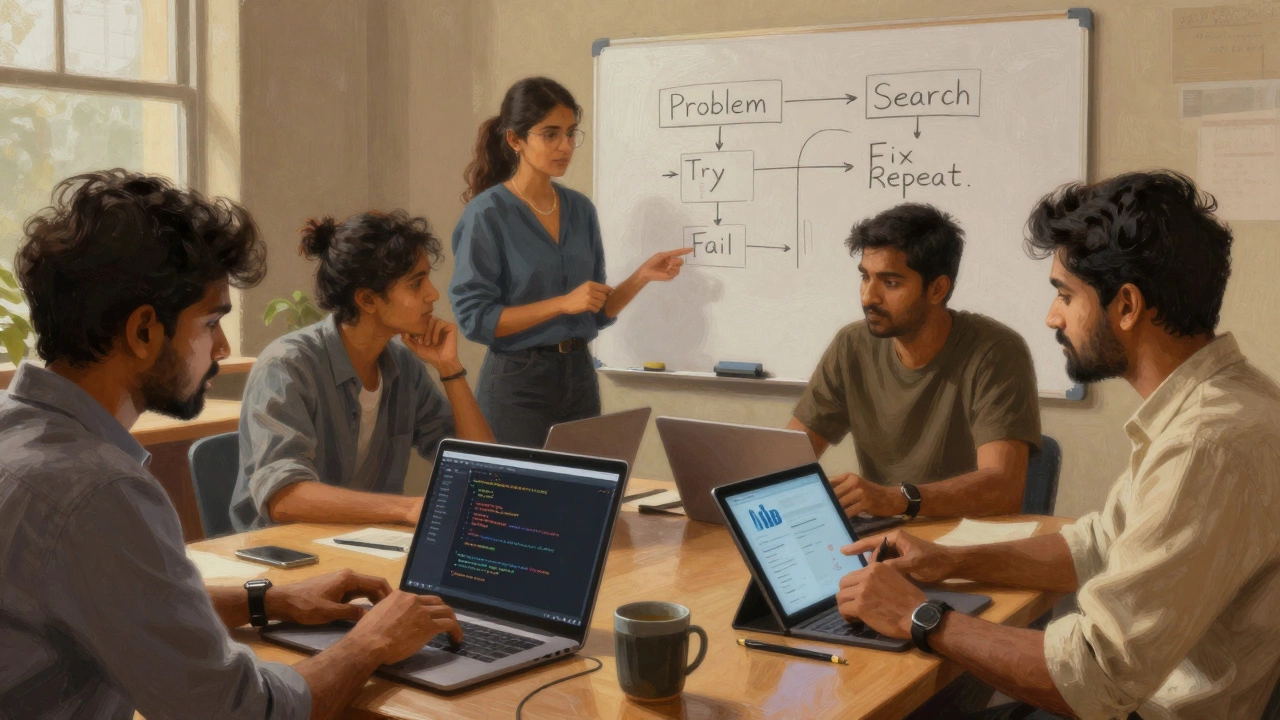
- "I get stuck and give up." That’s normal. Every developer gets stuck. The difference between those who quit and those who don’t is how they handle it. Keep a notebook. Write down the error message. Search it word-for-word on Google. Stack Overflow has answers for 90% of beginner errors.
- "I don’t have time." You don’t need hours. You need 20 minutes a day, five days a week. That’s less than one episode of a TV show. In six months, that’s 100 hours of practice. Enough to build your first real project.
There’s no magic formula. No secret shortcut. Just consistent action.
Where to Start: A Realistic Path for 2026
Here’s what actually works for people learning on their own in 2026:
- Choose one language to start with. Python is the easiest for beginners. It reads like plain English. Use it to automate simple tasks-rename files, scrape weather data, or build a to-do list app.
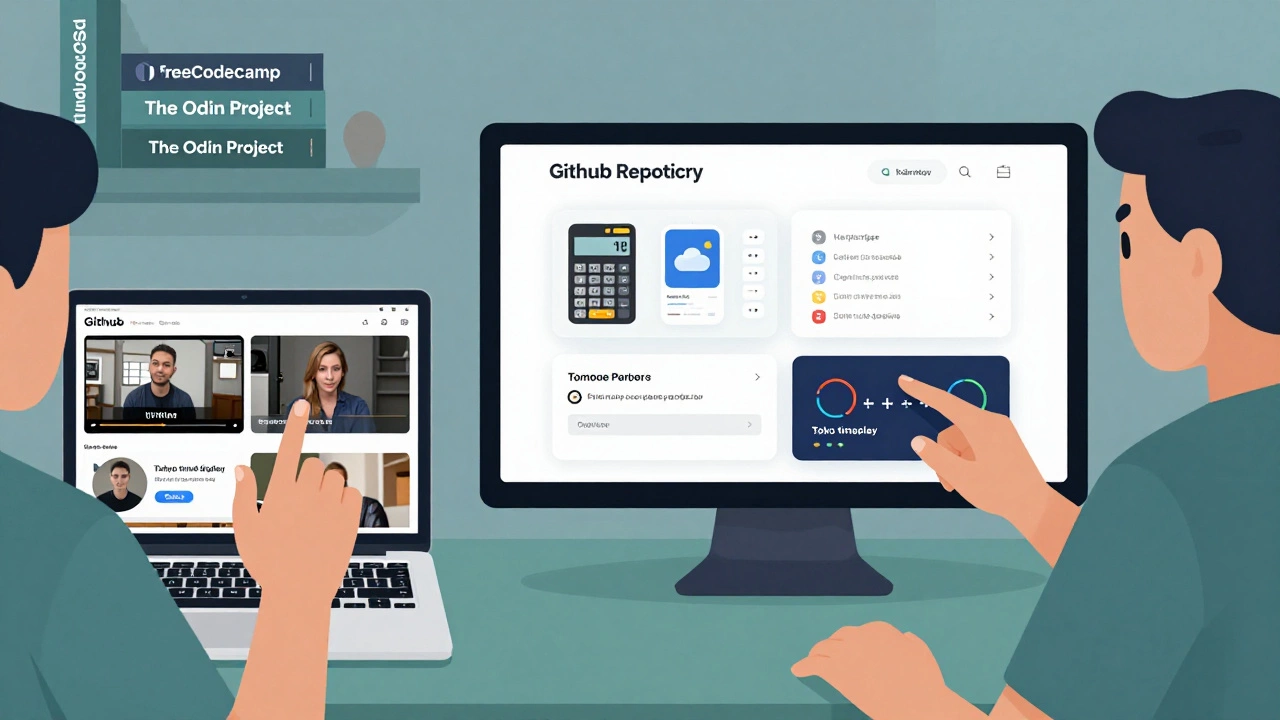
- Use free, project-based resources. FreeCodeCamp, The Odin Project, and CS50 by Harvard are all free and built around real projects. Don’t watch videos passively. Pause them. Type the code yourself. Break it. Fix it.
- Build something small every week. Week 1: A calculator. Week 2: A quiz game. Week 3: A webpage that shows the current time in Tokyo. Each one teaches you something new.
- Learn to use GitHub. Upload your code. Don’t wait for it to be perfect. Share it. People will give you feedback. That’s how you improve.
- Join a community. Reddit’s r/learnprogramming, Discord servers for beginners, or local meetups in Wellington. Ask questions. Answer others’ questions. Teaching someone else cements your own understanding.
There’s no need to learn JavaScript, React, Node.js, and Docker all at once. Pick one thing. Master it. Then move to the next.
What You’ll Learn That Classes Don’t Teach
Bootcamps and courses teach you syntax. They show you how to write a function. But they rarely teach you how to debug, how to ask for help, or how to keep going when nothing works.
When you teach yourself, you learn:
- How to read documentation-even when it’s confusing
- How to search for errors using the exact wording of the message
- How to break a big problem into tiny, solvable pieces
- How to recognize when you’re stuck because you’re tired, not because you’re stupid
- How to celebrate small wins: "I fixed that bug!"
These are the skills employers care about more than any certificate.
How Employers See Self-Taught Programmers
Here’s the truth: most tech companies don’t care if you went to college. They care if you can solve problems.
In 2025, a survey of 500 tech hiring managers in New Zealand found that 68% had hired someone with no formal coding education. Why? Because they had a portfolio.
One developer in Auckland got hired after submitting a GitHub repo with a weather app that pulled data from three different APIs, handled errors gracefully, and had clean, commented code. He never took a class. He built it over weekends while working part-time at a coffee shop.
Companies are looking for:
- Proof you can build things
- Proof you can learn on your own
- Proof you don’t give up
Your GitHub profile is your resume. Your projects are your portfolio. Your ability to explain how you solved a problem is your interview.
Common Mistakes (And How to Avoid Them)
Most people who try to teach themselves fail for the same reasons:
- Switching languages every month. You don’t need to learn Python, then JavaScript, then Ruby. Pick one. Stick with it for at least six months.
- Waiting to feel "ready." You’ll never feel ready. Start before you’re ready.
- Trying to build the next Instagram. Start small. A habit tracker. A recipe organizer. A calculator. Tiny wins build confidence.
- Not sharing your work. If you never show your code to anyone, you’ll never get feedback. And feedback is how you improve.
- Comparing yourself to others. Someone who’s been coding for five years will look like a genius. You’re not behind. You’re just at the beginning.
What Success Looks Like After 6 Months
If you put in 20 minutes a day, five days a week, for six months, here’s what you’ll have:
- A GitHub profile with 8-10 projects
- Basic understanding of how websites, apps, and databases work
- The ability to read documentation and solve your own errors
- Confidence that you can learn anything new
- A network of other learners who can help you when you’re stuck
That’s enough to apply for junior roles, freelance gigs, or even just start building tools for your own life.
Final Thought: You Don’t Need a Degree. You Need a Habit.
Teaching yourself to code isn’t about talent. It’s about consistency. It’s about showing up even when you’re tired. Even when you’re frustrated. Even when you think you’re not good enough.
The most successful self-taught programmers aren’t the smartest. They’re the ones who kept going.
You can do this. Not because you’re special. But because you’re willing to try.
Can I really learn to code without any prior experience?
Yes. Most people who teach themselves to code start with zero experience. You don’t need to know math, computers, or how the internet works. You just need curiosity and the willingness to try. Start with HTML and CSS. Build a simple webpage. That’s your first step.
How long does it take to get a job if I teach myself to code?
It varies. Some people land jobs in 6 months. Others take a year. It depends on how much time you put in, the quality of your projects, and how actively you network. The key isn’t speed-it’s proof. Build 3-5 real projects. Share them. Apply for junior roles. Many companies hire based on skill, not degrees.
Is Python still the best language to start with in 2026?
Yes. Python remains the most beginner-friendly language because of its simple syntax and wide use in real-world applications-from websites to data analysis to automation. It’s used by companies like Google, Netflix, and Instagram. Learning Python gives you a solid foundation, and you can move to JavaScript or another language later if needed.
Do I need to learn algorithms and data structures to get hired?
Not right away. For entry-level roles, employers care more about your ability to build working projects than your knowledge of sorting algorithms. Focus on building apps first. Once you have a job or are applying for more competitive roles, then dive into algorithms. They matter more for senior positions.
What if I get stuck for days on one problem?
That’s normal. Even experienced developers get stuck for days. The trick is to break it down: write down what you’re trying to do. What’s the error message? Search it exactly as it appears. Try explaining it out loud to an imaginary person. Take a walk. Come back later. You’ll often see the solution when you stop forcing it.