
Most people who want to speak English feel stuck. They know words. They understand grammar. But when someone talks to them, their mind goes blank. That’s not because they’re bad at English. It’s because they never learned how to speak it.
Stop memorizing. Start using.
Textbooks and apps are great for learning vocabulary. But they don’t teach you how to talk. Speaking isn’t about perfect grammar. It’s about getting your message across. Think of it like riding a bike. You don’t learn by reading a manual. You learn by falling off and getting back on.
Start small. Say one thing out loud every day. Not in your head. Not in the mirror. Say it to someone. Even if it’s just, “I’m tired today.” Or, “This coffee is good.” Say it like you mean it. Your brain needs to get used to making sounds in English before it trusts you can do it.
Listen like you’re learning a song
You didn’t learn your first language by studying grammar rules. You heard it over and over until your mouth knew how to copy it. That’s how you learn to speak English too.
Find short audio clips - one to three minutes long - from real people talking. YouTube channels like “English Addict with Mr Steve” or “Learn English with Emma” work well. Play one clip three times in a row. First, just listen. Second, listen and repeat what you hear out loud. Third, try to say it without the audio. Don’t worry if you sound weird. Your accent isn’t the goal. Clarity is.
Repeat this every day for ten minutes. In three weeks, you’ll notice you understand more without trying. That’s because your ears are training your mouth.
Copy real conversations
Most English learners wait to speak until they’re “ready.” But there’s no such thing as ready. You become ready by doing.
Find simple dialogues online - like ordering coffee, asking for directions, or introducing yourself. Write them down. Then, act them out. Pretend you’re in the situation. Say the lines out loud. Change the words a little. “Can I get a latte?” becomes “Do you have any hot drinks?” That’s how real people talk.
Try this with a friend, even if they’re also learning. One person plays the shopkeeper. The other plays the customer. Switch roles. Do it three times. You’ll feel silly at first. But after the third time, you’ll realize you didn’t need to think about the words. You just said them.
Speak to yourself - out loud
You don’t need a conversation partner to start speaking. You just need to open your mouth.
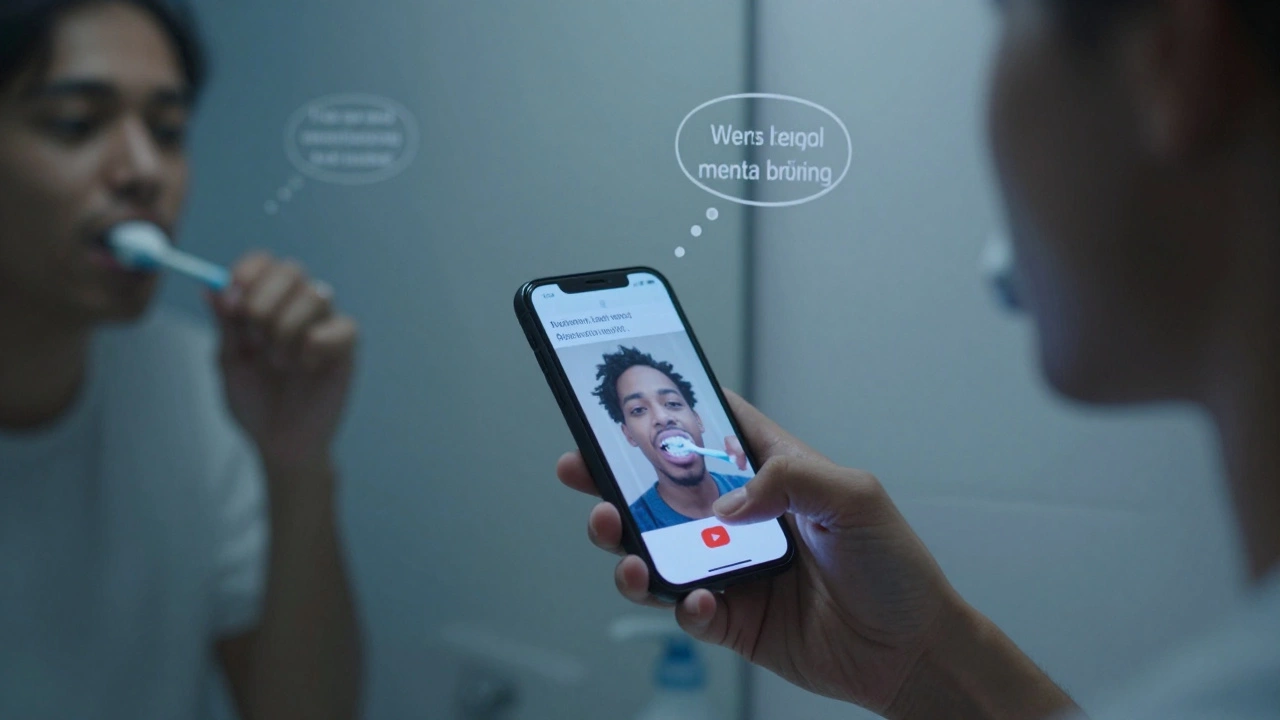
While you’re brushing your teeth, describe what you’re doing: “I’m putting toothpaste on the brush. I’m moving it up and down.” While you’re walking to the bus stop, narrate your day: “I’m going to work. I hope the bus isn’t late.”
This isn’t just practice. It’s brain rewiring. Your brain starts to think in English instead of translating from your native language. That’s the biggest hurdle for beginners. When you stop translating, speaking becomes faster and easier.

Use simple phrases - not perfect sentences
Native speakers don’t speak in textbook sentences. They say things like:
- “I’m kinda tired.”
- “Can you help me real quick?”
- “Yeah, pretty much.”
- “No idea.”
Forget “I am feeling extremely fatigued due to lack of rest.” That’s not how people talk. Learn the phrases people actually use. Write them down. Practice them until they feel natural.
Start with five daily phrases. Use them in real situations. “What’s up?” “How’s it going?” “I didn’t catch that.” “Can you repeat that?” These aren’t fancy. But they keep conversations alive.
Find your people
You don’t need to join a fancy class. You need to find people who will let you mess up.
Look for free online language exchanges. Apps like Tandem or HelloTalk connect you with people who want to learn your language. You talk in English for 15 minutes. They talk in your language for 15 minutes. No pressure. No grades. Just real talk.
If you’re shy, start with text chats. Then move to voice messages. Then try a short video call. You’ll be surprised how quickly people are patient. Most of them were beginners once too.
Make mistakes - on purpose
The fear of sounding stupid is the biggest blocker. But here’s the truth: everyone makes mistakes. Even native speakers.
Try this: say something wrong on purpose. Say “I goed to the store” instead of “I went.” See what happens. Nine times out of ten, the person will understand you. They might even smile and say, “Oh, you mean went?” No one will laugh. No one will judge. They’ll just help you.
When you stop fearing mistakes, you stop freezing. And that’s when real speaking begins.
Track progress - not perfection
Don’t measure your progress by how many words you know. Measure it by how often you speak without panic.
Keep a simple log. Every day, write down:
- One thing you said in English
- One thing you understood
- One mistake you made
After a month, look back. You’ll see patterns. You’ll notice you’re using new phrases without thinking. You’ll remember a conversation you had last week and realize you didn’t need to pause once.
That’s progress. Not perfect grammar. Not a native accent. Just the ability to speak - and mean it.
What to avoid
Here’s what doesn’t work:
- Waiting until you’re “ready”
- Only studying grammar
- Learning long lists of vocabulary without using them
- Comparing yourself to others
- Thinking you need to sound like a news anchor
Focus on one thing: being understood. That’s all that matters.
Start today - not tomorrow
You don’t need a course. You don’t need to fly abroad. You just need to open your mouth and say something - anything - in English.
Right now, say this out loud: “I can speak English.”
Did you do it? Good. That’s your first step. Now do it again tomorrow. And the day after. Keep going. In six weeks, you’ll wonder why you waited so long to start.
How long does it take to start speaking English as a beginner?
Most beginners notice real progress in 4 to 6 weeks if they speak daily for just 10 to 15 minutes. It’s not about how much time you spend studying - it’s about how often you use the language. Speaking every day, even for a few minutes, builds confidence faster than hours of grammar drills.
Do I need to learn grammar to speak English?
You don’t need to memorize rules to speak. You need to hear and use the language. Grammar helps later, when you want to sound more precise. But for starting out, focus on phrases and real conversations. People understand you even with mistakes. You’ll naturally pick up grammar by hearing how others speak - not by studying charts.
What if I’m too shy to speak with others?
Start by speaking to yourself. Talk about your day, your food, your plans - out loud. Then try recording yourself. Listen back. Then try texting a language partner. Finally, move to voice messages. You don’t have to jump into a conversation with strangers. Take small steps. Every beginner was shy at first. Progress comes from doing, not waiting.
Should I take an English course to start speaking?
Courses can help, but they’re not required. Many free tools - like YouTube, language exchange apps, and podcasts - work better for speaking than traditional classes. The key is practice, not curriculum. If you’re in a course that only teaches grammar and reading, add your own speaking practice. Talk to yourself. Repeat dialogues. Find someone to chat with. That’s where real progress happens.
How do I know if I’m improving?
You’ll know you’re improving when you understand more without translating. When you catch yourself thinking in English instead of your native language. When you can reply to a question without pausing for five seconds. When you laugh at your own mistakes instead of feeling embarrassed. These are the real signs of progress - not test scores or vocabulary lists.