
Coding Career Timeline Estimator
Based on article data regarding learning intensity.
Your Projection
Adjust hours to see changes
- Waiting for input...
Have you ever stared at a screen full of colorful text and felt like you were trying to read an ancient, indecipherable language? You are not alone. For years, the tech industry has sold us a myth: that coding is reserved for math geniuses with photographic memories. But here is the truth that most bootcamps won't tell you upfront-coding isn't hard because it's complex; it's hard because it requires a completely different way of thinking.
If you are asking whether learning to code is difficult, the honest answer is yes, but only at first. It feels awkward, much like learning to drive a manual car or playing your first chords on a guitar. Your brain has to build new neural pathways. However, once those connections form, the "hard" part fades into problem-solving satisfaction. This guide breaks down exactly why coding feels tough, how to get past the initial frustration, and why choosing the right resources makes all the difference.
The Initial Hurdle: Why Does It Feel So Difficult?
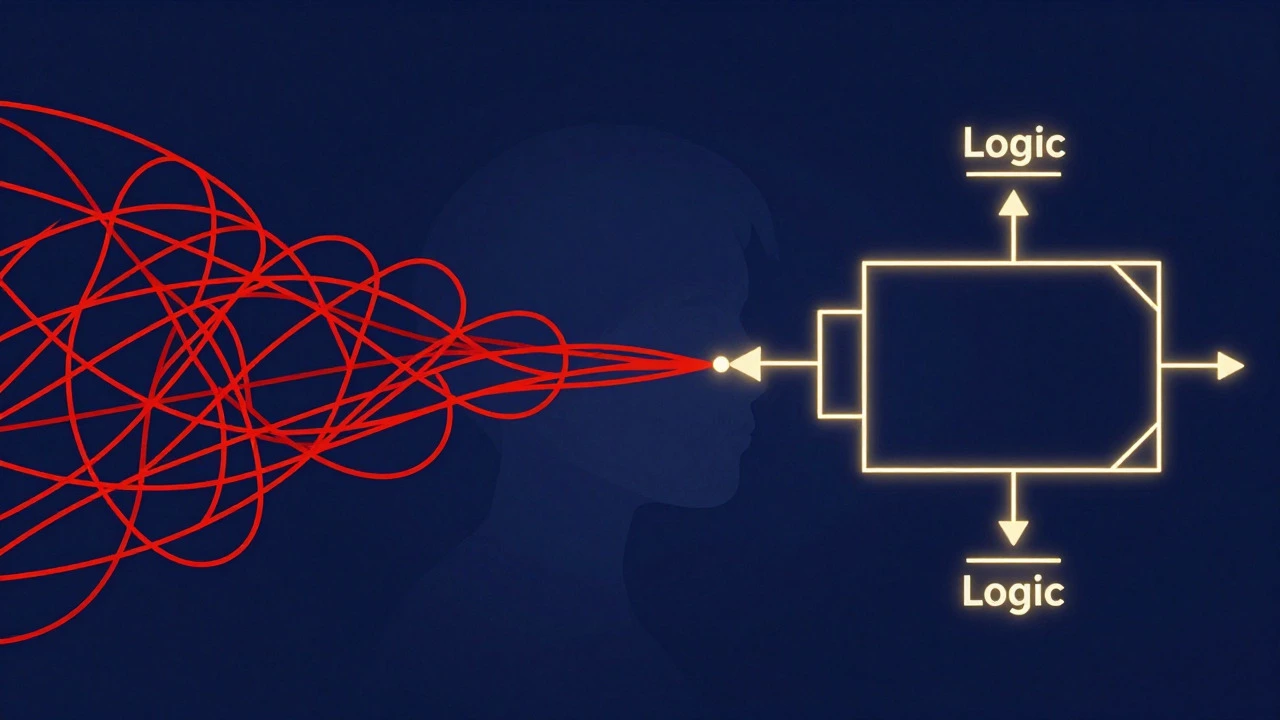
When you start coding, you aren't just learning syntax (the grammar of the language). You are learning logic. Most people spend their lives consuming information. Coding forces you to produce precise instructions. If you miss a single semicolon or misplace a bracket, the entire program crashes. This immediate feedback loop can be brutal for beginners.
This phenomenon is often called "imposter syndrome," but it’s actually just cognitive load. Your working memory is maxed out trying to remember variable names, function structures, and error messages simultaneously. Research from MIT suggests that novice programmers struggle not because they lack intelligence, but because they haven't yet developed "mental models" of how data flows through a system. Until you visualize that flow, every line of code looks like isolated magic rather than a connected process.
Consider this analogy: Learning to code is like learning to cook. At first, you follow a recipe step-by-step, terrified of burning the onions. You don't understand *why* the acid cuts the fat. But after months of practice, you stop reading the recipe. You taste the sauce, adjust the salt, and intuitively know when it's ready. Coding works the same way. The difficulty lies in the transition from following instructions to creating them.
Syntax vs. Logic: What Are You Actually Learning?
To understand if coding is hard for *you*, we need to separate two distinct skills: syntax and logic.
- Syntax is the specific rules and vocabulary of a programming language like Python or JavaScript. This is the easy part. Syntax is memorization. It’s like learning Spanish verbs. You look it up, you practice it, you remember it. Tools like AI assistants have made remembering syntax nearly obsolete in 2026.
- Logic is the ability to break down a large problem into small, solvable steps. This is the hard part. It requires abstract thinking. Can you take a vague idea like "build a to-do list app" and break it down into: 1. Create input field, 2. Save data to database, 3. Display data on screen?
Most beginners quit because they try to master syntax before understanding logic. They memorize code without knowing what it does. When they hit a bug, they have no framework to debug it. The key to making coding easier is to focus on the *concept* first. Don't worry about the exact spelling of a command. Worry about the flow of the solution.
The Role of Coding Classes in Reducing Friction
Self-teaching is possible, but it is statistically harder. According to data from the Stack Overflow Developer Survey, self-taught developers report higher levels of burnout compared to those who took structured courses. Why? Because structure eliminates decision fatigue.
When you learn alone, you waste hours deciding which language to pick, which tutorial to watch, and how to set up your environment. Coding classes are structured educational programs designed to teach programming fundamentals through guided instruction and projects. Whether these are online bootcamps, university modules, or community workshops, they provide a curated path.
A good coding class doesn't just lecture. It provides:
- Mentorship: Access to humans who can explain *why* something failed, not just *how* to fix it.
- Peer Support: A cohort of people facing the same struggles reduces isolation.
- Project-Based Learning: Building real applications instead of solving abstract math problems.
In Wellington, for example, local tech meetups often pair junior developers with senior engineers. This mentorship model accelerates learning by weeks. If you are considering formal education, look for programs that emphasize "pair programming"-working side-by-side with another coder. This technique forces you to articulate your thought process, which solidifies your understanding faster than silent coding ever could.
Choosing Your First Language: Does It Matter?
One of the biggest sources of anxiety for beginners is picking the "right" language. The short answer: it doesn't matter as much as you think. The long answer: some languages are friendlier for beginners than others.
| Language | Difficulty Level | Best For | Learning Curve |
|---|---|---|---|
| Python | Low | Data Science, AI, Backend Web | Gentle; reads like English |
| JavaScript | Medium | Web Development, Interactive UIs | Steep initially due to browser quirks |
| HTML/CSS | Very Low | Website Structure & Styling | Immediate visual feedback |
| Java | High | Enterprise Systems, Android Apps | Strict rules; verbose syntax |
For most adults starting in 2026, Python remains the gold standard for ease of entry. Its syntax is clean and readable. You can write a functional script in five lines of code. JavaScript is essential if you want to build websites, but it comes with a chaotic ecosystem of frameworks (React, Vue, Angular) that can overwhelm newcomers. Start with HTML and CSS to get quick wins, then move to Python or JavaScript depending on your interest in data or web design.
Common Pitfalls That Make Coding Seem Impossible
If you are struggling, check if you are falling into one of these three traps:
Tutorial Hell: This is when you watch endless videos but never type code yourself. Watching someone else code gives you the illusion of competence. You nod along, understanding every step. Then you open a blank editor and freeze. To escape tutorial hell, build tiny projects immediately. Change the code in the tutorial. Break it on purpose. Fix it.
Perfectionism: Beginners often try to write perfect code on the first try. Professional developers write messy, broken code constantly. The skill isn't writing correct code; it's debugging incorrect code. Embrace the errors. Error messages are not failures; they are clues. Read them carefully. Copy-paste them into search engines. You will find that thousands of others have had the exact same issue.
Comparing Yourself to Experts: Social media shows you the highlight reel. You see a senior engineer building an AI model in ten minutes. You don't see the ten years of experience behind it. Compare yourself only to where you were last week. Did you understand a concept today that confused you yesterday? That is progress.
How Long Does It Really Take?
There is no fixed timeline, but we can estimate based on commitment levels. Here is a realistic breakdown for reaching "job-ready" proficiency (enough to apply for junior roles):
- Casual Learner (5 hours/week): 12-18 months. Progress is slow, but sustainable alongside a full-time job.
- Dedicated Student (15 hours/week): 6-9 months. This pace allows for deeper project work and portfolio building.
- Full-Time Immersion (40 hours/week): 3-6 months. Typical for coding bootcamps. High intensity, high burnout risk.
Remember, "job-ready" doesn't mean you know everything. It means you can learn enough to solve the problems at hand. Companies hire juniors for their potential and problem-solving attitude, not their encyclopedic knowledge of libraries.
Practical Steps to Start Today
If you are convinced that coding is worth the effort, here is your action plan for the next 30 days:
- Pick One Language: Choose Python or JavaScript. Do not switch until you finish a project.
- Set Up Your Environment: Install a code editor like VS Code. It’s free, powerful, and used by millions.
- Follow a Structured Course: Use platforms like freeCodeCamp, The Odin Project, or a paid bootcamp if you need accountability.
- Build Three Tiny Projects:
- A calculator that performs basic math.
- A personal homepage with your bio and links.
- A simple to-do list that saves items to your browser.
- Join a Community: Sign up for Discord servers, Reddit forums (like r/learnprogramming), or local meetups. Asking questions is part of the job.
The hardest part of coding is starting. Once you write your first "Hello World" program and see it run, the mystery dissipates. You realize that computers are just very fast, very dumb machines waiting for your instructions. And that is empowering.
Do I need to be good at math to learn coding?
Not really. Most web development and general software engineering require only basic arithmetic and logical reasoning. You do not need calculus or advanced algebra unless you are specializing in fields like machine learning, game physics, or cryptography. For 90% of coding jobs, strong logic and problem-solving skills matter far more than mathematical prowess.
Is it better to take a coding class or learn online for free?
It depends on your learning style. Free resources like YouTube and documentation are excellent for self-starters who are disciplined. However, coding classes provide structure, mentorship, and networking opportunities that accelerate learning. If you struggle with procrastination or feel isolated, paying for a structured course or bootcamp is often a worthwhile investment in your time and career.
What is the easiest programming language for absolute beginners?
Python is widely considered the easiest language for beginners due to its clean, readable syntax that resembles plain English. It handles many complex background processes automatically, allowing you to focus on logic rather than technical details. JavaScript is also a popular choice if you are interested in seeing immediate visual results in web browsers.
Can I learn to code if I am over 30?
Absolutely. Age is not a barrier to learning to code. In fact, older learners often bring valuable domain expertise from previous careers, which can make them unique candidates for specialized tech roles. While your brain may take slightly longer to adapt to new patterns, your life experience helps with problem-solving and patience, which are critical skills in programming.
How much time should I dedicate to coding each day?
Consistency beats intensity. It is better to code for 30 minutes every day than for five hours once a week. Daily practice helps reinforce neural pathways and keeps concepts fresh in your memory. Aim for at least one hour a day if you are serious about transitioning careers, breaking it into focused sessions with regular breaks to avoid mental fatigue.