Competitiveness & Preparation Analyzer
Based on 2026 data trends, compare your preparation effort against the statistical intensity of major global exams.
China • University Entry
India • Civil Services
USA • Medical School
India • Engineering
USA • Law Practice
Analysis Results
Opportunity Cost Warning
Analyzing...
Defining Competition in the Exam World
When people ask which exam is the hardest or most competitive, they usually mean two different things. Some look at the sheer number of applicants versus available seats. Others look at the depth of knowledge required to clear even the first round. There is no single answer because 'difficulty' depends entirely on your background and location.
For a student in India, the UPSC Civil Services is often called the toughest job on Earth. In China, the Gaokaois the National College Entrance Examination that determines future opportunities defines entire generations. Meanwhile, American students stress over the SAT or MCAT.
By 2026, we see a shift in how these tests are valued. Online admissions and portfolio-based entry are rising, yet traditional standardized testing remains the great equalizer for millions. Let's break down the heavy hitters by region and purpose.
The Asian Powerhouses: Scale Meets Pressure
In terms of raw numbers, Asian exams lead the pack. They carry the weight of national mobility on their shoulders.
The Gaokao (China)
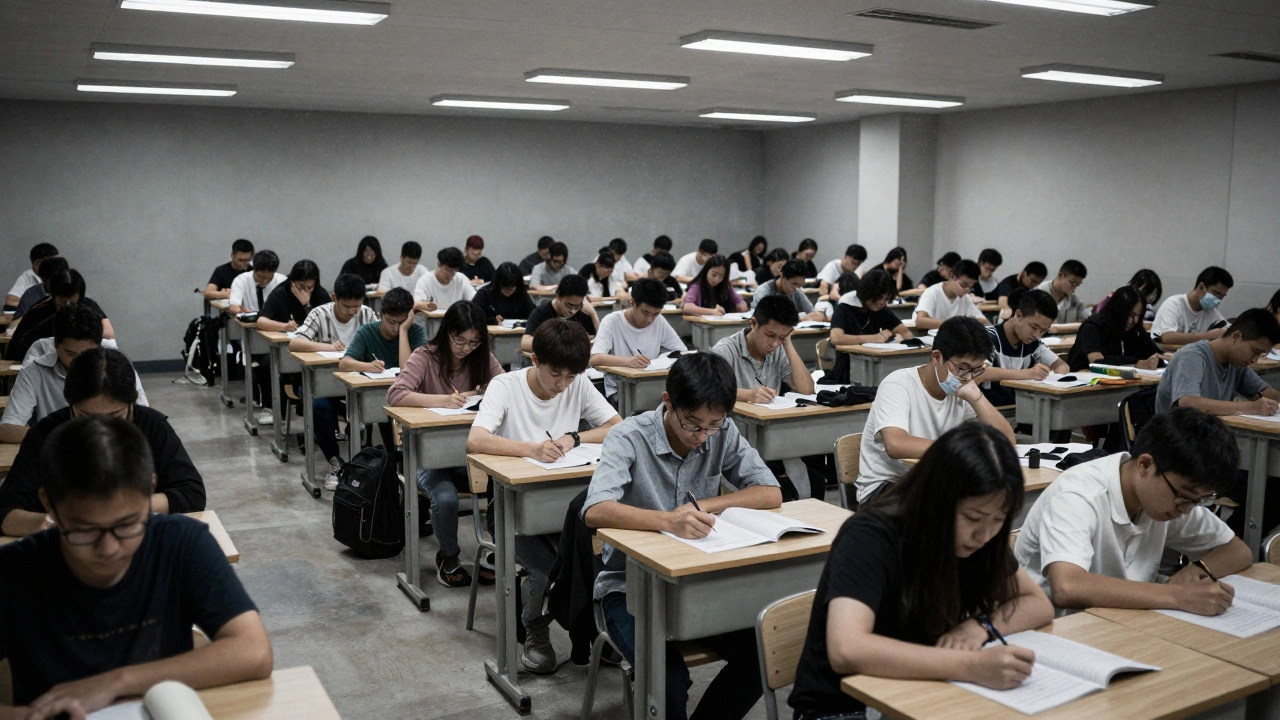
This test decides who enters university in the world's most populous nation. Every year, roughly 12 million candidates sit for the Gaokao. If a class of 50 students only has three university spots, competition becomes fierce. The pass rate for top-tier universities like Tsinghua or Peking University is less than 0.1%. This creates an intense culture of study known as "involution," where students spend years memorizing materials specifically for this moment.
JEE Advanced (India)
Focusing on engineering, the Joint Entrance Examination (JEE) is legendary. While over a million write the preliminary JEE Mains, only the top percentile get into the Indian Institutes of Technology (IITs). For the advanced stage, tens of thousands compete for a few thousand seats in elite institutions. The physics and chemistry problems aren't just about knowing formulas; they require creative problem-solving abilities that go beyond standard textbooks.
The Impact of Demographics
These exams are hard partly because of population density. In smaller nations, even highly ranked schools accept a higher percentage of qualified applicants. In countries like China or India, demographic pressure amplifies the difficulty curve significantly.
Western Gatekeepers: Selectivity and Access
In Europe and North America, exams often serve as gateways to professional degrees rather than general education. The competition feels different here-it's often financial and social as much as intellectual.
The MCAT (United States)
If you want to become a doctor in the U.S., the Medical College Admission Test is non-negotiable. With 529 medical schools and limited slots, the average matriculating student scores over 511 out of 528. This puts immense pressure on pre-med majors to perfect every detail of organic chemistry, biology, and psychology. Unlike other exams, you can retake it multiple times, leading many to burn out while chasing marginal score improvements.
The Bar Exam
Becoming a lawyer requires clearing state-specific bar exams in the U.S. Some jurisdictions, like California, notoriously have low pass rates-sometimes dipping below 40% for first-time takers. The exam tests legal reasoning under fatigue. Candidates face a multi-day marathon covering contracts, torts, and criminal law simultaneously.
The LSAT
The Law School Admission Test measures critical thinking rather than book knowledge. Top law schools demand scores above 172 (out of 180). Because this test focuses heavily on logical games, extensive practice is required, turning preparation into a full-time activity for months.
| Exam Name | Country/Region | Primary Goal | Est. Acceptance Rate |
|---|---|---|---|
| Gaokao | China | University Entry | < 1% (for Tier 1) |
| UPSC CSE | India | Government Jobs | < 0.1% |
| JEE Advanced | India | Engineering | ~0.5% of eligible pool |
| MCAT | USA | Medical School | Variable (High Score needed) |
| Cambridge A-Level | UK/Global | University | Depends on Grade |

The Hidden Factor: Opportunity Cost
You cannot discuss competition without mentioning opportunity cost. Preparing for the UPSC Civil Services often consumes 2-3 years of a young person's life. In contrast, a college prep test might take six months. When you lose potential earnings and career momentum for years, the "cost" of failure rises.
The CPA ExamCertified Public Accountant examination required for accounting professionals in the United States offers a different kind of hurdle. You must pass four rigorous sections covering auditing, regulation, and taxation. It is expensive and requires maintaining continuing education later. This long-term commitment adds to its status as a high-barrier exam.
Subjective vs. Objective Difficulty
Some tests rely on rote memory, while others test pure logic. The IQ Tests measure raw processing power, but they are not typically "exams" you sit for admission. Conversely, essay-based defenses in PhD programs rely on subjective panels.
Apart from standardized tests, consider interviews. Oxford and Cambridge Oxbridge universities in the UK combine written papers with intense oral assessments. This adds a layer of unpredictability. You might know the material, but if you freeze during the viva voce interview, you could still fail.
In 2026, digital proctoring has become standard across remote testing platforms. This adds a psychological burden. Being watched by a camera while taking an exam introduces anxiety that older paper-based tests did not have.

Tailoring Your Approach
Choosing the right exam depends on what you value. If you want guaranteed employment stability, government service exams dominate. If you seek research freedom, postgraduate entrance tests matter more. Here are practical steps to manage the competition:
- Start Early: Top scorers begin preparation 12-18 months in advance.
- Mock Testing: Simulate real conditions daily to build stamina.
- Resource Selection: Use official past papers rather than random apps.
- Mental Health: Treat sleep and nutrition as part of your study plan.
Frequently Asked Questions
Is the UPSC exam really the hardest in the world?
It is considered the hardest regarding the selection ratio and syllabus breadth in India. Less than 0.1% of aspirants qualify annually. Globally, it rivals the Gaokao in intensity due to the lack of alternative high-status career paths.
Can I skip the SAT for university?
Many US universities adopted test-optional policies after 2020. However, top Ivy League schools still recommend scores. Skipping it removes a safety net, making grades harder to compare against peers.
What is the pass rate for the Bar Exam?
Pass rates vary by state. New York sees around 75-80%, while California averages closer to 45-50% for first-time takers. It varies significantly depending on whether you attend an accredited law school.
Are online exams harder than offline ones?
Technically, no. However, the environment changes. Lack of physical supervision increases anxiety for some. Distractions at home are common, whereas a center provides a focused atmosphere.
Which exam is best for career growth in 2026?
This depends on the sector. Tech certifications like AWS or Google Cloud are trending high. Traditional MBA exams (GMAT/GRE) remain strong for management roles. Choose based on industry demand, not just difficulty.