
English Fluency Timeline Calculator
Based on FSI research, fluency requires 600-750 hours of effective practice. How much time can you practice daily?
People often ask, How many days will it take to speak English fluently? The answer isn’t a number you can mark on a calendar. It’s not 30 days, 100 days, or even 365. It’s not about time. It’s about how you use that time.
Fluency isn’t a finish line - it’s a habit
Fluency doesn’t mean you know every word in the dictionary. It means you can hold a conversation without stopping to translate in your head. You can explain your thoughts, ask for help, laugh at jokes, and argue about movies - all in real time. That’s not something you memorize. It’s something you practice.
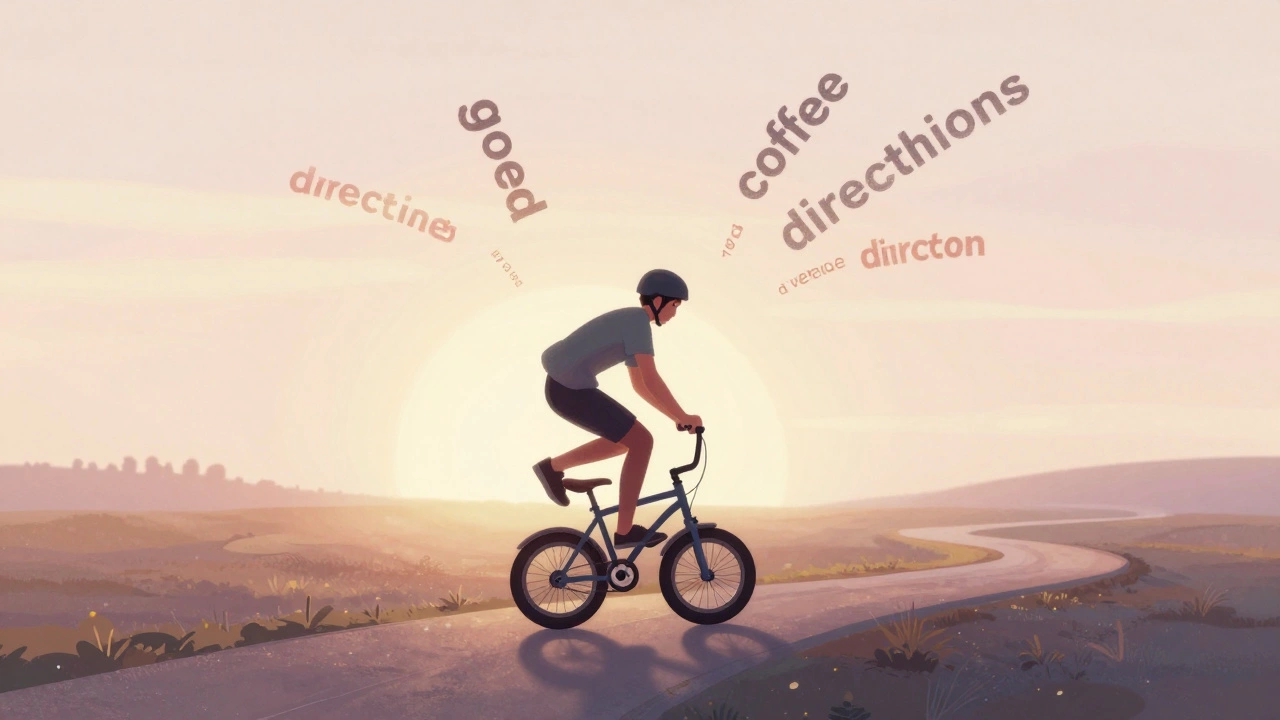
Think of it like learning to ride a bike. No one says, ‘I’ll ride a bike in 45 days.’ You fall, you get back up, you try again. Some days you wobble. Some days you fly. The key isn’t how long you’ve been practicing - it’s whether you’re still getting on the bike every day.
What fluency actually looks like
There’s no official test that says ‘you’re fluent.’ But here’s what real fluency sounds like in everyday life:
- You can explain why you’re late to work without stumbling over words.
- You understand a TV show without subtitles, even when people talk fast.
- You can order coffee, ask for directions, and chat with a neighbor about their dog - all without panic.
- You don’t wait for others to slow down. You join in.
This isn’t about grammar perfection. It’s about being understood. And being understood doesn’t need perfect tense usage. It needs confidence, repetition, and real conversation.
How long does it really take? The data
The U.S. Foreign Service Institute (FSI) studied how long it takes native speakers of languages like Spanish or French to reach professional fluency in English. For them, it took about 600-750 hours of guided learning.
But here’s what they don’t tell you: those numbers assume full-time study - 25 hours a week, five days a week. That’s 30 weeks, or about seven months. If you’re studying only 30 minutes a day, five days a week, that’s 2.5 hours a week. At that pace, 750 hours takes you three years.
But here’s the twist: people who reach fluency faster aren’t necessarily studying more. They’re speaking more.
Why most people never reach fluency
Most learners spend hours watching videos, doing grammar drills, and memorizing vocabulary lists. But they never talk. Not really.
They say, ‘I’m not ready yet.’ Or, ‘I’ll start speaking when I know more.’ But here’s the truth: you won’t know more until you start speaking.
Think about how kids learn their first language. They don’t wait until they’ve memorized all the rules. They babble. They mess up. They say ‘goed’ instead of ‘went.’ And no one corrects them every time. They keep going. That’s how fluency builds.
If you’re stuck, it’s not because you’re bad at English. It’s because you’re avoiding the thing that actually works: talking.
What actually speeds things up
People who speak English fluently in under a year share one thing: they talk to real people, every day.
- They join free online conversation groups on Zoom or Discord.
- They find language exchange partners - someone who wants to learn their language, and they learn English in return.
- They record themselves speaking for two minutes a day, then listen back. No editing. Just raw practice.
- They watch one English YouTube video a day and repeat out loud what the speaker says.
One woman I know from Wellington, who moved here from Colombia, started speaking English fluently in 11 months. She didn’t take expensive courses. She walked into a local library every Tuesday and joined a free English circle. She spoke for 20 minutes. Listened for 20 minutes. Did it again the next week. No textbooks. No apps. Just talking.
Time vs. effort: The real equation
Let’s break this down simply:
| Practice Type | Time per Day | Estimated Fluency Timeline |
|---|---|---|
| Grammar drills + vocabulary apps | 60 minutes | 5+ years (may never reach fluency) |
| Listening to podcasts | 30 minutes | 3-4 years (understanding improves, speaking lags) |
| Speaking with native speakers | 20 minutes | 1-2 years |
| Speaking + listening + self-correction | 30 minutes | 6-12 months |
The fastest path isn’t the hardest. It’s the most consistent. You don’t need to be perfect. You just need to be present.
What to do right now
You don’t need to wait for the perfect course. You don’t need to buy an app. You don’t need to fly abroad. Here’s what you can do today:
- Find one person you can speak English with this week. It could be a friend, a tutor, a language partner, or even an AI chatbot.
- Set a timer for 10 minutes. Talk about your day. Your favorite food. Your pet. Your last movie. Don’t stop. Don’t translate. Just speak.
- Write down three words you struggled with. Look them up. Say them out loud five times.
- Do it again tomorrow. And the next day. And the day after that.
After 30 days, you’ll notice something: you’re not thinking about grammar anymore. You’re thinking about what you want to say.
Fluency isn’t about speed - it’s about connection
People think fluency means sounding like a native. It doesn’t. It means you can connect. You can make someone laugh. You can ask for help when you’re lost. You can tell your story - clearly, confidently, without fear.
That’s not something you learn in a classroom. It’s something you build, one conversation at a time.
So how many days does it take? If you speak for 15 minutes a day, you’ll be speaking fluently in under a year. If you wait until you’re ready? You’ll wait forever.
Can I become fluent in English in 30 days?
No, you won’t become fully fluent in 30 days. But you can make huge progress. In 30 days of daily speaking practice, you’ll go from freezing up in conversations to holding basic chats without panic. Fluency takes months, not days - but the first breakthrough happens fast if you speak every day.
Is it better to learn English with a tutor or on my own?
A tutor helps if they make you talk - not just correct you. Many tutors focus on grammar and tests, which slows progress. The best approach is self-practice with occasional feedback. Record yourself, speak daily, then meet a tutor once a week to clear up big mistakes. That mix gives you freedom and correction without dependency.
Do I need to live in an English-speaking country to become fluent?
No. Living in an English-speaking country helps if you’re forced to use the language daily. But you can create that environment anywhere. Join online groups, watch English shows with subtitles turned off, talk to strangers on language apps, and speak out loud to yourself. The place doesn’t matter. The habit does.
Why do I understand English but can’t speak it?
You’ve trained your ear, not your mouth. Listening and speaking use different parts of your brain. You can watch ten English movies and still freeze when someone asks you a question. The fix? Speak more - even if you sound silly. Your mouth needs practice, not just your mind.
How do I know I’m fluent?
You’re fluent when you stop thinking about English. When you dream in it. When you argue with a friend about a TV show without pausing to find the right word. When you can make a joke and laugh at it - without translating it first. That’s fluency. It’s not a test score. It’s a feeling.
What comes next
Don’t look for the perfect course. Don’t wait for the perfect time. Start today. Speak for ten minutes. Make a mistake. Laugh. Do it again tomorrow.
Fluency isn’t a destination. It’s the result of showing up - again and again - even when you’re scared. And if you do that, you’ll get there. Not in 30 days. Not in 100. But in the time it takes to speak up - one day at a time.