
Degree Difficulty Calculator
When people ask, "What degree is the hardest?" they’re usually not talking about how much reading you do or how late you stay up. They’re asking which path pushes you to your absolute limit-physically, mentally, and emotionally-just to get to the starting line. And in the world of competitive exams, some degrees aren’t just tough. They’re designed to filter out everyone but the most relentless.
Medical School: The Marathon with No Finish Line
Medicine isn’t just hard. It’s relentless. In countries like India, China, and the U.S., getting into medical school is only the first hurdle. In India, the NEET exam sees over 2 million candidates compete for about 100,000 seats. That’s a 5% acceptance rate. And once you’re in? You’re looking at 5.5 years of study, followed by a mandatory 1-year internship. Then comes the residency-another 3 to 7 years depending on your specialty.
Students average 80 hours a week of study and clinical work. Sleep? Often under 5 hours a night. One study from the Journal of Medical Education found that 73% of medical students in India showed signs of clinical depression by their third year. The pressure isn’t just academic-it’s existential. One mistake in a diagnosis can cost a life. That’s the weight you carry every single day.
Engineering: The Numbers Don’t Lie
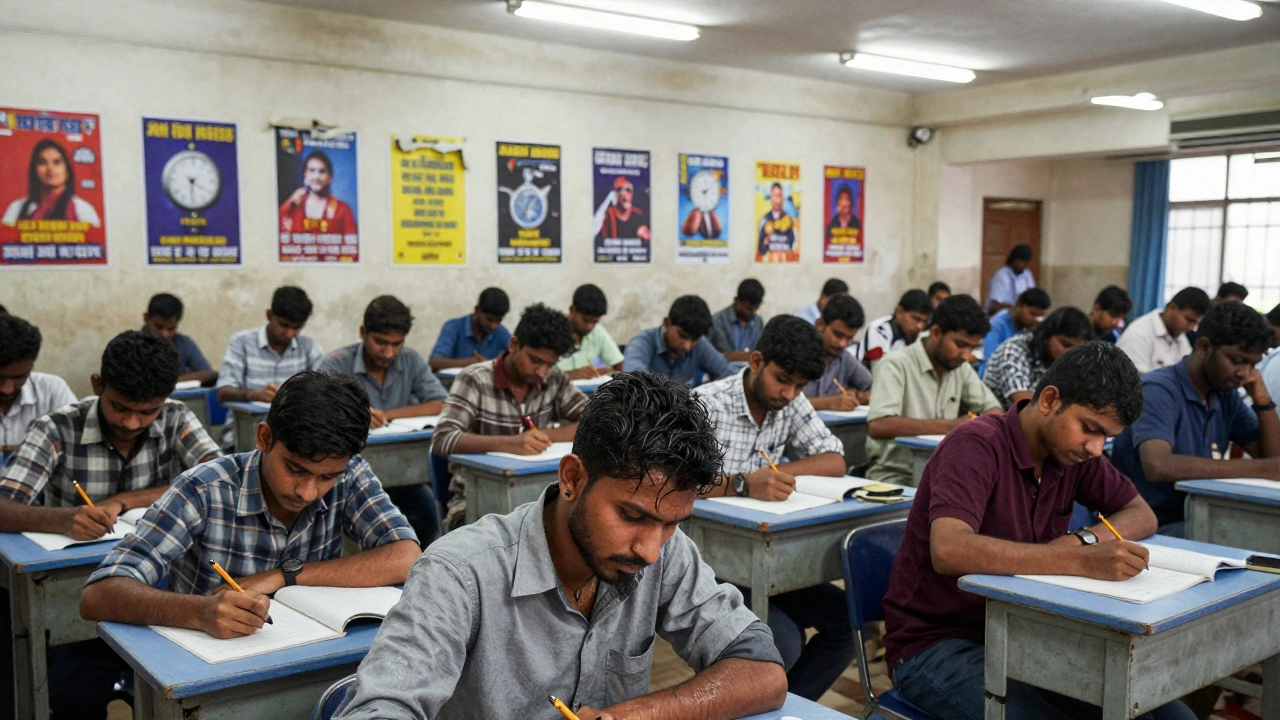
Engineering degrees, especially in countries like India, China, and Brazil, are brutal because of the sheer volume of competition. The Joint Entrance Examination (JEE Advanced) in India has around 250,000 applicants for just 10,000 seats at the IITs. That’s a 4% success rate. And the syllabus? Physics, chemistry, and math at a level most high schoolers won’t even encounter until university.
Top students spend 10 to 12 hours a day preparing for years. Many drop out of social life entirely. The failure rate is staggering-over 95% of applicants never make it into an IIT. Even if you do, the coursework doesn’t let up. A single semester can include 12 courses, each with weekly problem sets that take 20+ hours to complete. The attrition rate in the first year of engineering programs in India is over 40%. You don’t just learn engineering-you survive it.
Law School: The Mental Gymnastics
Law degrees don’t ask you to memorize formulas. They ask you to think in reverse. In the U.S., the LSAT is a logic puzzle designed to break people. The median score? Around 151 out of 180. Top schools like Harvard or Yale take students with scores above 170. In India, the CLAT exam for national law universities has over 80,000 applicants for roughly 3,000 seats.
Law school teaches you to argue both sides of every issue-even ones you believe in. You read 50-100 pages of dense case law every night. You learn to spot flaws in reasoning faster than most people spot typos. The bar exam? In the U.S., it’s a two-day test that covers 19 subjects. In 2025, the national pass rate was 68%. That means over 1 in 3 law graduates failed. And if you fail? You can’t practice. You lose a year. You lose income. You lose momentum.
Architecture: The Art That Demands Perfection
Architecture isn’t just about drawing buildings. It’s about turning creativity into code. In India, the NATA exam for architecture has a 12% acceptance rate. In the U.S., top programs like MIT or CalPoly accept fewer than 15% of applicants. But the real test comes after admission.
Students work 70-80 hour weeks on design studios. One project can take 3 months. You’ll redo your entire model 10 times because your professor says it "lacks soul." You’ll sleep in the studio. You’ll lose friendships because you’re too exhausted to respond to texts. The final thesis is judged on aesthetics, structural integrity, sustainability, and client needs-all at once. And if your model collapses during presentation? That’s not a glitch. It’s a career setback.
Chartered Accountancy: The Numbers That Never Sleep
CA isn’t a degree. It’s a gauntlet. In India, the CA Intermediate exam has a pass rate of 15-18%. The Final exam? Around 12%. You can’t just study-you have to live the material. The syllabus covers accounting, auditing, tax law, corporate law, cost management, and information systems. You need to pass three levels, each with 6-8 papers, over 4-5 years.
Most candidates work full-time while studying. They wake up at 4 a.m. to study before work. They skip vacations. They miss family events. The exam pattern? No multiple-choice questions. Every answer must be written out, step by step. One calculation error, and you fail the entire paper. In 2024, only 3,200 out of 240,000 candidates cleared all three levels. That’s 1.3%.

Why Does This Matter?
People think "hardest" means "longest" or "most books." But the real measure is how much of your life gets consumed. Medical school steals your sleep. Engineering steals your confidence. Law steals your certainty. Architecture steals your peace. Chartered accountancy steals your time.
And here’s the truth no one tells you: the hardest degree isn’t the one with the toughest syllabus. It’s the one that makes you question whether you’re good enough-every single day.
What’s the Point?
None of these degrees are "harder" than others in a universal sense. They’re hard in different ways. A medical student battles mortality. An engineer battles precision. A lawyer battles ambiguity. An architect battles beauty. An accountant battles perfection.
So if you’re asking which degree is the hardest, you’re really asking: "Which challenge do I have the stomach for?"
There’s no right answer. But if you’re ready to give up weekends, sleep, and social life-for years-you’re already halfway there. The rest? It’s just paperwork.
Is medical school really the hardest degree?
For many, yes. The combination of extreme competition to get in, the volume of material to master, the long hours, and the emotional toll make it one of the most demanding paths. In countries like India, Brazil, and the U.S., medical students face some of the lowest acceptance rates and highest burnout rates of any field. But "hardest" depends on your strengths-some find law or architecture more mentally exhausting.
Which exam has the lowest pass rate?
The Chartered Accountancy Final exam in India has one of the lowest pass rates globally, hovering around 12%. In comparison, the JEE Advanced for engineering in India sees about 4% success, and NEET for medicine is around 5%. But pass rates vary by country. In the U.S., the bar exam has a 68% pass rate on average, while the USMLE Step 1 for medical students has a pass rate of about 94%-but the real test is the pressure to score high enough to land a residency.
Can you switch from a hard degree to an easier one later?
Technically, yes-but it’s rarely practical. The time, money, and emotional investment make switching costly. Most people who leave medical or law school after a year end up with no degree and a massive debt burden. Some transition into related fields-like a former engineer moving into tech product management-but they rarely call it "easier." The skills you gain in a hard program are valuable, even if you don’t finish it.
Do top universities make degrees harder?
Not necessarily. The difficulty comes from the competition and the expectations, not the school itself. A student in a mid-tier medical college in India faces the same NEET cutoff and workload as someone at AIIMS. The difference is access to resources, not rigor. The hardest parts are the exams you have to clear to even get into the program.
Is there a degree that’s hard but not worth it?
There’s no universal answer. Some people thrive under pressure and find immense fulfillment in fields like architecture or law. Others burn out and switch careers. The value isn’t in the degree’s difficulty-it’s in whether the outcome aligns with your values. If you hate paperwork but love helping people, medicine might be worth it. If you crave creativity but hate deadlines, architecture could break you. Match the challenge to your motivation, not your reputation.
If you’re considering one of these paths, ask yourself: Are you ready to live with uncertainty for years? To sacrifice normalcy? To keep going even when the odds are against you? Because that’s not just studying. That’s surviving.