Government Interview Journey Estimator
Select the level of the position you are applying for to see the expected interview trajectory and key requirements.
Please select a job level to generate your interview roadmap.
You've spent weeks studying for the written exam, you've nailed the aptitude tests, and suddenly you get the invite. But here is the part that stresses everyone out: you have no idea how many times you'll actually have to sit across from a panel before you get an offer. Unlike a startup where you might just chat with a founder and a lead dev over two days, government hiring is a different beast entirely. It is slower, more rigid, and usually involves more steps.
Most people assume it's just one big interview and a background check. In reality, depending on the level of the role and the agency, you could be looking at anywhere from one to five distinct interview rounds. The goal for these agencies isn't just to see if you're "cool" or a "culture fit," but to prove-with a paper trail-that you are the most qualified person for the role to avoid any claims of bias or unfairness.
Quick Takeaways: The Hiring Timeline
- Entry-Level/Clerical: Usually 1 to 2 rounds.
- Mid-Level/Specialist: Typically 2 to 3 rounds.
- Senior Executive/Management: Often 3 to 5 rounds.
- Key Factor: The number of interviews depends more on the "grade" or "band" of the position than the agency itself.
The Typical Government Interview Journey
Before we break down the numbers, you need to understand that in the public sector, Government job interviews is a structured selection process designed to ensure merit-based hiring through standardized questioning and scoring. This means they can't just "wing it." Every single question is usually pre-approved by HR to ensure fairness.
For most candidates, the process starts with a screening. This might be a quick phone call or a virtual chat. It's not always counted as a "formal interview," but it is your first hurdle. If you pass that, you move into the formal stages. Let's look at how these stages usually shake out based on the role's complexity.
| Job Level | Expected Rounds | Primary Focus | Typical Format |
|---|---|---|---|
| Entry Level | 1-2 | Basic Skills & Reliability | Panel Interview |
| Mid-Management | 2-3 | Technical Expertise & Leadership | Technical + Behavioral |
| Senior Executive | 3-5 | Strategic Vision & Policy | Multiple Panels + Stakeholder Chats |
Round 1: The Behavioral Screen
In almost every government agency, the first real interview is a behavioral one. You've probably heard of the STAR Method is a structured manner of responding to a behavioral-based interview question by describing the Situation, Task, Action, and Result. If you aren't using this, you're essentially throwing away your chances. The panel wants concrete evidence that you've handled a difficult coworker or managed a tight deadline in the past.
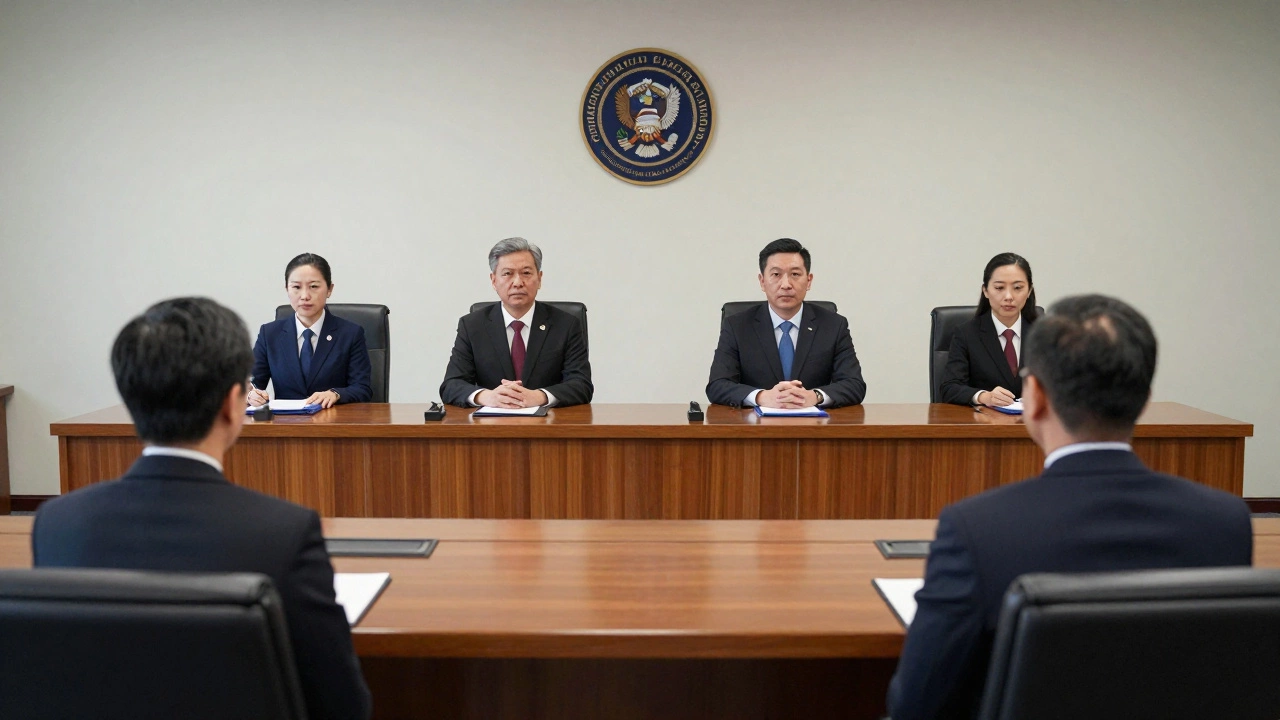
Why do they do this first? It's a filter. If you can't provide specific examples of your past performance, they won't waste the time of senior directors in later rounds. In these sessions, you'll likely face a panel of 3 to 5 people. One person takes notes, one asks the questions, and another observes your body language and demeanor. It feels like an interrogation, but it's actually just their way of ensuring the scoring is objective.
Round 2: The Technical or Competency Assessment
If you're applying for a role that requires a specific skill-like an accountant, an engineer, or an IT specialist-the second round is where they test your actual "chops." While the first round was about how you work, this round is about what you know.
Depending on the agency, this might not even be a conversation. It could be a "work sample test" where you are given a set of data and asked to write a briefing note or solve a technical problem within two hours. If it is an interview, expect deep-dive questions. For example, if you're applying for a role in Public Administration is the implementation of government policy and the management of public programs , they might ask you to explain how you would implement a new regulation while managing public pushback. They are looking for a logical thought process, not just a "correct" answer.
Round 3: The Stakeholder or Cultural Fit Interview
For higher-level roles, you'll often hit a third round. This is usually less about your technical skill and more about how you'll fit into the existing ecosystem. You might meet with people from other departments you'll be collaborating with.
The goal here is to see if you can navigate the bureaucracy. Government work involves a lot of "consensus building." If you come across as too aggressive or unwilling to follow protocol, you'll be flagged. They want to know: can this person handle a slow-moving environment without getting frustrated? Can they communicate with both a junior clerk and a cabinet minister?
The "Hidden" Stages: Beyond the Interview
Even after you've finished your final interview, you aren't hired yet. The government job interviews process is only one part of the onboarding. There are several "invisible" steps that can make it feel like the process is never-ending.
- Reference Checks: In the private sector, this is a formality. In government, it's a verification. They will check dates, titles, and specific achievements to make sure your resume isn't exaggerated.
- Background Checks: This can range from a simple criminal record check to a full Security Clearance is a process of verifying a person's background to determine if they can be trusted with sensitive government information. Depending on the level (Secret, Top Secret), this can add weeks or months to the timeline.
- Medical Screenings: Some roles, especially in law enforcement or field-based public works, require a physical exam before the final offer is signed.

Common Pitfalls to Avoid
The biggest mistake candidates make is treating a government interview like a coffee chat. Because the process is so structured, being "charismatic" isn't enough. If the panel asks for an example of a time you failed, and you give a vague answer about "always striving for perfection," you will likely score a zero for that question. They need the actual story.
Another trap is failing to research the specific agency's current priorities. Every department has a "Strategic Plan" or a "Annual Report" published online. If you can mention a specific goal the agency has for 2026-such as reducing carbon emissions in urban transport or improving digital accessibility for seniors-you immediately stand out as someone who is already invested in the mission.
How to Manage the Long Wait
Waiting between rounds can be agonizing. It is not uncommon to wait three weeks after a first interview just to hear if you've made it to the second. This happens because the panel has to collate all the scores, review them with HR, and potentially get a sign-off from a hiring manager who is traveling or buried in paperwork.
My advice? Keep applying elsewhere. Don't stop your job search because a government interview "went really well." Until you have a signed offer letter and a start date, you are still a candidate, not an employee. Use the gaps between interviews to refine your STAR stories and keep your other options open.
Why does the government have so many interview rounds?
Government agencies use multiple rounds to ensure a transparent and merit-based process. This prevents favoritism and ensures that the selected candidate meets every single objective competency required for the role. It also allows different stakeholders to weigh in on the candidate's suitability.
Can I ask for a timeline after the interview?
Yes, absolutely. At the end of the interview, it is perfectly professional to ask, "What are the next steps in the selection process and when can I expect to hear back?" However, be prepared for a vague answer like "in a few weeks," as the bureaucracy often moves slower than the interviewers would like.
What if I'm asked the same question in different rounds?
This is common. Different panels may be looking for different nuances in your answer. Do not say "as I mentioned in the last round." Instead, treat the question as fresh. You can provide the same core example, but try to highlight a different aspect of the result or a different lesson learned to show more depth.
Is it normal to be interviewed by a panel of 5 people?
Yes, panels are the standard in public sector hiring. It removes individual bias. While it can be intimidating, remember that they are usually just following a script. Make eye contact with the person asking the question, but glance at the other panel members occasionally to keep them engaged.
Does a high score on the written exam mean fewer interviews?
Generally, no. The written exam is a qualifying tool used to create a "shortlist." Once you are on that list, everyone typically goes through the same interview stages regardless of their exam score. The interviews are where the final ranking is decided.
Next Steps for Candidates
If you're currently in the middle of the process, your next move depends on where you stand:
- If you're awaiting your first invite: Start mapping your career history into a STAR grid. Write down 5-7 universal stories (a time you led, a time you failed, a time you disagreed) that can be adapted to different questions.
- If you've finished one round: Send a brief, professional thank-you email to the recruiter. Keep it short and reiterate your interest in the specific mission of the agency.
- If you're at the final stage: Prepare your references. Reach out to your former managers and let them know they might receive a call or a detailed questionnaire from a government HR department.