
IIT JEE Subject Difficulty Estimator
Understand Your Strengths
This tool analyzes your performance patterns to identify which subject is likely your most challenging based on the article's insights about JEE difficulty.
Key Takeaways
- Mathematics is frequently cited as the most difficult subject due to its abstract concepts and calculation intensity.
- Physics challenges students with complex problem-solving and application of theoretical concepts.
- Chemistry requires a balance of memorization and logical reasoning, making it unique in difficulty.
- Difficulty varies between JEE Main and JEE Advanced.
- Success depends on personalized strategy rather than just labeling one subject as the hardest.
Every year, thousands of students ask the same question while staring at their study tables: which subject will actually stop me from getting into IIT? The reputation of the IIT JEE Indian Institutes of Technology Joint Entrance Examination is built on its difficulty, but pinning down the hardest subject is trickier than it looks. Some students struggle with the abstract nature of Mathematics, while others freeze during Physics numericals. Chemistry often gets overlooked, but its vast syllabus can be a hidden trap.
There is no single answer that fits every candidate. Your background, your strengths, and how you think play a huge role. However, looking at past trends, student feedback, and the structure of the exam, we can identify clear patterns. Understanding these patterns helps you allocate your time better. Instead of guessing, you can focus your energy where it matters most.
The Big Three: Physics, Chemistry, and Mathematics
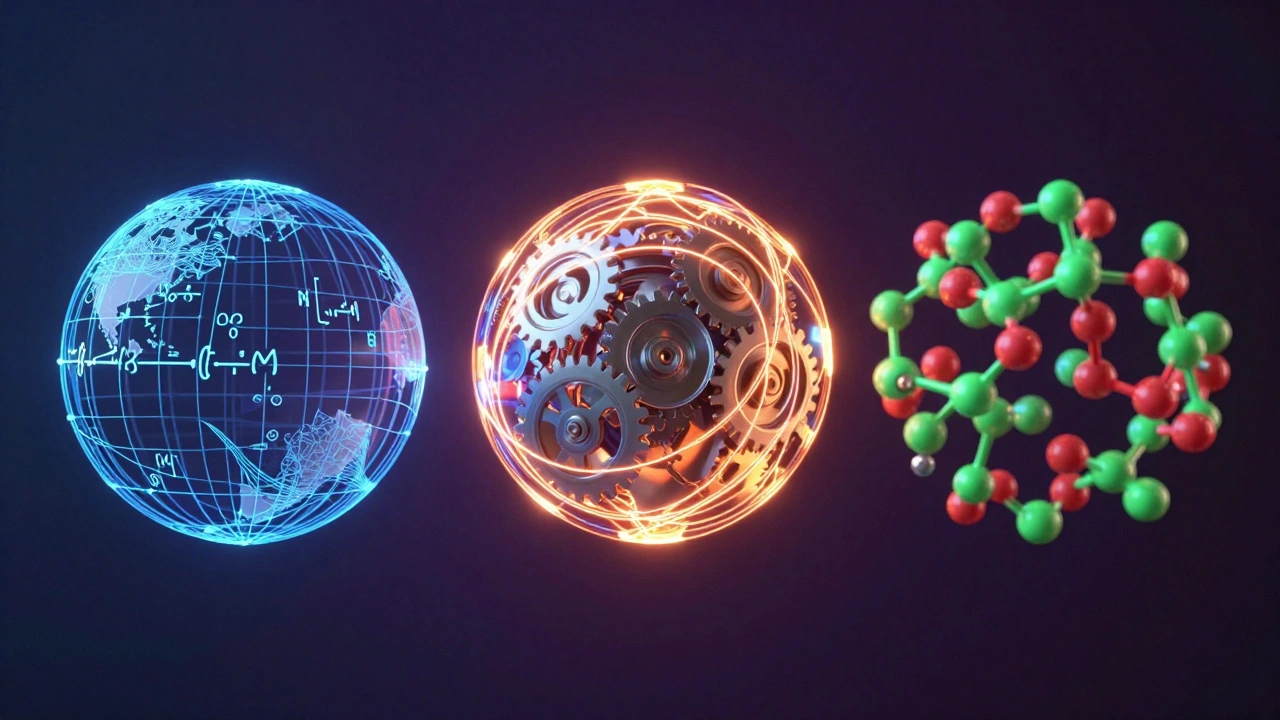
The exam is divided into three core pillars. Each one tests different skills. To understand the difficulty, we need to look at what each subject demands from you. It isn't just about knowing the formulas; it is about how quickly and accurately you can apply them under pressure.
Mathematics often gets the top spot for difficulty. Why? Because it is purely logical and cumulative. If you miss a concept in Class 11, it affects your understanding in Class 12. There is no room for partial credit in your understanding. You either know how to integrate a function, or you don't. There is no "close enough" in a calculation-heavy exam.
Physics is the next contender. It requires visualization. You have to see the problem in your mind before you solve it on paper. Mechanics, Electrodynamics, and Modern Physics are the heavyweights here. A small error in setting up the free-body diagram can ruin the entire answer. It tests your ability to translate real-world scenarios into mathematical equations.
Chemistry is the wildcard. It is split into Physical, Organic, and Inorganic. Physical Chemistry is like Math, requiring calculations. Organic is like a story with mechanisms and reactions. Inorganic is mostly memory-based. This mix means you need three different brain modes to tackle one subject.
Why Mathematics Often Tops the Difficulty List
When you talk to toppers or coaching institutes, Mathematics comes up the most. The syllabus is vast. It covers Calculus, Algebra, Coordinate Geometry, and Vectors. The sheer volume of topics means you cannot afford to skip anything. If you ignore Trigonometry, you might fail a question in Vectors because they are connected.
The calculation speed is another factor. In a timed exam, solving a complex integral takes time. If you spend too long on one Math question, you lose time for Physics or Chemistry. This creates a psychological pressure. Students often report anxiety when they see a long Math problem. They fear they won't finish the paper.
Furthermore, the JEE Advanced paper often includes multiple correct type questions in Math. These require deep conceptual clarity. A single wrong option selection can lead to negative marking. This risk factor adds to the perceived difficulty. You need precision, not just effort.
The Physics Challenge: Application Over Theory
Physics is hard because it is practical. You cannot just memorize laws. You have to understand how forces interact in a system. For example, in Rotational Motion, you need to combine concepts of torque, angular momentum, and energy conservation. If your foundation is weak, the problem becomes unsolvable.
Experimental Physics is also a part of the exam now. This changes the game. You might need to analyze a graph from a lab experiment and deduce a value. This tests observation skills, not just textbook knowledge. Many students focus only on theory and neglect the practical aspect, leaving them unprepared for these specific questions.
Electrodynamics is often cited as the toughest unit within Physics. It involves complex circuits and magnetic fields. Visualizing field lines and current flow requires a strong mental model. If you cannot visualize it, you cannot solve it. This makes Physics a subject of high variance. One student finds it easy, another finds it impossible.
Chemistry's Unique Role in the Exam
Chemistry is often called the "scoring subject." This is true, but only if you prepare it right. The difficulty here lies in the diversity. Physical Chemistry requires numerical skills similar to Math. If you are bad at calculations, Physical Chemistry will feel like Math.
Organic Chemistry is about mechanisms. You need to understand how electrons move. It is logical, but it requires memorizing specific reactions. If you forget a reagent, the whole reaction path changes. Inorganic Chemistry is the most memory-intensive. You need to know trends in the periodic table, coordination compounds, and qualitative analysis.
The challenge is balancing these three. Spending too much time on Physical Chemistry might leave you weak in Inorganic. Spending too much on Inorganic might make you slow in Physical. Finding the right balance is the real difficulty. Many students underestimate Chemistry because it seems easier initially, but it catches them up in the final months.

JEE Main vs. JEE Advanced: The Difficulty Gap
The difficulty changes depending on which exam you are taking. JEE Main is more straightforward. The questions test basic concepts and application. The syllabus is slightly smaller. Here, Chemistry is often the easiest to score in because the questions are direct.
JEE Advanced is a different beast. It tests depth. A question might combine concepts from two different chapters. For example, a Physics question might require Calculus from Math. This interdisciplinary approach increases the difficulty. You cannot study subjects in isolation.
The time management is also stricter in Advanced. You have fewer questions to solve, but each one is harder. The negative marking is more severe. This makes the "hardest subject" feel even harder because the penalty for mistakes is higher. Students often find Math to be the most punishing in Advanced due to the complexity of the problems.
| Subject | JEE Main Difficulty | JEE Advanced Difficulty | Key Challenge |
|---|---|---|---|
| Mathematics | High | Very High | Calculation Speed & Concept Depth |
| Physics | Medium-High | High | Application & Visualization |
| Chemistry | Medium | Medium-High | Syllabus Breadth & Memory |
Strategies to Tackle the Hardest Subject
Knowing which subject is hard is useless if you don't know how to handle it. The key is early identification. If you know Math is your weak point, start it early. Do not wait until the last six months. Consistency is more important than intensity.
Use NCERT books as your base. Even for Advanced, the concepts start here. Clear the basics before moving to reference books. Many students jump into advanced problems without clearing the fundamentals, leading to confusion.
Practice Mock Tests regularly. This helps you understand your pace. If you consistently fail Math questions in mocks, analyze why. Is it a concept gap? Or is it calculation error? Adjust your study plan based on this data. Blindly studying more won't fix a specific weakness.
Time management is critical. During the exam, do not get stuck on one question. If a Math problem takes more than 5 minutes, mark it and move on. You can come back later if time permits. This strategy saves you from losing marks in other subjects where you might be stronger.
How Subject Difficulty Affects Your Rank
Your rank depends on your percentile, not just the marks. If a subject is hard for everyone, the cutoff drops. If Math is very tough in a particular year, the overall score might be lower, but your rank could still be good if you perform better than others.
However, ignoring a subject is risky. If you skip Chemistry because you think Math is harder, you lose easy marks. Chemistry questions are often quicker to solve. Leaving them out reduces your total score significantly. A balanced approach ensures you maximize your potential across all three subjects.
Focus on your strengths while maintaining your weaknesses. If you are good at Physics, aim for a high score there. But keep Math and Chemistry at a passing level. A high score in one subject cannot fully compensate for a zero in another. The composite score determines your fate.
Is Mathematics really the hardest subject for IIT JEE?
For most students, Mathematics is considered the hardest due to its vast syllabus and the need for high calculation speed. However, difficulty is subjective. Students with strong logical skills might find Physics harder.
Which subject has the highest weightage in IIT JEE?
All three subjects-Physics, Chemistry, and Mathematics-have equal weightage in the exam. Each contributes equally to the total score, so neglecting any one subject affects your rank.
Can I skip Chemistry to focus on Math and Physics?
No, skipping Chemistry is not advisable. Chemistry is often considered the scoring subject. Ignoring it means missing out on easy marks that could significantly boost your total score and rank.
How does difficulty differ between JEE Main and Advanced?
JEE Main focuses on basic concepts and application, making it relatively easier. JEE Advanced tests depth and interdisciplinary understanding, making the questions significantly harder and more complex.
What is the best way to prepare for the hardest subject?
Start early, focus on NCERT basics, and practice regularly with mock tests. Identify your weak areas early and allocate more time to them while maintaining your strong subjects.