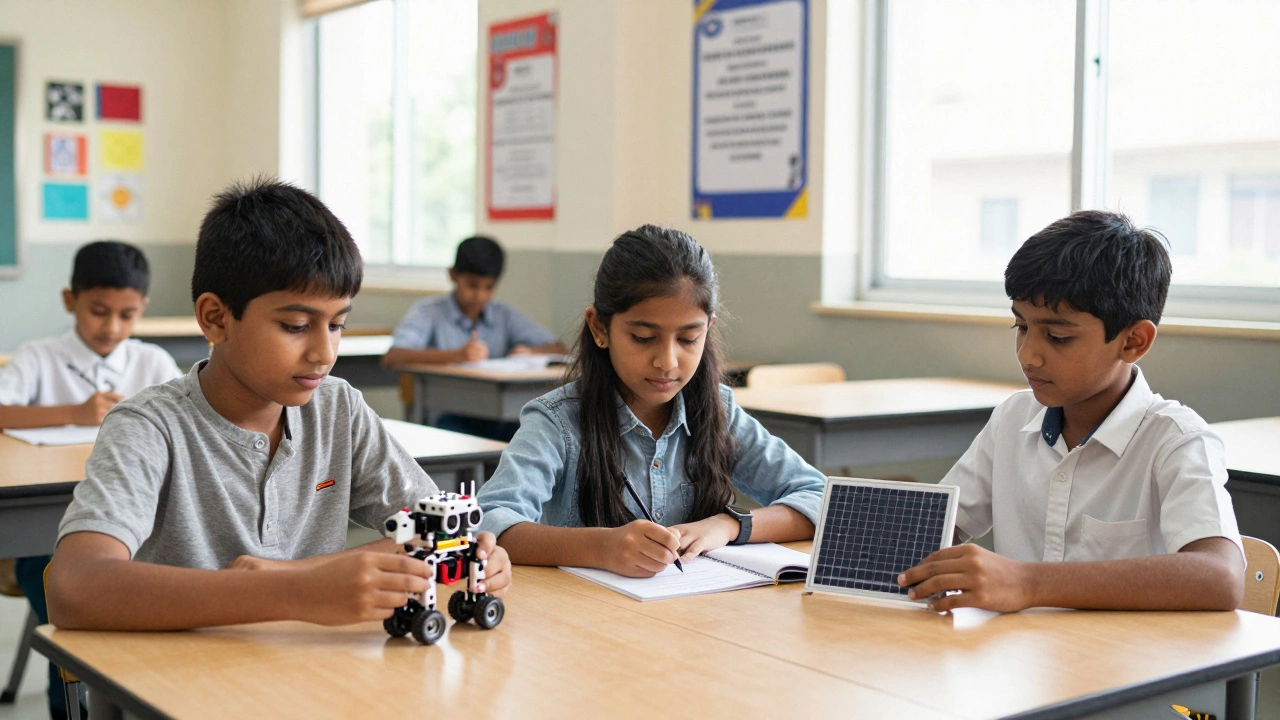
There’s no single school in India that holds the official title of "number one"-but if you’re asking because you want the best education for your child, you’re not alone. Every year, parents scour rankings, ask teachers, and check forums hoping to find the one school that stands above all. The truth? It’s not about a single name. It’s about what matters most to your child.
There’s No Official National Ranking
The Ministry of Education doesn’t rank schools. Neither does the Central Board of Secondary Education (CBSE). So when you see headlines like "India’s #1 School Is...", they’re not from a government source. They’re from private organizations like Education Today, Outlook, or The Week. These rankings use metrics like board exam results, infrastructure, faculty qualifications, extracurriculars, and alumni success. But here’s the catch: two different rankings can give you three different top schools in the same year.
For example, in 2025, The Week ranked St. Xavier’s Collegiate School in Kolkata as number one based on CBSE Class 12 results and holistic development. Meanwhile, Education Today placed Delhi Public School, R.K. Puram at the top for its innovation in STEM and global partnerships. And in another list, The Doon School led because of its alumni network and leadership programs.
None of these schools are "better" than the others-they just excel in different areas. If your child thrives in science labs and robotics competitions, DPS R.K. Puram might be the right fit. If they’re more into literature, debate, and arts, St. Xavier’s could be the better match. Rankings don’t measure happiness, growth, or fit.
What Makes a School Truly Top-Tier?
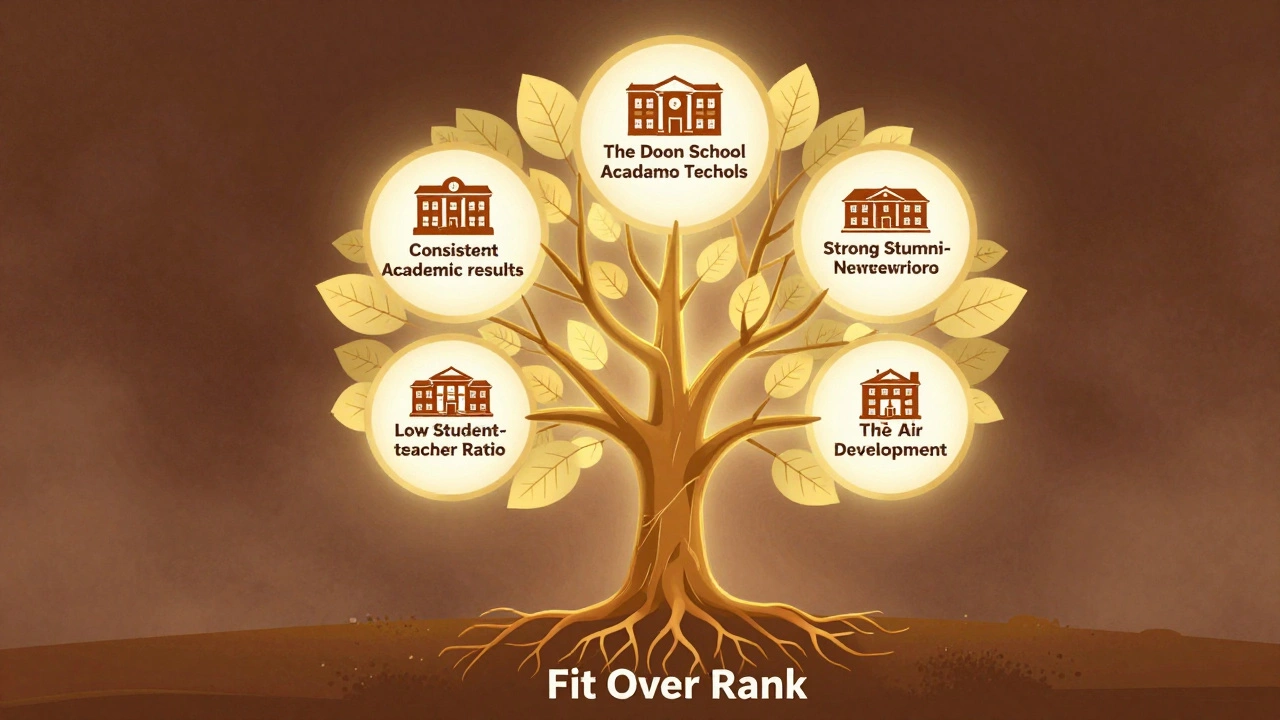
Instead of chasing a number, look at what really impacts learning. The best schools in India share five key traits:
- Consistent CBSE results: Top schools have average scores above 90% in Class 10 and 12. In 2024, schools like Modern School, Barakhamba Road and Delhi Public School, Mathura Road had over 95% pass rates with 70%+ scoring above 90%.
- Qualified teachers: At least 80% of faculty hold master’s degrees or higher. Many have trained at IITs, NITs, or top universities abroad.
- Low student-teacher ratio: The best schools keep it under 1:15. Some elite institutions go as low as 1:10, allowing personalized attention.
- Strong alumni network: Schools like St. Stephen’s School, Delhi and Welham Girls’ School have alumni in top global universities and Fortune 500 companies.
- Focus beyond exams: The top schools don’t just teach for boards. They build critical thinking, emotional intelligence, and real-world problem-solving skills.
These traits aren’t listed on any ranking website. You’ll find them by talking to current parents, visiting classrooms, and watching how students interact with teachers.
Why Rankings Can Mislead You
Let’s be honest: rankings are often shaped by marketing. Some schools spend lakhs on PR campaigns to appear at the top. Others don’t even submit data. A school with 100% board results might be small, with only 50 students. Another with 98% results might serve 1,200 kids-making its achievement far more impressive.
Also, rankings rarely account for:
- Student mental health support
- Accessibility for children with learning differences
- Transportation and safety
- Parental involvement opportunities
- Cost versus value
Take The Air Force School, Delhi. It doesn’t appear in most rankings because it doesn’t market itself. But its CBSE pass rate is consistently above 94%, and it offers free education to children of armed forces personnel. For many families, that’s the real #1.
The Real #1 School Is the One That Fits Your Child
There’s no magic formula. A school that works for a child who loves coding and robotics might crush a creative writer. And vice versa.
Ask yourself:
- Does my child learn better with structure or freedom?
- Do they need more hands-on labs, or do they thrive in discussion-based classes?
- Is after-school support available if they struggle?
- Can they access counseling, arts, or sports without extra fees?
- Will they feel seen and supported-not just pushed to perform?
The best school isn’t the one with the most trophies. It’s the one where your child walks in every morning excited to learn-and walks out feeling proud of who they are becoming.
What Top CBSE Schools Actually Do Differently
Here’s what separates the top 5% of CBSE schools from the rest:
- Project-based learning: Instead of memorizing formulas, students build solar-powered models, design apps, or run mock businesses. DPS Gurgaon’s "Innovation Lab" has students develop solutions for local community problems.
- Real-world assessments: Exams aren’t just written tests. Students present portfolios, defend research, or lead peer workshops. This builds confidence and communication skills.
- Teacher autonomy: Top schools let teachers design their own lesson plans within CBSE guidelines. That means lessons adapt to student needs-not the other way around.
- Parent-teacher co-creation: Regular forums let parents help shape policies on homework, screen time, and mental health. Schools like Delhi Public School, Sushant Lok have parent committees that help redesign the school calendar.
- Global exposure: Top schools partner with institutions abroad for virtual exchanges. Students in Jamnabai Narsee School recently collaborated with peers in Singapore on a climate action project.
These aren’t gimmicks. They’re teaching methods proven to boost long-term success. A 2023 study by NCERT found that students from schools using project-based learning scored 22% higher in critical thinking tests than peers from traditional schools.
Where to Look Beyond Rankings
If you’re serious about finding the right school, skip the rankings. Do this instead:
- Visit at least three schools in your area. Don’t go on open house days-go on a regular Tuesday morning.
- Ask to sit in on a Class 8 science class and a Class 11 English literature session. Watch how students respond.
- Ask teachers: "What’s one thing you wish parents understood about how we teach?"
- Check the school’s last three years’ CBSE results. Look for consistency, not just one perfect year.
- Talk to parents of current students. Ask: "Would you send your child here again? Why or why not?"
The answers will tell you more than any trophy shelf ever could.
Frequently Asked Questions
Is there an official government ranking of schools in India?
No, the Indian government does not rank schools. CBSE only certifies schools and publishes board exam results. Any "top school" list you see comes from private media or research firms using their own criteria, which may include exam scores, infrastructure, or alumni success-but not official metrics.
Which school has the highest CBSE Class 12 pass percentage?
In 2024, several schools reported 100% pass rates, including Delhi Public School, R.K. Puram, Modern School, Barakhamba Road, and St. Xavier’s Collegiate School, Kolkata. But pass percentage alone doesn’t tell the full story. Some schools have small batches, while others serve thousands. Look at the percentage of students scoring above 90%-that’s a better indicator of academic rigor.
Are private CBSE schools better than government schools?
Not necessarily. While many private schools have better infrastructure and smaller classes, some government schools-like those under the Kendriya Vidyalaya Sangathan (KVS)-have CBSE results that rival top private institutions. In 2024, KVS schools like KV IIT Delhi and KV Navi Mumbai had over 95% pass rates and 60%+ students scoring above 90%. The difference often lies in resources, not teaching quality.
Does being ranked #1 mean better college admissions?
Not directly. Colleges like IITs, NITs, and top universities don’t look at your school’s ranking. They care about your JEE, NEET, or CUET scores, your extracurriculars, and your personal statement. A student from a lesser-known school with a strong project portfolio and high board scores often outperforms someone from a "top" school with average grades.
What should I prioritize when choosing a CBSE school?
Prioritize fit over fame. Look for schools that offer strong teacher support, encourage curiosity, and have a healthy balance between academics and well-being. Check the student-teacher ratio, ask about mental health resources, and observe how students engage with teachers. The best school is the one where your child feels safe, challenged, and inspired-not the one with the most headlines.