
Learning Mode Matchmaker
Answer these 5 questions based on your current life situation and preferences to find your ideal educational path.
Recommended Path:
0/5 Strong Indicators
You sit at your desk, staring at a laptop screen. The lecture is paused. Outside, the world is moving fast. You wonder if you’d learn better here, or if you should be sitting in a physical room with thirty other people listening to the same professor. This isn’t just a preference; it’s a structural shift in how we acquire knowledge. In 2026, the debate between distance learning and traditional classroom education is no longer about which one exists-it’s about which one works for your specific life, brain, and goals.
The short answer? Neither is universally "better." One is faster and more flexible; the other offers deeper social integration and immediate accountability. To decide, you need to look past the hype and examine the mechanics of how you actually learn.
The Mechanics of Presence: Why Physical Classrooms Still Matter
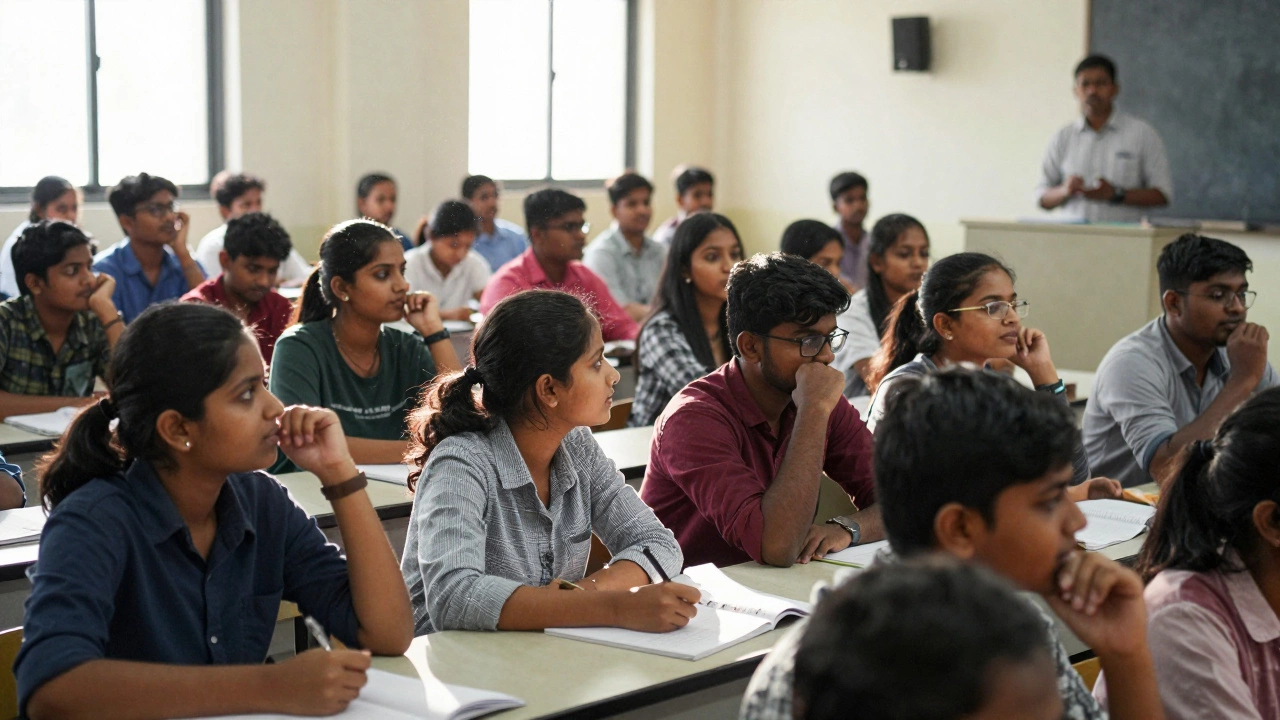
There is a reason schools have existed in buildings for centuries. It’s not just tradition. Human beings are social creatures, and learning is often a social act. When you walk into a university lecture hall or a high school classroom, you enter an environment designed for collective focus. The "contagion" of attention is real. If everyone around you is taking notes, you’re likely to take notes too. This phenomenon, known as behavioral modeling, creates a natural pressure to engage that simply doesn’t exist when you’re alone in your bedroom.
In a physical setting, the feedback loop is instantaneous. You raise your hand, the teacher stops, you ask a question, and the confusion clears in seconds. There is no lag time, no buffering icon, and no awkward pause where you wonder if you should unmute yourself. For complex subjects like advanced mathematics, laboratory sciences, or performing arts, this immediacy is crucial. You can’t simulate the tactile experience of mixing chemicals or the spatial awareness required in a dance studio through a video call.
Furthermore, the informal networks built in classrooms-studying with friends after class, grabbing coffee with a professor, joining clubs-are often more valuable than the curriculum itself. These connections lead to internships, jobs, and lifelong friendships. Distance learning can replicate some of this through forums and group projects, but it rarely captures the spontaneous energy of hallway conversations.
The Power of Autonomy: The Case for Distance Learning
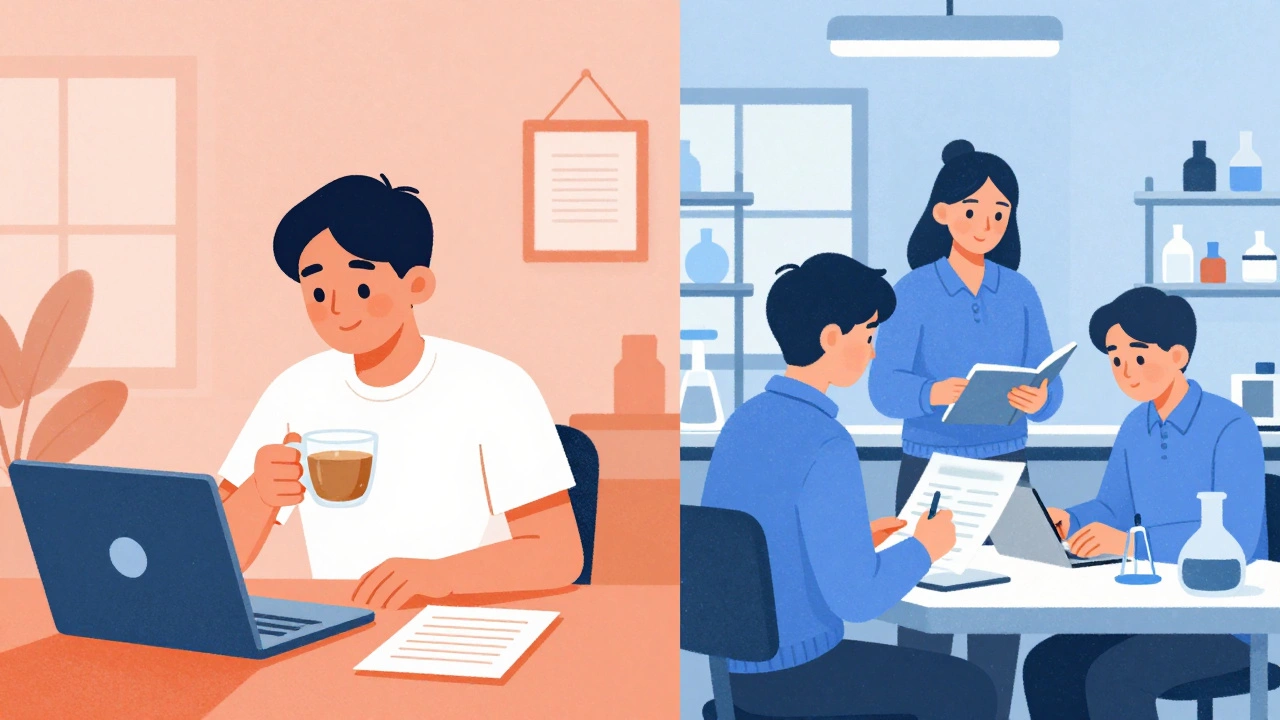
On the flip side, distance learning offers something physical classrooms cannot: total control over your environment and schedule. For adults balancing work, family, and study, this flexibility is not a luxury; it’s a necessity. You don’t commute. You don’t wait for the bell to ring. You can pause a lecture to make dinner, rewind a confusing explanation three times, or speed through material you already know.
This self-paced nature allows for personalized learning speeds. In a traditional classroom, the teacher must move at the pace of the average student. If you’re ahead, you get bored. If you’re behind, you fall off the map. Online platforms, especially those using adaptive AI technology common in 2026, can adjust difficulty levels in real-time. They identify your weak points and serve you extra practice problems while skipping content you’ve mastered. This efficiency can reduce the time needed to complete a degree or certification by months.
Additionally, distance learning removes geographical barriers. You can enroll in a top-tier program from New Zealand while living in Wellington, or access a specialized course from a university in Europe without buying a plane ticket. The cost savings are significant. No tuition hikes driven by campus maintenance, no housing costs on campus, and no transportation expenses. For many, this makes higher education accessible for the first time.
Key Comparison: Distance Learning vs. Classroom Education
| Feature | Distance Learning | Classroom Education |
|---|---|---|
| Flexibility | High: Learn anytime, anywhere | Low: Fixed schedules and locations |
| Social Interaction | Limited: Digital forums, occasional video calls | High: Face-to-face, spontaneous networking |
| Cost | Lower: No commuting, lower tuition often | Higher: Campus fees, housing, transport |
| Self-Discipline Required | Very High: You manage your own time | Moderate: External structure provided |
| Hands-On Experience | Limited: Simulations only | High: Labs, studios, physical tools |
| Pace of Learning | Self-Paced: Adjust to your speed | Fixed: Set by instructor and syllabus |
The Hybrid Model: The Best of Both Worlds?
If you’re torn between the two, you’re not alone. Most educators now agree that the future isn’t purely digital or purely physical-it’s hybrid. Also known as blended learning, this model combines online coursework with periodic face-to-face sessions. Imagine watching lectures online at your own pace, then meeting once a week for discussion groups, labs, or collaborative projects.
This approach solves the biggest pain points of both systems. It retains the flexibility and cost-effectiveness of distance learning while preserving the social connection and hands-on guidance of the classroom. However, it requires careful planning. Students must still possess strong time-management skills to keep up with the online portion, and institutions must invest in technology to ensure seamless transitions.
For working professionals, hybrid models are often the gold standard. You can maintain your job during the day, study online in the evenings, and attend weekend workshops for networking and practical application. It’s demanding, but it maximizes efficiency.
Who Should Choose Distance Learning?
Distance learning is ideal for you if:
- You are highly self-motivated. You don’t need someone to tell you what to do next. You can set deadlines and stick to them without external pressure.
- You have limited time or mobility. Parents, caregivers, or full-time employees benefit from the ability to study late at night or early in the morning.
- You prefer visual or auditory learning. Online courses often provide rich multimedia resources, transcripts, and recorded lectures that you can review multiple times.
- You are budget-conscious. Saving on commuting, housing, and campus fees adds up quickly over a multi-year degree.
- You are pursuing technical or theoretical fields. Subjects like computer science, data analysis, literature, or history translate well to digital formats.
Who Should Stick with Traditional Classrooms?
Traditional classroom education remains the better choice if:
- You struggle with procrastination. The fixed schedule and physical presence of peers create accountability that keeps you on track.
- You thrive on social interaction. If you learn best through debate, group work, and immediate feedback, the classroom environment is superior.
- You are studying hands-on disciplines. Medicine, engineering, nursing, theater, and culinary arts require physical practice and equipment that cannot be replicated online.
- You value networking. Building relationships with professors and classmates in person can open doors to opportunities that virtual connections might miss.
- You are younger. Children and teenagers often lack the maturity to manage independent online learning effectively. The structure of a school day supports their developmental needs.
Common Pitfalls to Avoid
Whichever path you choose, there are traps to watch out for. In distance learning, isolation is the biggest enemy. Without intentional effort to connect with peers, you can feel disconnected and lose motivation. Join online study groups, participate actively in forums, and schedule regular video check-ins with classmates.
In classroom settings, passive attendance is the risk. Just because you’re physically present doesn’t mean you’re learning. Engage actively: ask questions, sit near the front, and form study groups. Don’t let the comfort of routine turn into complacency.
Also, beware of credential bias. While perceptions are shifting, some employers still view traditional degrees more favorably than online certificates. Research your industry’s standards before committing. In tech and creative fields, portfolios matter more than diplomas. In law or medicine, accredited institutional status is non-negotiable.
Final Thoughts: Making the Right Choice
The question isn’t really "what is better." It’s "what is better for me, right now?" Your circumstances will change. A student who starts in a classroom might switch to online courses after getting married or starting a career. An online learner might return to campus for a graduate program to build new networks.
Assess your learning style, your financial situation, and your career goals. Be honest about your discipline level. If you’re unsure, try a low-stakes online course first to test your adaptability. Or audit a local college class to see if the classroom energy sparks your interest. Education is a journey, not a destination. Choose the vehicle that gets you there most comfortably and efficiently.
Is distance learning recognized by employers?
Yes, increasingly so. By 2026, most major employers accept accredited online degrees and certifications as equivalent to traditional ones. The key is accreditation. Ensure your online program is accredited by a recognized body. In industries like IT, healthcare, and finance, skills and portfolios often outweigh the mode of delivery.
Which is cheaper: online or classroom?
Distance learning is generally cheaper. You save on commuting, campus housing, meal plans, and sometimes even tuition, as online programs often have lower overhead costs. However, hidden costs like reliable high-speed internet, a dedicated workspace, and new hardware can add up. Always calculate the total cost of ownership.
Can I network effectively in distance learning?
It requires more effort but is possible. Use LinkedIn to connect with classmates, join alumni associations, and participate in virtual study groups. Many online programs now include mandatory collaboration projects and virtual career fairs. Proactive engagement is key to building a professional network online.
Is hybrid learning harder than pure online or classroom?
Hybrid learning can be more challenging because it demands versatility. You need the self-discipline of an online student and the punctuality of a classroom attendee. However, many find it less stressful overall because they can manage their time better while still accessing human support when needed.
What subjects are not suitable for distance learning?
Subjects requiring extensive hands-on practice are difficult to teach fully online. These include surgery, mechanical engineering labs, fine arts (like sculpture or painting), performance studies (theater, dance), and early childhood education practicums. While simulations help, they cannot replace physical experience in these fields.