
Getting a job in the federal government isn’t about knowing the right person or luck. It’s about understanding a system that’s been running the same way for decades-and doing it right. Every year, over 2 million people apply for federal jobs in the U.S. Only about 15% get hired. The rest? They apply the same way they would for a private company-and get rejected without even knowing why.
Start with the right job board: USAJobs.gov
This is the only official source for federal job listings. No LinkedIn. No Indeed. No Glassdoor. If it’s not on USAJobs.gov, it’s not a real federal job. The site is clunky, slow, and full of jargon-but it’s the only place that matters.
Here’s what most people miss: you can’t just search for "analyst" or "programmer" and expect results. Federal job titles are coded. A "Program Analyst" might actually be a budget specialist. A "Management Intern" could be a junior policy advisor. You need to read the duty statements, not the titles.
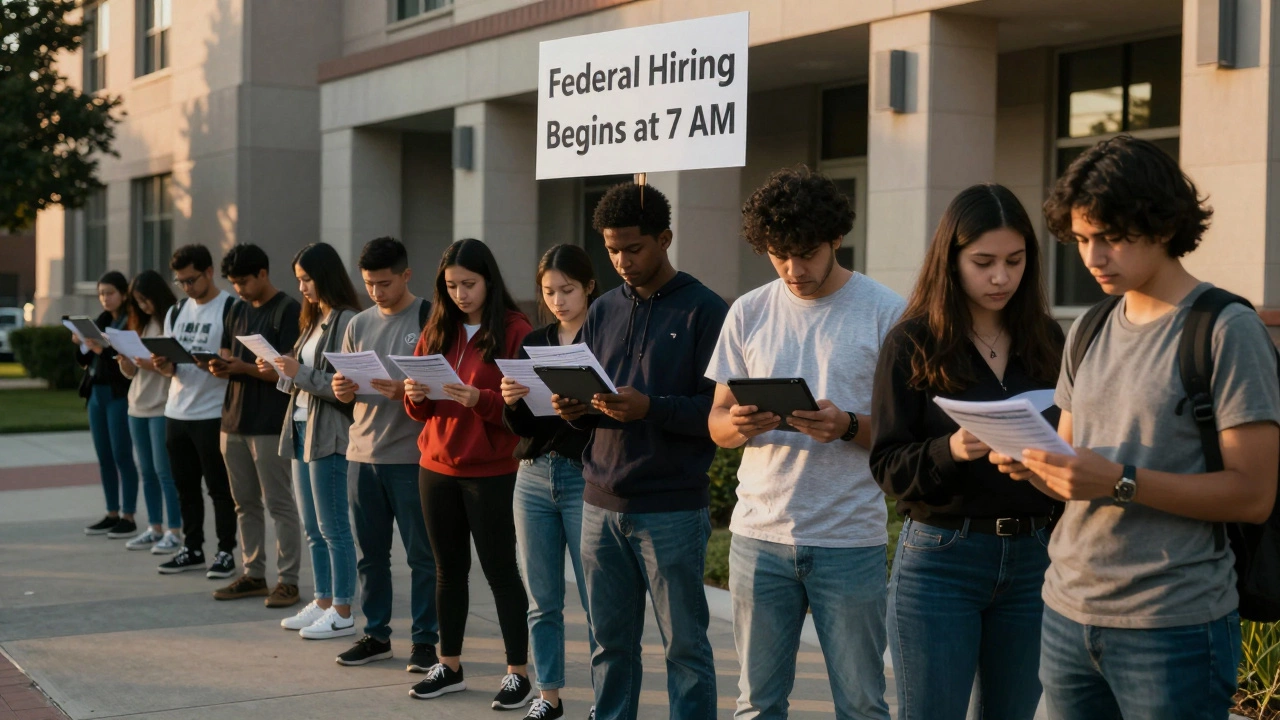
Use filters: "Open to the public," "Full-time," "Entry-level." Filter by salary range if you need to cover rent. Save your searches. Set up email alerts. Check it every Monday morning. Jobs appear at 7 a.m. Eastern Time, and they fill fast.
Know your eligibility: Who can apply?
Not everyone can apply for every job. There are three main categories:
- Open to the public - Anyone with U.S. citizenship can apply. This is where most entry-level jobs live.
- Open to current federal employees - Only people already working for the government can apply. These are promotions or lateral moves.
- Open to certain groups - Veterans, people with disabilities, former Peace Corps volunteers, or those who’ve worked for the government for over 3 years.
If you’re not a U.S. citizen, you’re out unless you have a special visa like a Green Card. No exceptions. No loopholes. No "I’ve lived here 10 years"-citizenship is non-negotiable.
Build a federal-style resume (it’s not a CV)
Your private-sector resume? Throw it out. Federal resumes are long. Like, 3 to 5 pages long. They’re not about style. They’re about proof.
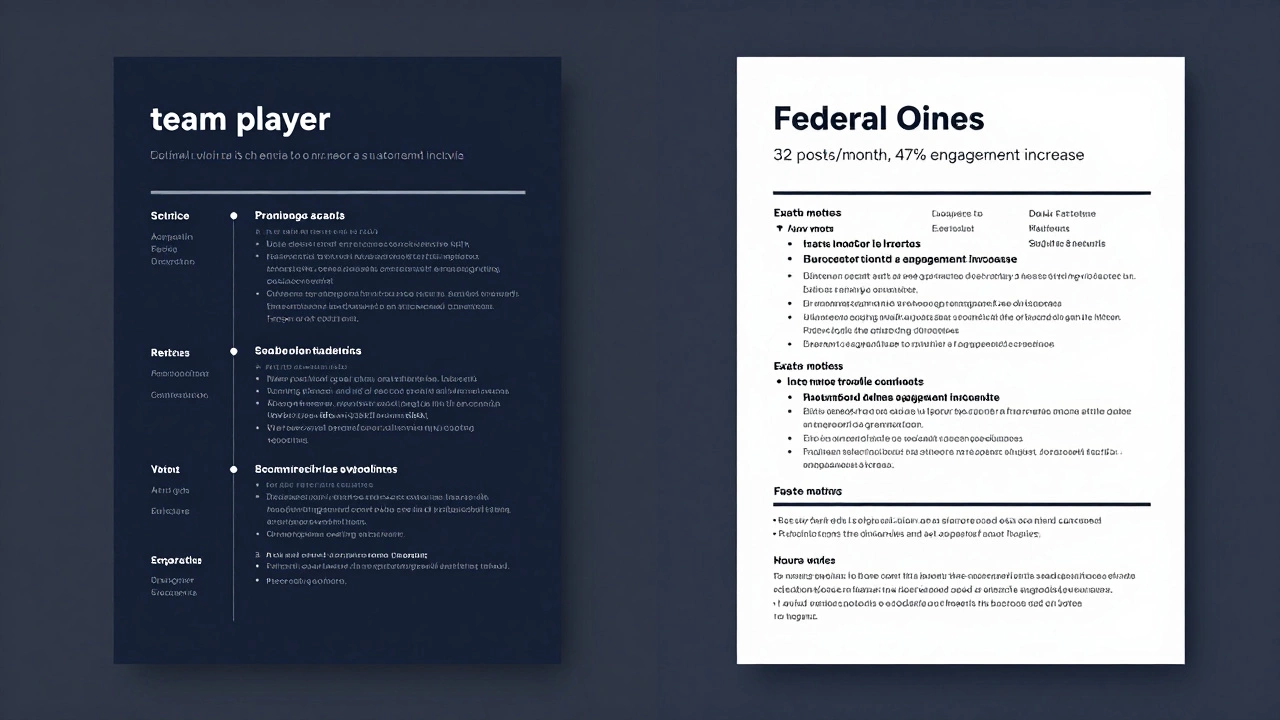
Each bullet point must answer: What did you do? How much? How often? What was the result? No fluff. No "team player" or "results-driven." Those mean nothing.
Example of a bad line: "Managed social media accounts." Good federal version: "Developed and published 32 social media posts per month across 4 platforms (Facebook, Twitter, Instagram, LinkedIn), increasing follower engagement by 47% over 8 months, resulting in a 22% rise in public service inquiries."
You must include:
- Job title, employer, dates (month/year to month/year)
- Hours worked per week (full-time = 40, part-time = 20)
- Supervisor’s name and contact info (yes, really)
- Specific accomplishments with numbers
- Relevant certifications and training
USAJobs has a resume builder tool. Use it. It forces you to include every required field. Don’t trust Word or Google Docs.
Understand the rating system: It’s not about who’s the best
Federal hiring doesn’t work like interviews. It’s a scorecard. You get points based on:
- Education (bachelor’s = 10 points, master’s = 20)
- Work experience (1 year = 5 points, 3+ years = 15)
- Specialized skills (language fluency, security clearance, software proficiency)
- Veteran status (preference adds 5-10 points)
You need a minimum score to be considered. If you score 75 and the cutoff is 85? You’re rejected. No interview. No second chance.
That’s why your resume matters so much. Every single bullet has to earn you points. If you’re applying for a cybersecurity job and you’ve never taken a CompTIA Security+ course? Get it. It’s $400 and worth 10 points.
Apply early, apply often, apply correctly
Most people wait until the deadline. Bad move. Applications open at 7 a.m. Eastern. By 10 a.m., hundreds are in. The system gets overloaded. Your application might not even process.
Here’s the rule: submit your application 48 hours before the deadline. Always. Even if you’re not 100% done. You can edit it later.
Also, don’t apply to just one job. Apply to 10-15 that match your skills. You’ll get rejected more than you get accepted. That’s normal. The average applicant applies to 23 jobs before landing one.
And never copy-paste the same application. Tailor your resume and cover letter to each job. Use keywords from the duty statement. If they mention "budget analysis," make sure your resume says "budget analysis," not "financial planning."
Prepare for the interview (if you get one)
Only 10-15% of applicants get an interview. If you do, it’s usually a panel of 3-5 people. They’re not there to be nice. They’re there to see if you can handle bureaucracy.
Expect behavioral questions: "Tell me about a time you had to follow a strict procedure even when it was inefficient." Or: "How do you handle conflicting priorities from multiple supervisors?"
Answer using the STAR method: Situation, Task, Action, Result. But don’t sound rehearsed. Be real. Federal managers hate robotic answers.
They might ask about your knowledge of the agency. Know their mission. Know their recent reports. Know who the current head is. If you’re applying to the EPA? Know their latest air quality standards. If it’s the VA? Know their wait-time goals.
What to expect after you’re hired
Once you get the offer, you’ll go through a background check. This takes 3-12 months. If you’ve ever had a DUI, filed for bankruptcy, or lived overseas for over a year, it’ll take longer. Don’t hide anything. They’ll find out anyway.
Your first paycheck will come in 4-8 weeks. You’ll get health insurance, retirement (FERS or CSRS), paid leave (13-26 days/year), and telework options (if the job allows).
Don’t expect a raise in your first year. Promotions are slow. You might be stuck at GS-5 for 2 years. But the job security? Unbeatable. Even in a recession, federal jobs don’t vanish.
Common mistakes that cost people the job
- Using a one-page resume
- Not including supervisor contact info
- Applying without U.S. citizenship
- Missing the "occupational questionnaire" (it’s part of the application)
- Not tailoring the resume to the job announcement
- Applying to jobs you’re not qualified for just to "get experience"
The biggest mistake? Thinking this is like applying to Amazon or Google. It’s not. It’s a government process. You have to play by its rules.
Where to get free help
You don’t need to pay for a "federal job coach." There are free resources:
- USAJobs Help Center - Live chat and tutorials
- USA.gov - Guides on applying for federal jobs
- Local workforce centers - Offer free resume reviews and workshops
- Veterans Employment Representatives - Free help for vets
- Reddit communities - r/federaljobs and r/governmentjobs have real applicants sharing tips
Don’t waste money on courses that promise "guaranteed federal job placement." They don’t deliver. The system doesn’t work that way.
What to do if you get rejected
You will get rejected. Multiple times. That’s normal.
When you do, request feedback. You can email the point of contact listed in the job posting. Say: "I’d appreciate any feedback on my application to improve for future opportunities." Most will reply.
Look at your score. If you scored 72/100, figure out where you lost points. Was it education? Experience? Skills? Then fix it. Take a course. Get certified. Gain more hours. Apply again.
People who land federal jobs aren’t the smartest. They’re the most persistent.