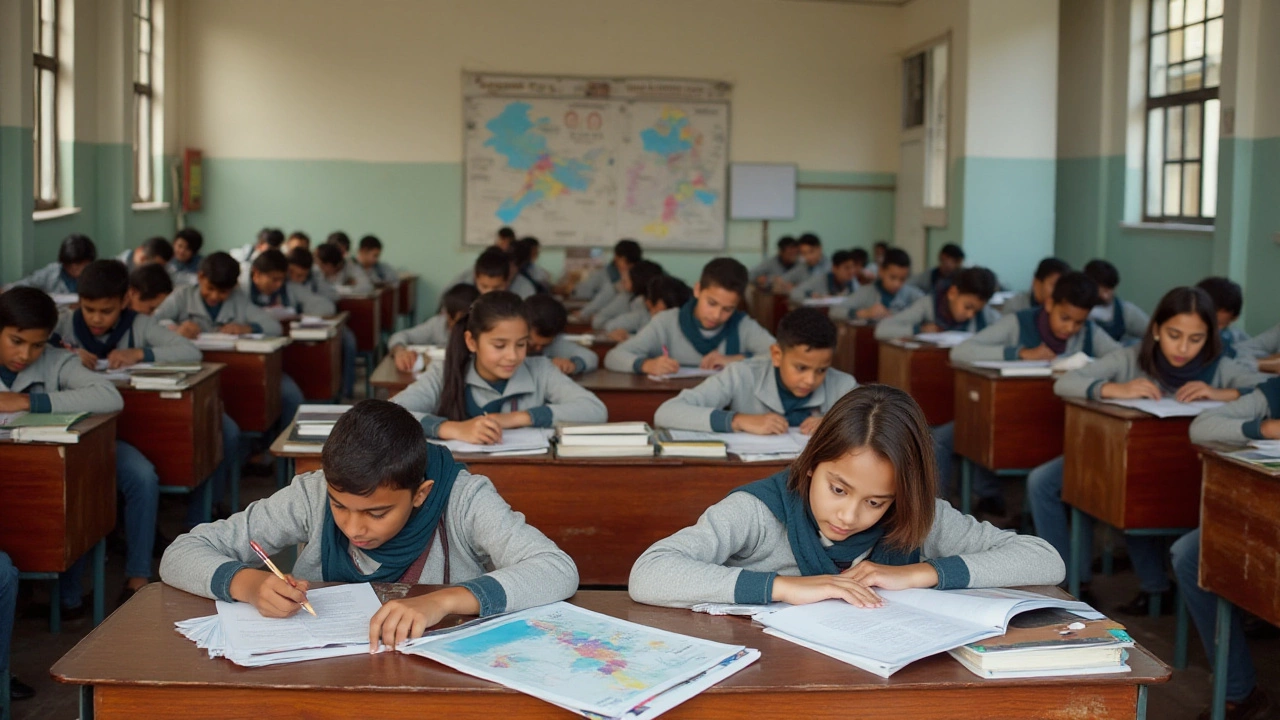
CBSE Papers: What They Are, Why They Matter, and How to Use Them
When you hear CBSE papers, practice and past exam papers issued by the Central Board of Secondary Education for students in India. Also known as CBSE board papers, these are the real tests students face in Class 10 and Class 12 — not guesswork, not theory, but the actual format, style, and difficulty level used every year. If you're preparing for Class 10 or 12, skipping CBSE papers is like training for a marathon without ever running on pavement. They don’t just test what you know — they test how well you can perform under real exam pressure.
CBSE papers are built around a fixed CBSE syllabus, the official curriculum set by the Central Board of Secondary Education for schools across India. This means every question — whether it’s a 1-mark multiple choice or a 5-mark long answer — comes from topics listed in that syllabus. You won’t find surprises. What you will find is repetition. Patterns. Favorite question types that show up year after year. That’s why top scorers don’t just study — they reverse-engineer past papers. They notice how often thermodynamics shows up in Physics, how many marks are allocated to grammar in English, or how many numericals are hidden in Chemistry. They learn where to spend time, and where to skip.
And it’s not just about memorizing answers. CBSE sample papers, official practice papers released by CBSE to help students understand exam structure are designed to mirror the real thing — same marking scheme, same time limits, same balance of easy, medium, and hard questions. Using them helps you build rhythm. You learn how fast to write. When to skip a tough question and come back. How to structure answers so the examiner can spot your marks easily. Many students lose points not because they don’t know the answer, but because they write too much, too little, or in the wrong format.
CBSE papers also reveal what’s changing. Every year, CBSE tweaks the weightage — maybe more case-based questions in Science, fewer direct definitions in History. The 2024 papers had more application-based questions than before. The 2025 papers? They’ll follow that trend. If you only study from textbooks, you’re playing catch-up. But if you’ve gone through the last five years of CBSE papers, you’re already ahead.
And let’s be clear — CBSE papers aren’t just for toppers. They’re for everyone who wants to stop guessing and start knowing. Whether you’re aiming for 90% or just trying to pass, these papers show you exactly what’s expected. No fluff. No theory without practice. Just real questions, real answers, real results.
Below, you’ll find real posts that break down how to use CBSE papers effectively — from which ones to prioritize, to how to analyze them, to what mistakes students keep making. No fluff. Just what works.