Most Popular School Boards Worldwide: A Deep Dive Into Education Systems
Curious about which school board tops the list worldwide? Get the real stats, stories, and pros and cons behind the most popular education boards on the planet.
When it comes to school boards in India, CBSE, the Central Board of Secondary Education, is the most common choice for students preparing for competitive exams like JEE and NEET. Also known as Central Board of Secondary Education, it’s the backbone of India’s public education system, with a focus on standardized testing and syllabus uniformity across the country. On the other side, IB, the International Baccalaureate, is a globally recognized curriculum designed to build critical thinking, research skills, and international awareness. Also known as International Baccalaureate Diploma Programme, it’s popular among families planning to study abroad or seeking a broader, less exam-driven education. These two systems aren’t just different—they’re built for different goals.
CBSE follows a structured, content-heavy approach. If your child is aiming for top engineering or medical colleges in India, CBSE is the direct path. Its syllabus lines up perfectly with JEE and NEET patterns, and most coaching centers design their materials around it. You won’t find project-based assessments or extended essays in CBSE—just clear, predictable exams. Meanwhile, IB doesn’t just test memory. It asks students to write 4,000-word extended essays, complete 150 hours of creativity and service activities, and take theory of knowledge classes. IB students often struggle with the workload, but they gain skills that universities abroad value: independent research, time management, and the ability to argue ideas—not just recite them.
Cost is another big divider. CBSE schools are widely available, even in small towns, and fees are usually low. IB schools? They’re mostly in big cities, and annual fees can run over ₹10 lakh. That’s not just a school—it’s an investment. And if you’re not planning to go overseas, is that investment worth it? Many Indian parents choose IB because they believe it’s "better," but the truth is, it’s just different. One isn’t superior—it’s just suited to a different future. If your kid wants to study in the US, UK, or Canada, IB gives them a smoother transition. If they’re targeting IITs or AIIMS, CBSE gives them the edge in exam prep. There’s no one-size-fits-all answer. What matters is matching the system to the destination.
Some students switch from CBSE to IB after Class 10, hoping for a fresh start. Others stick with CBSE even if they plan to go abroad—because they’re strong in exams and can still get into top universities with good SAT scores and extracurriculars. The truth? Both paths work. But knowing the difference helps you pick the one that fits your child’s strengths, not just your hopes.
Below, you’ll find real comparisons, success stories, and practical advice from parents and students who’ve walked both roads. Whether you’re deciding right now or just curious, these posts break down what actually matters—no fluff, no marketing hype.
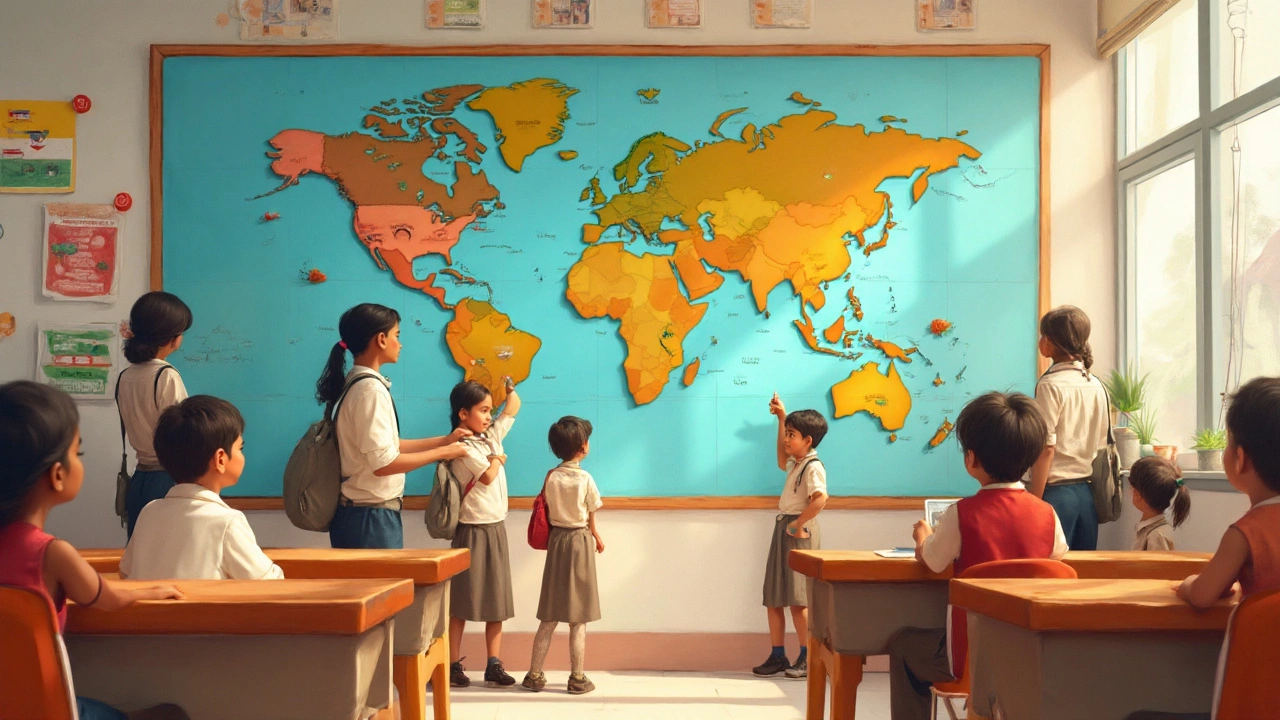
Curious about which school board tops the list worldwide? Get the real stats, stories, and pros and cons behind the most popular education boards on the planet.