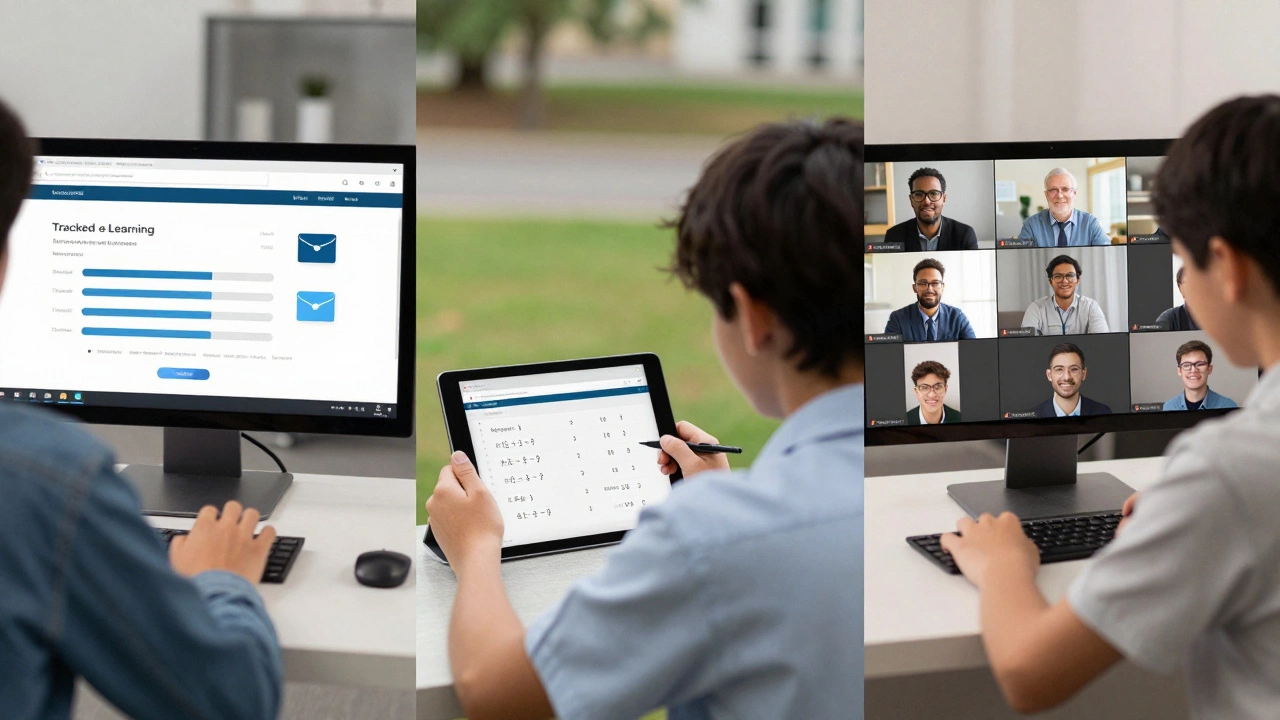
eLearning in India: What It Is, How It Works, and Where to Start
When you hear eLearning, the use of digital tools to deliver education outside a traditional classroom. Also known as online learning, it’s not just watching videos—it’s structured courses, live classes, quizzes, and feedback loops that help you actually learn something. In India, eLearning isn’t a trend anymore. It’s the backbone of how millions study for JEE, NEET, government exams, and even learn English with apps like Duolingo. You don’t need to be in a coaching center in Kota or Delhi to get quality education anymore. All you need is a phone, a connection, and the right platform.
eLearning encompasses tools like Google Classroom, a free system schools use to assign work, track progress, and communicate with students, and online learning platforms, websites like Coursera, Udemy, or local Indian apps that host full courses. These aren’t just fancy websites—they’re replacing textbooks for many students. A student in a small town in Odisha can now take the same NEET prep course as someone in Mumbai, thanks to recorded lectures and live doubt sessions. And it’s not just for students. Teachers use these tools to grade faster, share resources, and reach more learners without being stuck in one room.
But here’s the thing: not all eLearning is created equal. Some platforms give you videos and call it a day. Others give you quizzes, peer feedback, progress tracking, and real-time coaching. That’s the difference between scrolling through content and actually learning. The best eLearning courses—like the ones covered in our posts—focus on eLearning that builds skills, not just screens. Whether it’s coding without math, mastering English with Duolingo, or using Google’s tools to run a virtual classroom, the goal is the same: make learning stick.
You’ll find real examples here: how a teacher switched from Google to a privacy-first platform, what a real eLearning course looks like step by step, and why some students crush their exams using free tools while others pay thousands and still fall behind. There’s no magic formula. But there are patterns. And we’ve collected them—all the tools, mistakes, wins, and hidden costs—so you don’t have to figure it out alone.